


Burning up
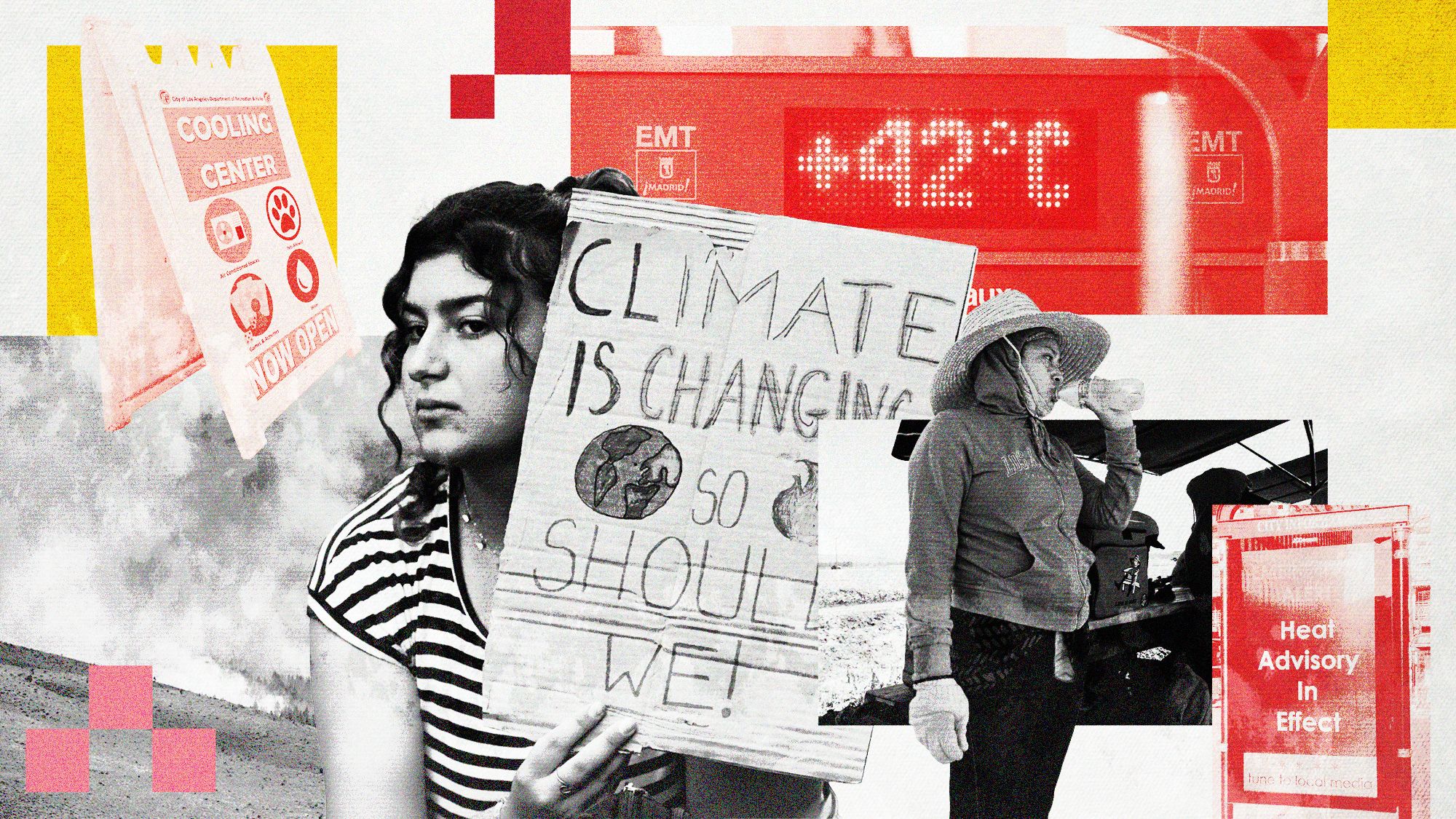
As the planet warms, climate change will transform not only the environment but also human health. In this series, Burning up, we examine the health effects of heat, air quality, food and infection risk. This installment explores the most promising ways to adapt to a warmer future.
Which climate adaptation strategies actually protect health?
Climate change is increasing exposure to extreme heat and wildfire smoke, but some interventions can reduce the resulting illness, hospitalizations and deaths. Others lower temperatures or pollution levels without yet having enough evidence to show that they improve health outcomes at scale.
Live Science reviewed dozens of studies and spoke with 19 climate and health experts to identify the most promising solutions for two major climate-related threats: extreme heat and wildfire smoke.
The strongest evidence comes from interventions that reduce disease, hospital visits or death—not only heat exposure, pollution levels or other intermediate measures.
The strongest evidence is where these approaches reduce illness, hospital visits or death, not just heat exposure, pollution levels or other intermediate markers.
Charles Leonard, associate professor of epidemiology at the University of Pennsylvania
The most effective way to avoid the worst health consequences of climate change remains reducing carbon emissions. Limiting warming to 1.5 degrees Celsius (2.2 degrees Fahrenheit), for example, would result in an estimated 11,600 fewer deaths from wildfire-smoke exposure in the U.S. each year than warming of 3 C (5.4 F).
But even rapid emissions reductions would not eliminate climate-related health risks. Communities will also need effective adaptation strategies.
Extreme heat
Extreme heat can cause heat stroke, cardiovascular stress, kidney damage and death. The evidence shows that the best protection comes from combining public warnings, accessible cooling, workplace protections and measures that reduce indoor and outdoor temperatures.
Citywide heat-warning systems
Evidence grade: Strong
New York City offers one of the clearest examples of an effective heat intervention. In 2008, the city lowered the threshold for activating its emergency heat plan after officials noticed that people were developing heat stroke at temperatures below the National Weather Service threshold of a 105 F (40.6 C) heat index.
The revised plan was activated at 100 F (37.8 C) for one day or 95 F (35 C) for two consecutive days. It included targeted outreach to vulnerable groups, phone alerts, measures to protect power and water supplies, and the opening of cooling centers.
Lowering the threshold correlated with a more than 50% reduction in hospitalizations for heat stroke and related illnesses on hot days.
Effective heat-warning systems do more than issue alerts. They coordinate outreach to vulnerable people, utility protections and health-care preparations for an increase in patients.
Effective systems do far more than issue a temperature alert.
Shweta Arya, senior project manager for smart surfaces at the American Public Health Association’s Center for Climate, Health and Equity
Researchers studying heat plans often use “natural experiments,” comparing conditions before and after an intervention or between similar communities with and without a plan. A 2025 analysis using these methods concluded that heat-exposure prevention plans reduced deaths attributable to extreme heat across Europe by 25%.
Air conditioning and heat pumps
Evidence grade: Strong
Air conditioning and heat pumps are among the most direct ways to control indoor temperatures. Air conditioning has been linked to fewer hospital admissions in California and fewer heat-related deaths at Texas prisons. During a heat wave in Portugal, patients in a hospital with air conditioning had a 40% lower risk of dying than patients in wards without it.
However, air conditioning cannot be the only solution. It depends on electricity and is vulnerable to power outages. It also increases electricity demand and can contribute to outdoor warming through expelled heat.
Although 90% of U.S. households used air conditioning in 2020, having the equipment does not guarantee that people can afford to operate it. The “heat or eat” dilemma describes how households may limit food purchases or take on debt to pay energy bills.
In many cases, the main barrier to staying cool indoors is not access to cooling equipment but the ability to pay monthly energy bills, said Pilar Botana Martinez, a research scientist in Boston University’s Department of Environmental Health.
“One of the most important lessons emerging from heat adaptation research is that no single intervention is sufficient on its own,” said Shweta Arya.
Shade, rest and hydration for outdoor workers
Evidence grade: Strong
Staying indoors is not practical for everyone. Nearly one-third of U.S. employees—mostly men—had regular outdoor exposure as part of their jobs in 2022. Construction workers, agricultural laborers and people working in hot warehouses may face dangerous heat while working.
Some of the strongest evidence for protecting outdoor workers comes from sugarcane workers in Central America. La Isla Network has helped workplaces introduce mandated breaks for rest, shade, hydration and sanitation.
Data collected over six years showed that the strategy improved health by reducing negative outcomes such as heat-related kidney failure. Similar reductions in heat-related illness have been observed in California, Texas and Guangzhou, China.
Although these interventions involve training and supply costs, they can increase productivity, making them easier for companies to adopt.
The aim is to build systems that reduce risk and harm, increase productivity and provide a return on investment so that these efforts just become business as usual.
Jason Glaser, CEO of La Isla Network
Passive cooling
Evidence grade: Intermediate
Passive cooling lowers indoor temperatures without mechanical equipment. Approaches include reflective or “cool” roofs, shade structures, urban greenery, courtyards, ventilation and other traditional building techniques.
These measures can improve comfort and safety while making air conditioning more efficient. They may also reduce energy costs and electricity demand during peak-power periods.
Modeling suggests that cool roofs can work at scale. A 2019 California study predicted that statewide adoption would halve the number of people exposed to heat-wave conditions by 2050. A 2024 London study predicted that cool roofs could reduce heat-related deaths by up to 32% during heat waves.
Green infrastructure can also reduce heat exposure. In dense Southeast Asian cities, trees, street greenery and additional bodies of water have been associated with air-temperature reductions of up to 4.7 F (2.6 C) and surface-temperature reductions of up to 19.8 F (11 C).
These strategies may not be suitable everywhere. Measures that reduce heat deaths could increase deaths from cold, and a 2025 study found that cold-related deaths are four times more common globally. Communities that experience both heat waves and cold snaps will need to consider these trade-offs.
Personalized heat alerts
Evidence grade: Strong
Most heat-warning systems rely on a temperature threshold considered dangerous for an average person. But people exposed to the same temperature can respond very differently depending on their health, age, living conditions and social circumstances.
A pilot program by New York insurance company EmblemHealth used a trained artificial-intelligence agent to provide personalized advice to 17,000 people with complex health or social needs. Hospital admissions were cut in half compared with a control group that did not participate.
Personalized alerts could shift heat warnings from generic, passive messages to proactive guidance that addresses an individual’s needs. However, these systems work best when combined with other interventions.
Cooling centers
Evidence grade: Weak
Cooling centers are public spaces such as libraries, schools, religious buildings and commercial locations where people can escape dangerous heat, often with the help of air conditioning.
Despite widespread use in the U.S. and internationally, there is very limited evidence that cooling centers reduce heat-related deaths or hospitalizations. One likely reason is that vulnerable people may not visit them often.
A 2024 study of Virginia’s cooling centers questioned the state’s strategy after finding that communities with cooling centers also had higher numbers of heat-related illnesses. A 2025 review from the National Bureau of Economic Research also questioned whether people who would benefit most can or will access cooling centers—and whether traveling to one could increase heat exposure compared with staying home.
Wildfire smoke
Wildfire smoke contains fine particles known as PM2.5. These particles are about 30 times smaller than the diameter of an average human hair and can travel deep into the lungs and bloodstream, increasing the risk of heart attacks, asthma attacks and adverse pregnancy outcomes.
PM2.5 pollution contributes to tens of thousands of excess deaths in the U.S. each year. Depending on future carbon emissions, wildfire-smoke emissions could increase by 262% to 482% by 2055.
Commercial and portable air filtration
Evidence grade: Intermediate
Air filtration reduces indoor exposure to wildfire smoke. It can involve commercial heating, ventilation and air-conditioning systems or portable filters, including a fan with a filter attached to it.
Staying indoors protects people from the worst PM2.5 exposure, but smoke can still enter buildings. A 2021 California study using 1,400 air-quality sensors found that nearby wildfires tripled indoor PM2.5 levels compared with days without fires.
Studies found that newer-grade filters, such as MERV 16 or higher, can reduce indoor PM2.5 by 81% in commercial systems. Portable air cleaners have also reduced exposure in Montana offices, Seattle homes and Singapore apartments.
It remains unclear how much filtration reduces deaths or hospitalizations in real-world conditions. People may fail to replace filters or may use portable cleaners only intermittently. Modeling nevertheless suggests that some filtration measures could prevent 11% to 63% of hospital admissions and 7% to 39% of wildfire-linked deaths.
N95 masks for outdoor smoke exposure
Evidence grade: Intermediate
Some people, including construction workers and others with outdoor jobs, must go outside during smoky conditions. Protective measures include distributing N95 respirators and requiring smoke-protection plans for outdoor workers.
Modeling studies suggest that N95 respirators can reduce wildfire-smoke exposure by 90%. A model using data from the 2012 Washington state wildfires found that the masks could reduce smoke-related hospitalizations by up to 30% compared with not wearing masks.
Land management and wildfire prevention
Evidence grade: Intermediate
The evidence for reducing wildfire smoke through land management is mixed. Forest thinning, tree harvesting, underbrush removal and prescribed burns may reduce the fuel available for massive, uncontrolled wildfires.
A 2022 modeling study led by U.S. Forest Service scientists compared four forest-management scenarios in the Lake Tahoe basin over the following century. It found that thinning and prescribed burning reduced PM2.5, smoke-related illness and deaths compared with fire suppression alone. The study also modeled lower health costs in 2039.
However, the benefits plateaued as more land was burned. Research from the southeastern U.S. shows that land management can itself become a major source of PM2.5.
Prescribed burns have one important advantage over unplanned wildfires: smoke can be anticipated. Communities can plan for when and where it is likely to affect people, said Heidi Huber-Stearns, director of the Center for Wildfire Smoke Research and Practice at the University of Oregon.
Smoke alerts
Evidence grade: Uncertain
Fire and smoke alerts based on high-resolution air-quality data could warn people about dangerous pollution and explain when to take protective action.
Because these programs are relatively new, little evidence shows whether they reduce wildfire-smoke exposure, hospitalizations or deaths. Evidence from other hazards is more encouraging: a 2012 World Bank modeling exercise found that weather data and early warnings saved nearly 800 lives per year in Europe and could save a further 23,000 lives in the Global South if warning systems were upgraded.
Hurricane warnings may offer a useful model because people often act on these early alerts.
What adaptation strategies work best?
No single intervention can protect everyone from the health effects of climate change. Effective adaptation will likely combine early warnings, personalized outreach, affordable indoor cooling, passive cooling, workplace protections, cleaner indoor air and access to protective equipment.
Researchers agree that more funding is needed to determine which interventions improve health outcomes and can be expanded successfully. Much is known about the effects of climate change, but less is known about which solutions work best in real-world conditions.
“There comes a point where we need to move from studying the impacts to looking at interventions and solutions and see what actually works out there,” said Barrak Alahmad, director of the Occupational Health and Climate Change Program at Harvard University.
How the evidence was evaluated
Interventions were categorized as strong, intermediate or weak.
Strong: Data shows a reduction in disease, hospitalization or death at the population level. The evidence comes from randomized trials or quasi-experimental studies, with sample sizes large enough to show a clinically meaningful effect.
Intermediate: Data shows improvement in an intermediate measure, such as temperature or PM2.5 concentration, that is linked to negative health outcomes. The evidence may also rely on modeling to estimate population-level health benefits.
Weak: Limited data exists, or the available data does not show a strong protective effect.
Burning up: How can we adapt to a warming world?
Source: www.livescience.com