


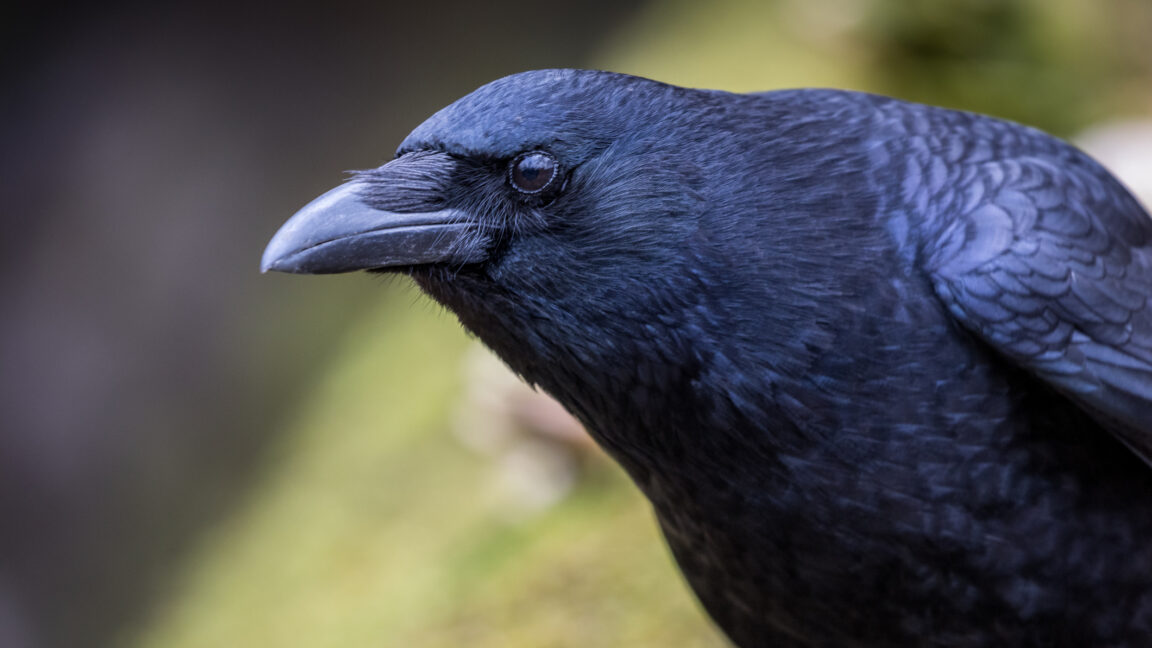
Crows Make Decisions in Just 235 Milliseconds—Faster Than Primates
Birds may process information remarkably quickly, and crows appear to be especially fast decision-makers. Researchers suggest that compact brains, high body temperatures, and highly evolved body systems may help explain their speed.
Why birds can process information so quickly
The first factor is simple size. Because flight imposes strict weight restrictions, birds pack vast numbers of tiny neurons into their relatively small brains. Their axons—the long, cable-like fibers that transmit electrical and chemical signals between cells—are also shorter.
“Long lines take time. Short lines speed everything up,” Nieder said.
The second factor is temperature. Human body temperature is around 36.6 degrees Celsius, while birds can reach temperatures as high as 41 or even 42 degrees Celsius. This higher body temperature accelerates chemical processes throughout a bird’s body.
“All the ion channels open and close faster. All the transmitters move faster through the synaptic cleft,” Nieder explained. “Evolution has pushed their bodies right to the limit. This is a life of overtaking, and everything in birds is pushed to the limit, not just the brain, but also the respiratory and cardiovascular systems.”
How quickly do crows make decisions?
In the study, crows made decisions in about 235 milliseconds, while primates took more than 400 milliseconds. However, these results should not be interpreted as an absolute limit for either group.
The reported times apply specifically to the random-dot-motion task, which essentially requires an animal to wait and determine which direction a group of moving dots is flowing.
The study has important limitations
There are several caveats to describing crows—or birds in general—as exceptionally fast decision-makers.
First, the study included only two birds, which is a relatively small sample. “On the one hand, it’s a valid constraint,” Nieder said. “On the other hand, if you look at monkey research, this is the standard number of animals we have for very complex types of research that combine behavior and electrophysiology.”
It may also be difficult to know whether the findings apply beyond crows. Other birds may not be capable of being trained to perform the task accurately, particularly because the experiment requires highly intelligent animals.
So far, Nieder said he does not know whether the crows’ superior decision-making performance is the result of faster bird brains in general or whether crows are simply more intelligent than other birds.
“Crows are known to be highly intelligent birds, so maybe there’s something special about them,” Nieder said.
Source: arstechnica.com