


This is today’s edition of The Download, a weekday newsletter delivering a daily briefing on the latest technology news, science breakthroughs, and digital trends.
How MIT Technology Review selected the world’s top 35 young scientists and engineers
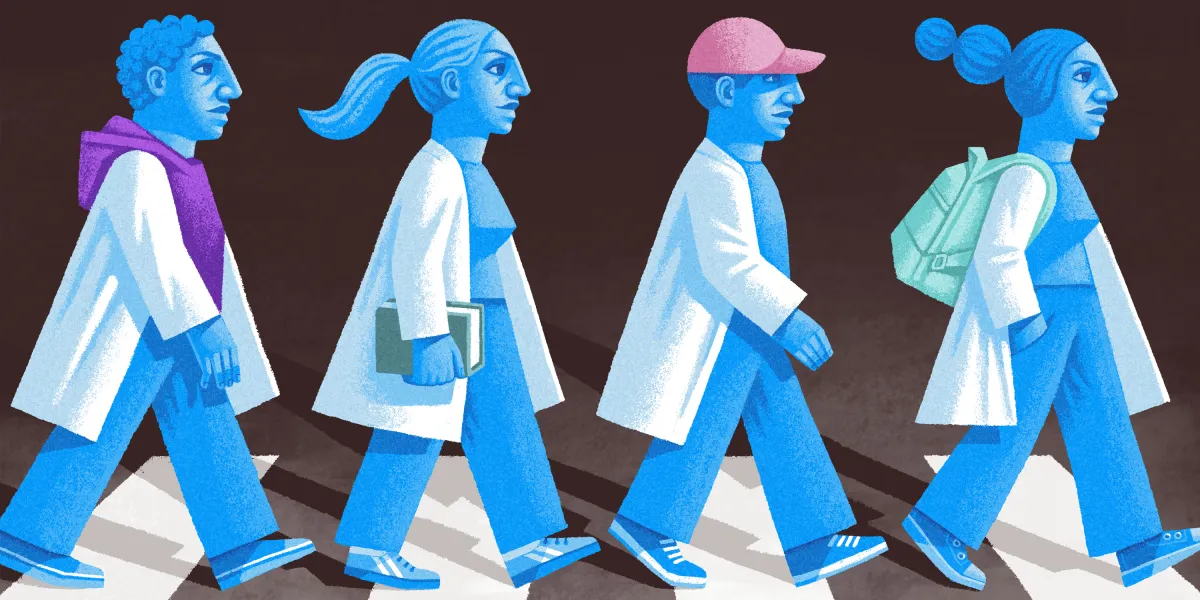
On September 8, MIT Technology Review will announce its 2026 list of Innovators Under 35. The annual list recognizes 35 young innovators from around the world who are conducting groundbreaking scientific research and developing practical technology solutions to some of society’s most difficult challenges.
By identifying the world’s leading young scientists, engineers, and technology innovators, we aim to show readers where technological progress is heading in the years ahead.
This selection process also helps our newsroom discover emerging talent and learn more about the researchers and engineers shaping the fields we cover.
We received 550 nominations this year. Discover how we narrowed the field to 35 young innovators shaping the future of technology, and explore last year’s list.
—Amy Nordrum
How the “censorship-industrial complex” is reshaping the internet and US policy
—Irene Guo
The first time I heard the phrase “censorship-industrial complex” was on April 15, 2025. That was when I learned that a small US State Department office responsible for monitoring and countering foreign disinformation from Russia, Iran, China, and other countries was facing an imminent shutdown.
Why was the office being closed? Critics accused it of serving as a central hub in the so-called censorship-industrial complex—a broad and controversial label applied to government agencies, academics, civil society organizations, and Big Tech platforms that allegedly work together to suppress conservative and populist speech online while combating disinformation.
I reported the story on April 16. But that was only the beginning of a deeper investigation into how ideas that once existed largely on the fringes of the right-wing internet have moved into the Trump administration.
To understand what this political movement could mean for online speech, content moderation, and the future of the internet, read my full story here.
MIT Technology Review Narration: Montana moves closer to becoming an experimental medical hub
In late July, a biotech company developing an experimental drug in Montana received a clear path toward selling the treatment directly to consumers.
Companies conducting preliminary drug testing—sometimes involving as few as 10 healthy people—can pay $12,500 to apply to the state’s new review board. If approved, a company could set its own prices and distribute the drug through experimental treatment clinics. The first clinics are expected to open near the end of this year.
Montana’s new law is unique. Similar laws in other states generally restrict experimental treatments to terminally ill patients. Montana’s system, however, is theoretically open to anyone who provides informed consent and can afford the treatment. That could include people seeking therapies for rare diseases, as well as consumers interested in drugs promoted as longevity or preventive treatments.
—Jessica Hamzelou
This is our latest story, published weekly as a narrated podcast from MIT Technology Review. Listen on Spotify and Apple Podcasts. Follow MIT Technology Review Narrated on your preferred platform to receive every new episode as it is released.
Must-read technology news
We’ve searched the internet for the most important, surprising, alarming, and fascinating technology stories making news today.
1. China-linked hackers launch an “unprecedented” AI attack on Taiwan
Hackers used open-source AI agents to compromise government websites. (Financial Times $)
+ A British military drone was reportedly spotted sending signals to China. (Cybernews)
+ Taiwan’s “silicon shield” could be weakening. (MIT Technology Review)
2. Two Wall Street firms are paying $100,000 a month for early access to President Trump’s posts
Trump Media says more than 10 companies have subscribed to the service. (CNN)
+ The service offers rapid access to market-moving posts on Truth Social. (BBC)
+ Trump Media lost $238 million after the value of its cryptocurrency holdings fell. (CNBC)
3. ICE plans to give police officers gloves capable of delivering painful electric shocks
The agency plans to spend up to $20 million on thousands of the devices. (Associated Press)
+ A switch changes the gloves from standard mode to “electric mode.” (The Guardian)
4. Spotify will label AI-generated artists and limit their recommendations
The streaming platform is taking action against fake performers and artificially generated music. (The Guardian)
+ An “AI Persona” label will appear on artist profiles and track listings. (The New York Times $)
5. Social media fueled a deadly migration surge from Morocco to Spain
Online disinformation encouraged thousands of people to attempt the dangerous crossing. (The New York Times $)
6. Anthropic’s Claude adds watermarks to AI-generated text and images
The technology could help identify AI content while preserving the anonymity of voters. (Axios)
7. Drugs that mimic the brain’s arousal signals are gaining popularity
Orexin drugs could eventually help treat sleep disorders, ADHD, and addiction. (The Economist $)
+ Psychedelic treatments continue to fall short in some clinical trials. (MIT Technology Review)
8. Cargo thieves are turning to violence to steal AI hardware
A transport ship disappeared after an escort vessel was attacked. (WIRED $)
9. Scientists may have found the elusive glueball, a particle made entirely of force
The Chinese collision provides some of the strongest evidence yet for this unusual form of matter. (Science)
10. Companies promising “100% human-authored” research reviews are using AI
Reviewers on the Research Gold website appear to be generated by artificial intelligence. (404 Media)
Quote of the day
“I think the fourth wave of slop will be when there are no more meaningful quality hits on slop and the average portion of slop is better than the best guys in the field.”
—Kevin Roose, technology columnist for The New York Times, speaking on the Pivot podcast about what the next stage of AI-generated “slop” could look like.
One more thing
Are you ready to hand over your keys to an AI agent?
People are beginning to give AI agents real autonomy, but we are not yet prepared for the consequences. Because any action that can be described in text could potentially be performed by an AI agent, these systems could cause significant harm or unintended disruption.
Iason Gabriel, a senior staff research scientist at Google DeepMind who specializes in AI ethics, says, “The big paradox of agents is that the very thing that makes them useful, that they can perform a variety of tasks, is also about giving up control.”
Researchers warn that autonomous AI agents could misunderstand instructions, expose sensitive information, fall victim to prompt-injection attacks, and exploit software vulnerabilities at scale. There is also no foolproof way to guarantee that an AI agent will behave exactly as its developer intended.
Here’s why giving AI agents greater autonomy could be dangerous.
—Grace Huckins
We still have good things
A place for comfort, fun, and distraction to brighten your day. Have an idea? Please contact me.
+ Built and tested by intrepid inventors: an anti-mosquito electric suit.
+ Musician Hasan Ceylan performs inspiring covers of modern hits using traditional Turkish instruments from the Ottoman musical tradition.
+ With the US midterm elections approaching, see whether you can draw districts to rig an election in the puzzle game “Gerrymandle.”
+ Photographer John Thomson’s 19th-century images of China offer rare glimpses of an ancient society on the verge of major change.
Source: www.technologyreview.com