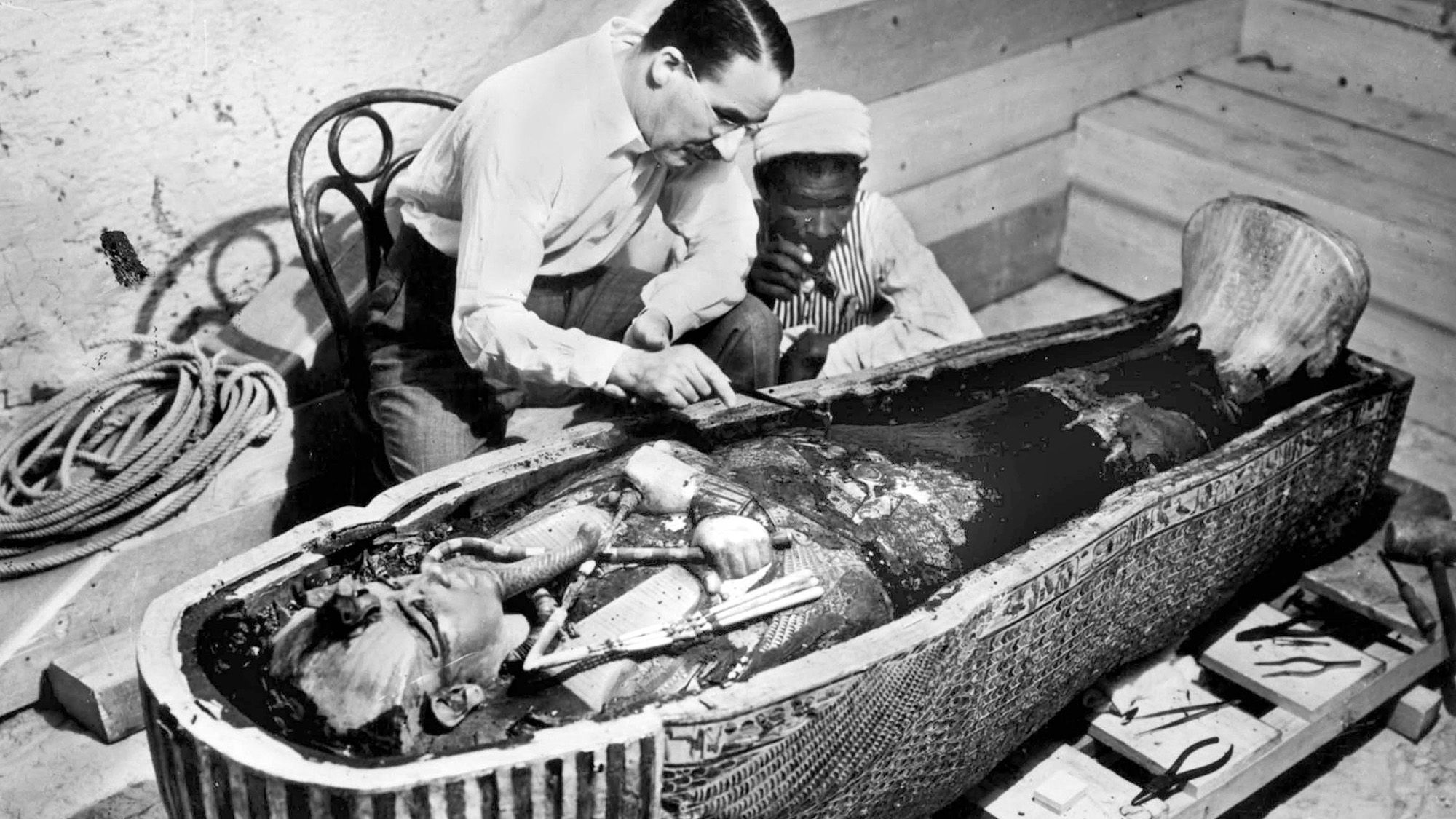
In archaeology, excavators meticulously unearth artifacts layer by layer, discovering ancient treasures such as charred seeds, fragmented bones, and minute pollen grains. This detailed process is complemented by extensive research to analyze the findings. However, a unique branch of archaeology, known as experimental archaeology, employs modern techniques alongside historical insights to recreate past human behaviors and lifestyles.
In this excerpt, Keene investigates ancient Egyptian mummification practices by meeting two specialists who masterfully apply ancient techniques to prepare human bodies for the afterlife.
Throughout history, various cultures have practiced mummification, with the Egyptian method being the most renowned. However, scant records exist detailing their embalming procedures. Consequently, experimental archaeology has emerged as crucial for understanding mummification, leading experts to recreate mummies in contemporary settings. While most experiments involve animals, a few daring individuals, notably Bob Bryer and Ron Wade, have mummified human remains, with their most notable case occurring in 1994.
Wade aspired to be a mortician like his father. After serving as a medic in the Vietnam War, he became an anatomist and eventually led the Maryland State Board of Anatomy. Bryer, an Egyptologist, has amassed a vast collection of books on Egypt, even renting a second apartment just for reading. They selected a 76-year-old white man from Baltimore who had donated his body to science for their mummification project, affectionately nicknamed “EM Balm” by Wade.
To maintain authenticity, Bryer and Wade utilized replicas of pharaonic tools and materials—including linen wraps, a wide wooden embalming table, and copper and obsidian blades. They initially faced challenges with copper blades, which proved ineffective for cutting flesh. Before commencing their mummification, they practiced extracting the brain on severed heads leftover from a medical school’s plastic surgery class.
In their research, Bryer learned that Egyptian embalmers removed the brain through the nostrils with hooked rods. Their first attempts to scoop it out failed due to the tissue’s softness. Ultimately, they resorted to spraying water into the corpse’s nose, turning the brain into a slurry and allowing for its removal. “It’s like a milkshake,” Bryer remarked, “a strawberry milkshake, to be exact.”
Receive the world’s most fascinating discoveries directly to your inbox.
Once confident in their techniques, the duo began their mummification process in May 1994, with the first step being organ removal.
In ancient Egypt, different organs had varied treatments. The brain was often discarded, while the heart remained in place, believed to be the center of thought and emotion. Abdominal organs were extracted and preserved. Following established protocols, they made a 3.5-inch incision to remove the spleen, liver, gallbladder, lungs, and 22 feet of intestines. The most challenging aspect was separating the lungs from the heart due to their size and placement.
After organ removal, they cleansed the abdomen using palm wine and myrrh while filling the skull with frankincense. This essential ritual not only prepared the body for the afterlife but also helped eliminate microorganisms and mask odors. Other sacred substances, such as pistachio resin and beeswax, were also utilized, often imported at great cost.
Bryer and Wade then dehydrated the body using natron, a natural mineral composed of salt and baking soda that forms in Egypt’s dry wadis. Natron effectively extracts moisture from flesh, rendering it inhospitable to bacteria and other decay-causing organisms, effectively preserving the tissue. Notably, Bryer managed to dig up natron in Egypt and transport hundreds of pounds through customs without drawing attention, thanks to his film crew’s presence.
In their laboratory, they placed the removed organs in a bowl, covering them with natron. Subsequently, they filled the corpse with 29 bags of the powder, placed it on a scale to achieve the correct weight, and stored it in an office maintained at 104°F (40°C) with dehumidifiers to mimic the Egyptian environment.
Over five weeks, the natron absorbed body fluids, becoming dense and brown, requiring them to break it open with an iron rod. Bryer recalls the smell being acrid yet tolerable, despite having to wear surgical masks to keep out the odor. As the body dried, the skin hardened and became wrinkled, revealing teeth as the lips retracted. The mummy’s skin turned yellow-brown, affirming that these changes were a result of embalming rather than prolonged exposure to Egypt’s arid climate.
The long-preserved mummy of Ramses II. Experts have recreated the mummification process to gain insight into how ancient Egyptians preserved their dead.
(Image credit: Patrick Landman via Getty Images)
The dehydration process affected the body’s flexibility, making limbs stiff as branches, reducing its weight from 188 pounds (85 kg) to 79 pounds (36 kg). The dried organs revealed why embalmers often placed them in narrow funerary vessels—because natron shrank them enough to fit.
After the natron phase, Bryer and Wade performed a ceremonial full-body massage using oils from lotus, cedar, and palm. Although ceremonial, it offered practical benefits, enhancing flexibility for handling before they wrapped the body in linen. Ancient techniques included wrapping each finger of hands and feet individually and sneaking amulets and magical spells into the layers, an age-old custom.
For the past 30 years, the mummy has been kept at room temperature in a metal coffin in Maryland. Bryer and Wade have occasionally checked the remains but reported no spoilage. “He’s dead, but he’s in good condition,” Bryer notes.
Sam Keene is a New York Times bestselling author of seven books. He spent years collecting mercury from broken thermometers as a child and now resides in Washington, DC. His work has appeared in renowned publications like National Geographic, The New Yorker, and The Atlantic, and he has been featured on NPR’s “Radiolab” and “Science Friday.”
Little, Brown
Dinner with King Tut: How a Rogue Archaeologist Recreates the Sights, Sounds, Smells, and Tastes of a Lost Civilization
2026 PEN/E.O. Wilson Literary Science Writing Award Finalist | Los Angeles Times Bestseller | Indie Bestseller | New Yorker Best Books of 2025
Whether it’s the remarkable pyramids of Egypt or the majestic temples of Mexico, we have a visual grasp of history. But what about our other senses—the pungent tang of Roman fish sauce, the delightful texture of Egyptian sourdough? The dramatic sounds of medieval conflict and the intense excitement of an Aztec ball game, where defeat could mean death?