


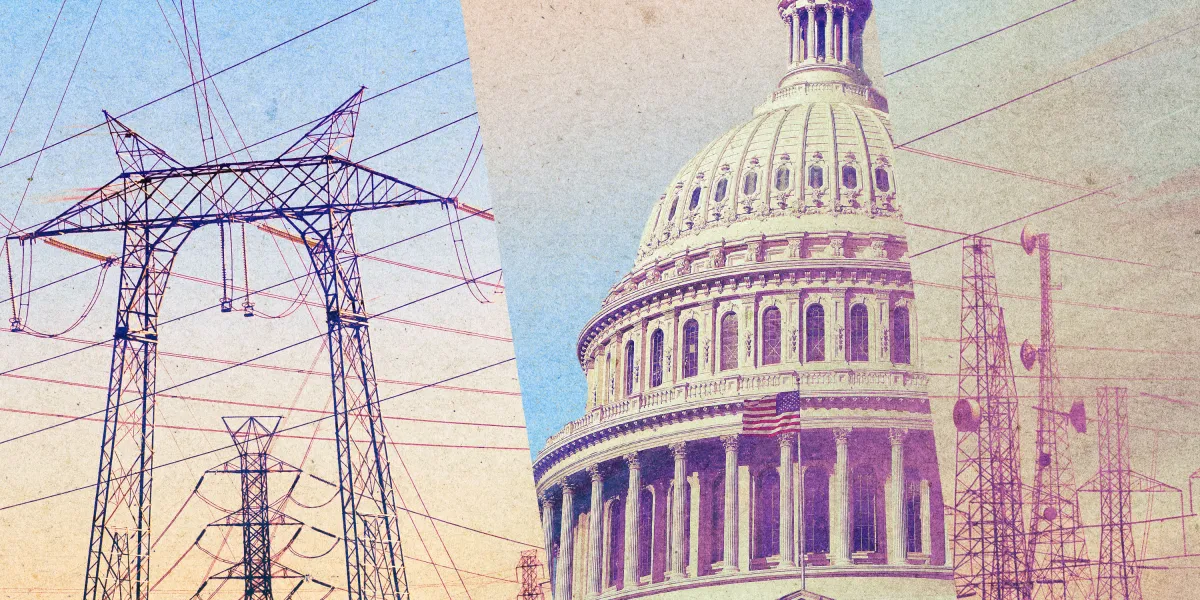
Early analyses suggest that BAAJA could expand clean-energy development and lower power-system costs, but its effects on U.S. emissions remain uncertain. Depending on how the bill changes permitting and which projects are built, it could reduce emissions—or enable enough new natural-gas generation to increase pollution and related health risks.
Studies offer different projections for BAAJA
An analysis by the Rhodium Group found that, in a best-case scenario, BAAJA could reduce economy-wide emissions by 4%, lower annual utility costs by $78 per household and add 200 gigawatts of new clean energy by 2040. In the worst-case scenario, economy-wide emissions would remain about the same. The Rhodium Group analysis is available here.
Researchers at the nonprofit Resources for the Future reached a more optimistic conclusion for the power sector. Their report found that the bill could reduce power-sector emissions by 6% by 2041 and save more than $350 billion in system costs by the middle of the century.
Permitting changes could also accelerate natural-gas development
Critics worry that the permitting bill could open the floodgates for new natural-gas plants. More of these plants are being announced as data centers drive up electricity demand and increase the load on the power grid.
“You end up with a trade-off of essentially growing the clean power industry and then growing the fossil fuel industry as a compromise,” said Kevin Kercher, an energy modeler and assistant professor of mechanical engineering at Purdue University.
To quantify that trade-off, Kercher modeled the bill’s potential emissions effects. He found that if BAAJA had been in place in 2025, energy-sector emissions would have been higher than the actual baseline. The health and mortality risks associated with air pollution would also have increased.
Senate vote and political uncertainty
The bill was scheduled for a Senate vote on November 9, well before the next Congress takes control. It was unclear what the dramatic Democratic victory would mean for the legislation, which was expected to pass the Senate with support from most Republicans if a few Democrats voted in favor.
Democrats could decide to wait until next year, when they control the majority in both chambers. However, any agreement would ultimately have to be signed by President Trump, and future legislation would have limits on what could be changed.
What gets built will determine the emissions impact
If permitting new projects becomes easier, the United States could see more clean energy as well as more natural-gas generation. Electricity prices may fall, but demand could rise, potentially increasing overall emissions.
Simplifying the permitting system and eliminating red tape is a worthwhile goal. But when it comes to emissions, the projects that the policy enables will remain critically important.
Source: www.technologyreview.com