


Disruptions to maritime traffic through the Strait of Hormuz have exposed the vulnerability of oil-exporting countries in the Middle East. Yet the disruption also presents a strategic opportunity: to rethink how the region’s energy infrastructure can support a more resilient, low-carbon global economy.
The transition to clean energy is often viewed as a threat to fossil-fuel-producing countries. However, many assets developed during the oil era—including ports, refineries, tanker fleets, aviation hubs and government-backed investment funds—could help accelerate the shift to sustainable energy.
By repurposing these assets, Middle Eastern oil producers could become major developers of a global sustainable aviation fuel (SAF) supply chain.
Meeting the sustainable aviation fuel demand gap
Aviation produces more than 2% of global anthropogenic carbon dioxide emissions and faces growing regulatory and public pressure to decarbonize. For long-haul flights, electric and hydrogen-powered aircraft remain years away. In the meantime, sustainable aviation fuel made from waste oils and fats, agricultural residues, industrial waste gases, wastewater sludge, biomass and synthetic feedstocks offers a practical way to reduce aviation emissions during this decade.1 (see go.nature.com/4wrwfws).
A cleaner flying future — aviation requires a fundamental redesign
Despite its potential, SAF currently accounts for less than 1% of global jet-fuel consumption. Closing this production gap will require new technologies, supportive policies and coordinated investment. The opportunity extends beyond aviation.
For the Gulf Cooperation Council (GCC)—Bahrain, Kuwait, Oman, Qatar, Saudi Arabia and the United Arab Emirates (UAE)—and neighboring oil-producing countries, developing a sustainable aviation fuel industry could diversify national economies and create new revenue streams as global oil demand approaches a plateau.
SAF development could also create jobs across the value chain, including feedstock collection, refining, research, certification, logistics and port operations. These activities would help build a workforce equipped for a future low-carbon economy.
At first glance, the Gulf may not appear to be a natural center for SAF production. Critics often argue that deserts lack sufficient biomass. This view overlooks the region’s major advantages: world-class energy infrastructure, globally connected transport hubs and government investment capacity that few other regions can match.
The Middle East can become a bridge to global SAF trade
Three factors make the Middle East a strong candidate for leadership in the sustainable aviation fuel market.
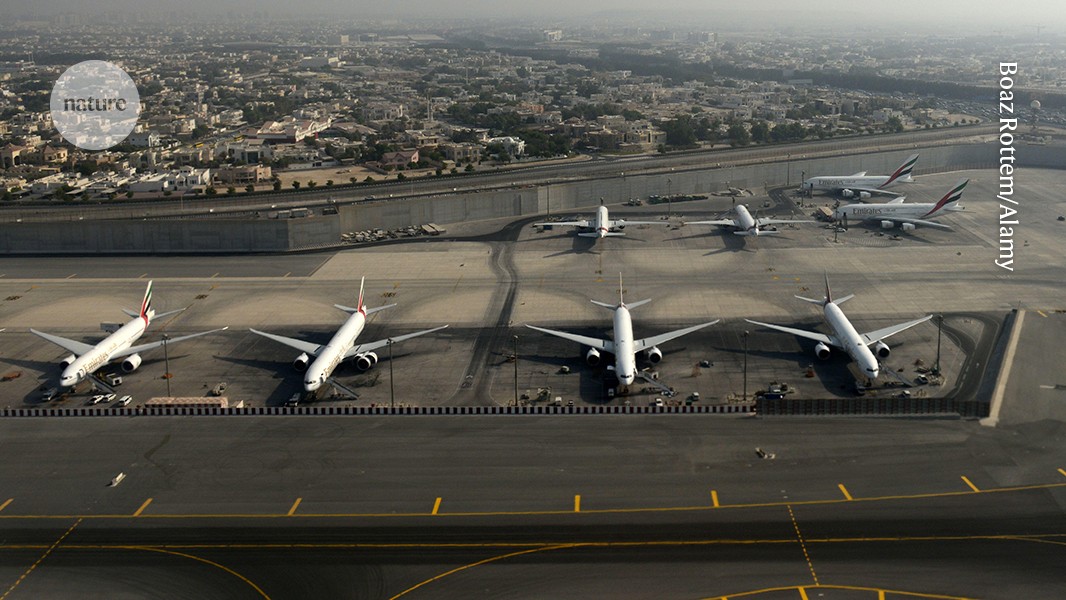
First, Gulf countries operate highly connected international aviation networks. Airports in the UAE, Saudi Arabia and Qatar rank among the world’s busiest. Flag carriers including Saudia, Riyadh Air, Qatar Airways, Emirates and Etihad Airways must increasingly comply with European Union climate regulations. The ReFuelEU Aviation Directive requires fuel suppliers to increase the share of SAF in aviation fuel blends.2 Airlines refueling aircraft in Europe will therefore need to purchase increasingly larger volumes of more expensive SAF.
Oil and gas drilling is moving to deep water – what’s at risk here
These EU requirements create a strong case for “green flight routes”—high-volume connections between major international airports that use SAF blends. Such routes could stimulate demand, demonstrate the viability of alternative fuels and reduce investment risks. European and Middle Eastern countries are well positioned to lead this initiative.3
Second, the Middle East has some of the world’s most advanced oil-export terminals and energy infrastructure. Facilities such as Al Danna’s Ruwais Industrial Park, the UAE’s Port of Fujairah, Saudi Arabia’s Ras Tanura Port and Qatar’s Ras Laffan Industrial City are supported by extensive refining and storage capacity. This infrastructure could be adapted for blending, storing and exporting SAF at a scale and speed that few other regions could match.
Third, Gulf countries have a strong culture of strategic investment. Most GCC governments manage sovereign wealth funds, including the Saudi Public Investment Fund and the Qatar Investment Authority. State-owned energy companies such as Saudi Aramco and the Abu Dhabi National Oil Company also have extensive experience acquiring, financing and operating energy assets worldwide.
These investment models could be expanded to support SAF feedstock production in regions ranging from Southeast Asia to Africa. By investing in biomass supply chains, Gulf energy companies could secure sustainable raw materials, improve transport economics and supply low-carbon aviation fuel to markets in Europe and Asia.4
The Middle East could therefore serve as a strategic link between biomass-producing regions and major SAF markets. This approach would also support emerging net-zero targets in Saudi Arabia, the UAE and Oman, while strengthening the region’s climate leadership following the UAE’s hosting of the United Nations COP28 climate summit in 2023.
Unlocking the Middle East’s maritime logistics advantages
One of the biggest opportunities for the Middle East to become a global SAF trading hub lies in its maritime logistics network. Very large crude carriers, each capable of transporting approximately 2 million barrels, carry around 70% of the region’s oil exports to Southeast and East Asia. Key destinations include China, India and Japan, while Singapore serves as a major regional trading, refining and shipping hub. Smaller volumes are transported to the Mediterranean on Suezmax vessels, which can pass through the Suez Canal and carry up to 1 million barrels.
These trade routes are largely one-way. As a result, many tankers return to the Gulf carrying ballast—usually water used to stabilize the vessel—rather than revenue-generating cargo. This makes return journeys inefficient and unprofitable.

Sustainable aviation fuel is produced by refining waste oil, gas and biomass. Credit: Jeffrey Groeneweg/ANP/Alamy
Several major importers of Middle Eastern crude—including China, India and European countries—also have substantial agricultural and forestry biomass resources. Gulf states could use backhaul cargo, or revenue-generating cargo transported on a tanker’s return journey, to move SAF feedstocks. In this model, raw materials from Asia or Europe would be shipped to the Middle East in otherwise empty tankers, where they could be processed into high-quality SAF.
GCC countries could also invest in overseas biofuel-processing facilities or partner with international refineries that produce finished SAF. The fuel could then be transported to the Middle East as backhaul cargo, improving vessel utilization and reducing supply-chain costs.
Meeting SAF demand would require only a portion of available return cargo capacity. Europe currently consumes approximately 400 million barrels of aviation fuel each year, most of it derived from fossil fuels. If total demand remains stable, around 24 million barrels of SAF would be needed annually to meet the EU’s 6% blending obligation by 2030.

Carbon credits won’t help fight climate change – here’s why
Assuming a 50% volumetric yield of SAF during refining, meeting this target would require approximately 48 million barrels of biocrude oil. That volume represents about 2.4% of the estimated 2 billion barrels of annual backhaul capacity available to Gulf countries. Meeting the EU’s 20% SAF obligation by 2035 would require approximately 160 million barrels of biocrude—around 8% of available backhaul capacity.
Even if the entire global aviation industry, which consumes approximately 2.2 billion barrels of aviation fuel annually, adopted equivalent 6% and 20% SAF mandates, the required biocrude volumes would represent only around 13% and 44% of the Gulf states’ annual backhaul capacity, respectively.
Investments in overseas SAF facilities would nevertheless need to be carefully targeted. Funding should focus on regions with abundant sustainable feedstocks and robust compliance with international standards, including areas that generate agricultural residues, food waste and used cooking oil.
Locating SAF plants near major transport corridors would allow GCC countries to integrate sustainable aviation fuel logistics into established oil-shipping networks. Traditional Middle Eastern trade routes could then become important enablers of the global energy transition.
A regional clearinghouse for SAF development
The Middle East could also establish a regional SAF clearinghouse to coordinate fuel testing, certification and sustainability verification for SAF produced across the Middle East, Africa and South Asia. The clearinghouse could provide a regional platform comparable to existing SAF authentication and verification systems in the United States, the European Union and the United Kingdom.
Such an institution would build technical knowledge, develop local skills and attract global partnerships. It could also position GCC countries as important hubs in the emerging sustainable aviation fuel trade ecosystem.5,6

Severe turbulence awaits – how scientists can keep air travelers safe in a warming world
Source: www.nature.com