


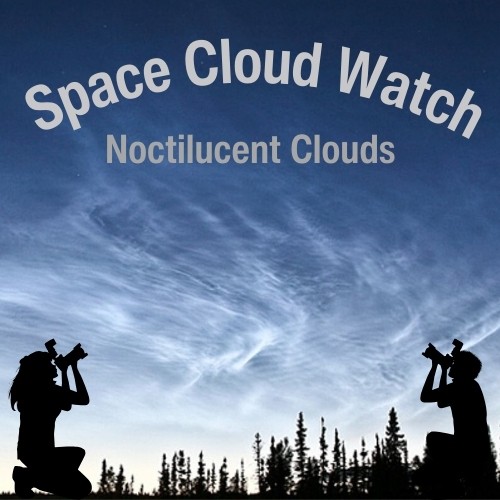
NASA-Supported Space Cloud Watch Uses AI to Identify Noctilucent Clouds
Some clouds are appearing lower in the sky more frequently than expected, raising questions about long-term changes in Earth’s atmosphere and weather patterns. To investigate these unusual cloud formations, scientists with the NASA-supported Space Cloud Watch project asked volunteers around the world to submit updated photographs. Now, one dedicated volunteer has created a machine learning tool to help identify these clouds more efficiently.
What Are Noctilucent Clouds?
Noctilucent clouds (NLCs) are the highest clouds in Earth’s atmosphere. They form in the mesosphere and reflect sunlight after sunset and before sunrise, creating a striking silvery-blue glow in the night sky. However, noctilucent clouds can be difficult to distinguish from lower-altitude clouds that look similar, leading to additional verification work for Space Cloud Watch scientists and project leaders.
Machine Learning Helps Identify NLCs
Space Cloud Watch volunteer Namay Chandra noticed that project leaders were manually reviewing many submitted images to confirm whether they showed noctilucent clouds. He recognized that the process could benefit from a human-guided machine learning system that would handle initial screening while keeping expert judgment at the center of the review process.
Namay explained, “We noticed that the NLC images were being manually verified by the project leader. This felt like a task well-suited for a human-involved machine learning pipeline that could automatically handle iterative screening while still centering human judgment on the most important images.”
Namay contacted Space Cloud Watch scientists Dr. Chihoko Karens and Brensa Thurairaja, who welcomed the idea. He developed and trained a machine learning pipeline using a wide range of cloud photographs, including lower-altitude clouds that are commonly mistaken for noctilucent clouds.
The new tool combines image pre-screening, cloud classification, and confidence-based review routing. After multiple rounds of development, testing, and refinement, Namay released the noctilucent cloud identification tool to the Space Cloud Watch project. Volunteers can use it when they are unsure whether they have photographed an NLC, while project scientists can also use it to identify images that require further review.
Join the Space Cloud Watch Project
Grab your camera and join the Space Cloud Watch project today. If you spot a bright, silvery cloud after sunset or before sunrise but are unsure whether it is a noctilucent cloud, the new identification tool can help you evaluate the image before submitting it. Your observations could help scientists better understand changes in Earth’s upper atmosphere.
Source: science.nasa.gov