


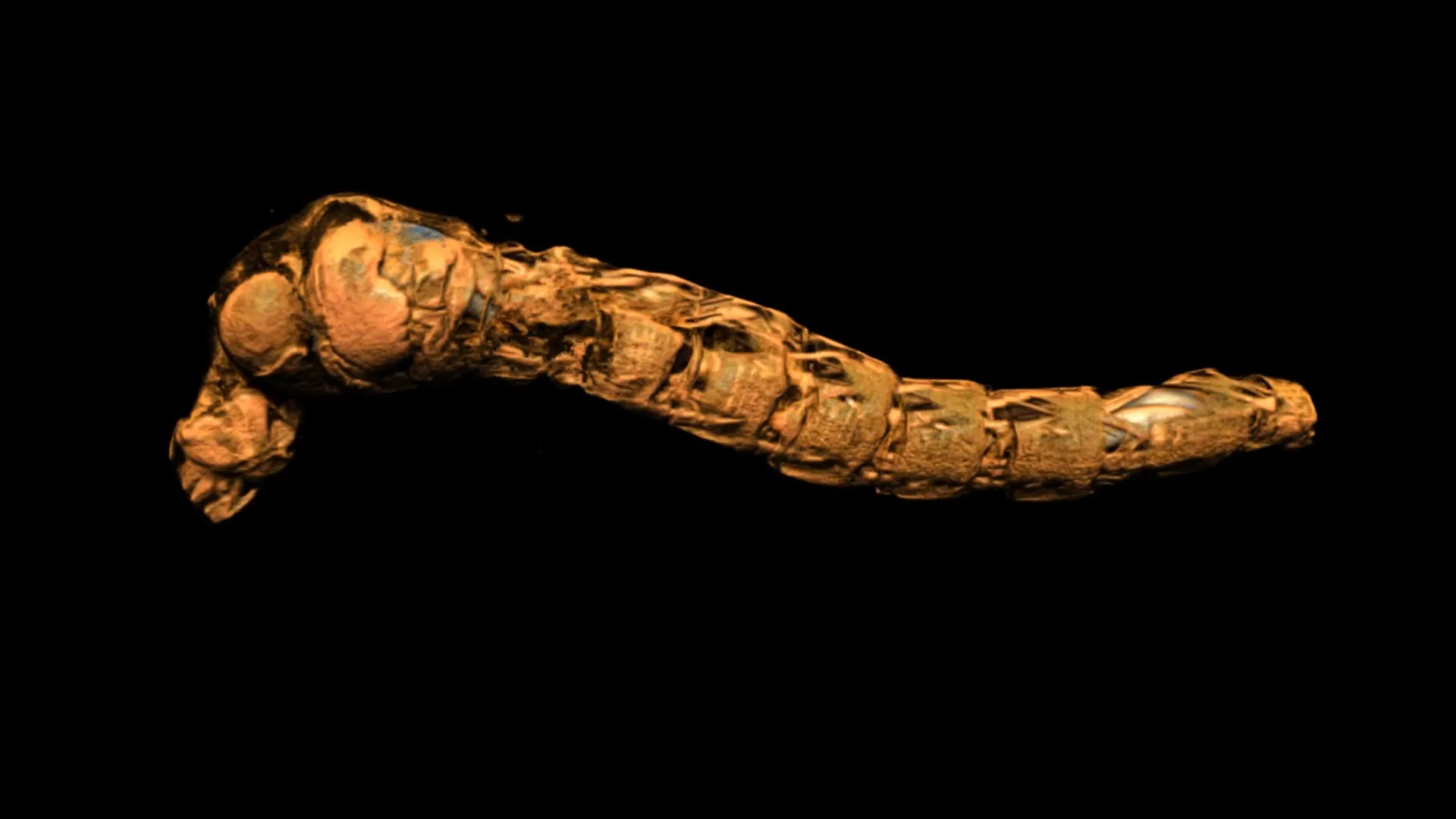
Deep-diving insect larvae in Africa’s Lake Malawi are challenging a leading theory about why insects are almost completely absent from the open ocean. Researchers found that the larvae rely on an exceptionally durable air-sac system that can withstand far greater water pressure than previously expected.
Billions of lake fly larvae (Chaoborus edulis) living in Lake Malawi, East Africa, complete an impressive daily vertical migration.
During the day, the larvae descend more than 200 meters into a deep, oxygen-poor region of the lake known as a dead zone. This harsh environment protects them from predators that cannot survive in low-oxygen water. After sunset, the larvae rise toward the surface to feed, passing through dense concentrations of fish that prey on them.
To study this remarkable underwater migration, researchers from the University of British Columbia, including Drs. Philip Matthews and Evan McKenzie, installed a sonar system on the lake floor. The equipment enabled them to track enormous swarms of larvae as they moved up and down through the water column.
Tiny Air Sacs Help the Larvae Control Buoyancy
When scientists examined the larvae, they discovered that part of the insects’ respiratory system had evolved into two pairs of small air sacs.
These air sacs function much like the ballast tanks of a submarine. By changing the size of the sacs, the larvae can adjust their buoyancy and control whether they sink into the depths or rise toward the surface.
The walls of the air sacs contain resilin, an extremely elastic biological material found in many insects. The larvae can change the pH of the sac walls, causing the resilin to expand or contract. This alters the volume of the air sacs and gives the insects precise control over their position in the lake.
Lake Fly Larvae Withstand Extreme Water Pressure
The researchers placed the larvae in miniature pressure chambers to test how much pressure their air sacs could tolerate before collapsing.
The results were remarkable: the sacs survived pressures equivalent to those found at depths greater than 400 meters—well below the depths the larvae normally reach during their daily migration.
Insects are among the most successful animals on land and in freshwater ecosystems, yet they are virtually absent from the open ocean. One widely accepted explanation is that the intense pressure in deep seawater would collapse the internal air spaces insects use for respiration.
The pressure-resistant air sacs of Chaoborus edulis suggest that extreme pressure alone may not explain why insects never became widespread inhabitants of the open ocean.
Insect Resilin Could Inspire Advanced Materials
Scientists have long studied resilin because it behaves like a highly durable biological rubber. In other insects, the material helps create flexible structures, including wing hinges and tendons, that can bend repeatedly without significant wear.
The newly identified buoyancy-control system could also support the development of smart materials made with resilin. In the future, similar chemical mechanisms may help researchers design artificial muscles and other materials capable of moving in response to changes in pH.
This research was partially funded by Natural Sciences and Engineering Research Council of Canada Discovery and Accelerator grants.
Source: www.sciencedaily.com