


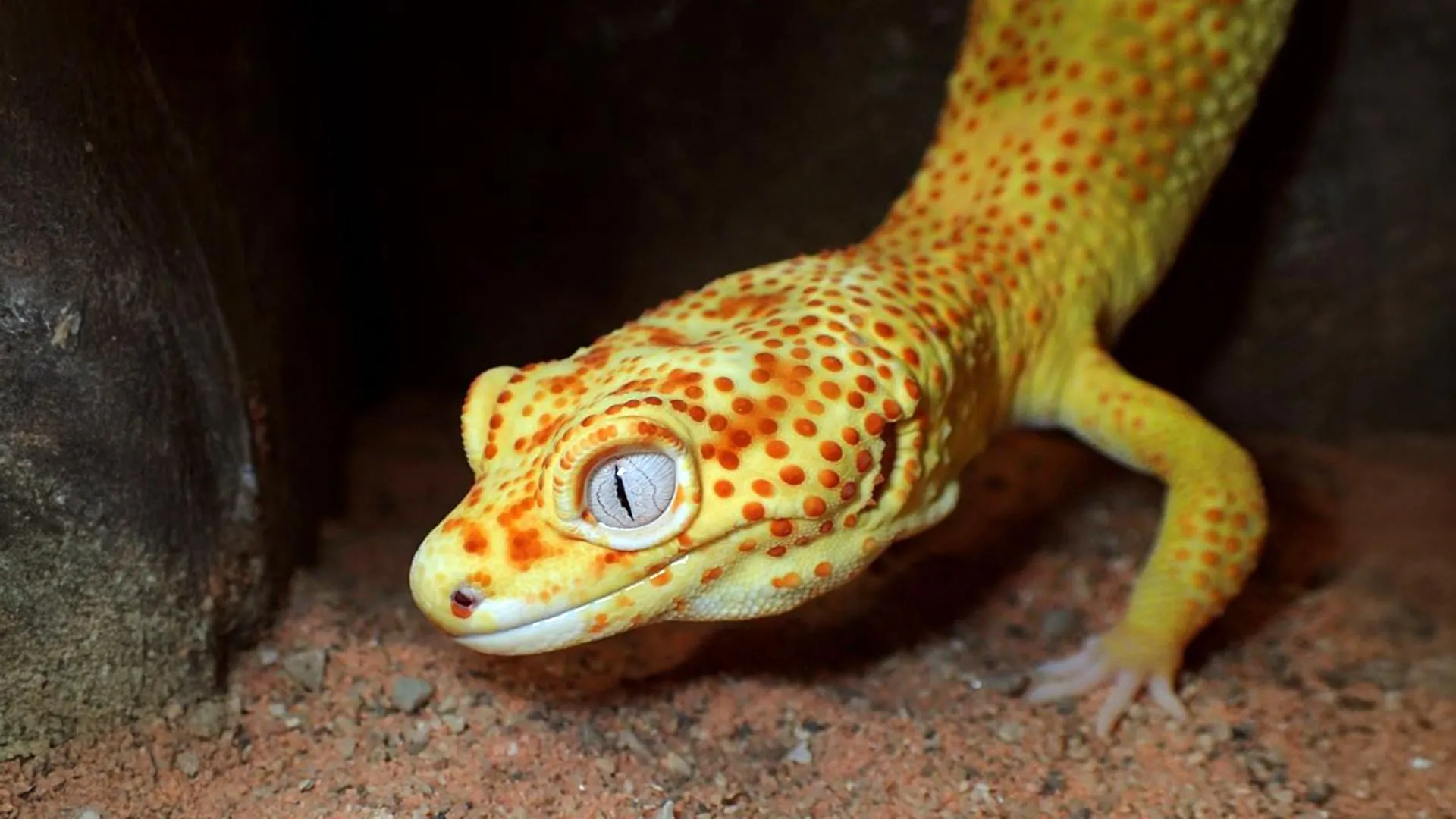
Colorful pet geckos, particularly the lemon frost morph, are becoming significant for cancer research due to their unusual susceptibility to tumors. Researchers believe that understanding the naturally occurring cancer in these reptiles could shed light on why certain species are more vulnerable to cancer, while others exhibit marked resistance.
The research, spearheaded by the University of Nottingham, uncovered key genetic alterations linked to tumors in a unique type of leopard gecko, as published in BMC Biology. Many of these genetic changes parallel those associated with human cancers, suggesting that studying these geckos could benefit cancer research significantly.
Cancer susceptibility varies greatly among reptiles; for instance, turtles rarely develop this disease, yet approximately 80% of white and yellow leopard geckos—commonly referred to as “lemon frost”—are prone to malignant tumors.
The project was led by Dr. Ylenia Chiari from the School of Life Sciences at the University of Nottingham and included an international team featuring postdoctoral fellows like Brandon Hastings (University of Nottingham), Dr. Scott Gloverman (University of Birmingham), Dr. Tony Gamble (Marquette University), Dr. Robert Ossiboff (University of Florida), and Dr. Virginia Gazziero and Dr. Giulio Caravagna (University of Trieste).
Why Lemon Frost Geckos are Prone to Cancer
Dr. Chiari noted, “By investigating why certain animals are highly susceptible to cancer while others are resistant, we aim to reveal the evolutionary strategies species have developed regarding cancer. The fact that tumors appear early in these geckos makes them an excellent model for cancer research, potentially inspiring innovative methods to prevent, detect, and treat human cancer.”
The lemon frost morph originated from a naturally occurring genetic mutation discovered during selective breeding in large leopard gecko populations. Its attractive white and yellow coloration quickly captured the pet industry’s attention. However, breeders soon identified a troubling trend: many of these geckos developed malignant tumors, often leading to metastasis.
Unlike laboratory mice, in which tumor growth must be induced artificially, lemon frost geckos naturally develop cancer at a comparatively young age. This characteristic provides researchers with a unique opportunity to study cancer emergence, evolution, and metastasis in a natural context.
DNA Sequencing Reveals Shared Cancer Genes
To deepen their understanding of the disease, researchers conducted whole-genome sequencing, comparing tumor samples to healthy tissues from the same geckos. They identified a series of recurring genetic changes across the tumors.
Many of these altered genes and biological pathways have already been linked to cancer in humans and various other animals. The researchers believe these similarities indicate that exploring the lemon frost gecko could yield insights that extend far beyond reptile biology.
This discovery underscores the importance of broadening animal models used in medical research. Species with naturally high cancer rates, like the lemon frost gecko, offer a complementary approach to traditional laboratory models, providing fresh perspectives on disease investigation.
Brandon Hastings, one of the study’s authors, stated: “Our findings emphasize the importance of exploring the entire tree of life for answers to better understand diseases, such as cancer, that significantly affect human health. Methodologically, it also illustrates how genomic software originally developed for human cancer can be adapted for diverse organisms.”
Biodiversity as a Source of Medical Insights
Dr. Scott Gloverman from the University of Birmingham emphasized the necessity of researching various species. He remarked, “We often turn inward to address human challenges, but every species has lessons to impart. By studying both cancer-prone and resistant animals, we can gain a comprehensive understanding of the disease. This underscores the critical importance of protecting biodiversity.”
Source: www.sciencedaily.com