


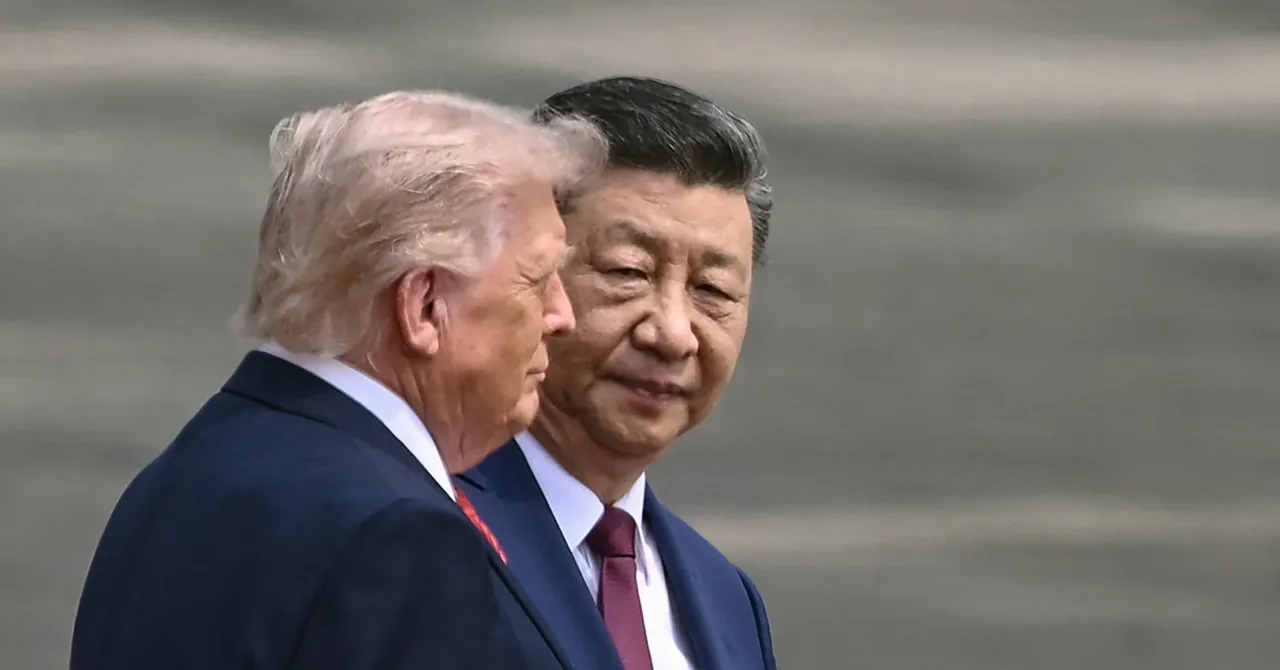
Trump-Xi Meeting: Trade, AI, Taiwan and Global Security on the Agenda
Of all the events, the most anticipated diplomatic meeting surrounding this week’s UN General Assembly is Donald Trump’s upcoming meeting with Chinese President Xi Jinping.
Although most diplomatic activity is taking place in New York, the meeting between the two leaders will be held at the White House. President Trump is scheduled to personally welcome Xi at Joint Base Andrews on Wednesday, September 23—a highly unusual diplomatic gesture, since U.S. presidents typically do not greet foreign leaders at airports.
Before that meeting, the U.S. delegation, led by Treasury Secretary Scott Bessent and Trade Representative Jamieson Greer, is meeting with China’s Vice Premier of the State Council, He Lifeng, to set the agenda. According to a World Economic Forum overview, the talks are expected to address trade tensions, supply chains, technology competition and Taiwan. The negotiations also come as the United States remains involved in a war in the Middle East that threatens to escalate.
Trade Ceasefire Set to Expire
The trade ceasefire reached after a meeting between President Trump and President Xi Jinping in Busan last year is scheduled to expire on November 10. Both governments must decide whether to extend the agreement, which reduced President Trump’s tariff threats and suspended port fees.
In addition to discussing a possible extension, the leaders could consider purchasing targets for key trade items, including agricultural products, energy and Boeing aircraft. They may also continue negotiating a package worth about $30 billion covering “non-sensitive” products across approximately 10 categories, although the scope of the package remains unsettled.
A central element of the Busan agreement was China’s decision to lift export restrictions on rare earths and minerals. These materials are essential to technology hardware used in cars, defense systems and artificial intelligence. As the United States seeks a more stable supply, Beijing is using its dominant position in international markets to bring Washington back to the trade-war negotiating table.
U.S.-China Competition Over Artificial Intelligence
According to Scott Bessent, AI safety will be discussed at the bilateral meeting. The issue is a major priority for business leaders, although the industry remains divided over the desired outcome.
Beijing wants the United States to ease some restrictions on Chinese technology. At the same time, growing calls to slow AI development in the name of safety have raised concerns among some U.S. companies that China could overtake them.
The issue remains uncertain. President Trump has rejected calls for domestic AI regulation, while the debate is closely connected to trade negotiations over export controls on computer chips and related materials.
Taiwan, Iran and Broader Geopolitical Risks
Trade negotiations are unfolding alongside some of the countries’ most sensitive geopolitical disputes. China has threatened to withdraw from the summit if the United States approves new arms sales to Taiwan.
The two countries are also expected to discuss China’s economic relationship with Iran and detained foreigners. Both sides are likely to proceed cautiously, seeking to preserve their influence without making fundamental changes to their positions.
In summary, Washington wants to expand access to Chinese products, markets and critical minerals while addressing specific security concerns. Beijing, meanwhile, is seeking relief from tariffs and other restrictions.
The United States and China are also competing for influence in regions such as Africa and Latin America. At the same time, both governments are trying to prevent Taiwan and other geopolitical disputes from damaging their economic relationship.
Despite symbolic gestures during talks in Beijing in May, the two leaders made few concessions at the negotiating table. The question now is whether their Washington meeting will produce a different outcome.
“The fact that we have a presidential summit coming up will probably show some results, but I don’t think we’re on the brink of any sort of breakthrough,” said Anna Ashton, a China trade analyst and founder of Ashton Intelligence, to CNBC. “I think the status quo is probably the best hope for both sides in general.”
Source: www.wired.com