


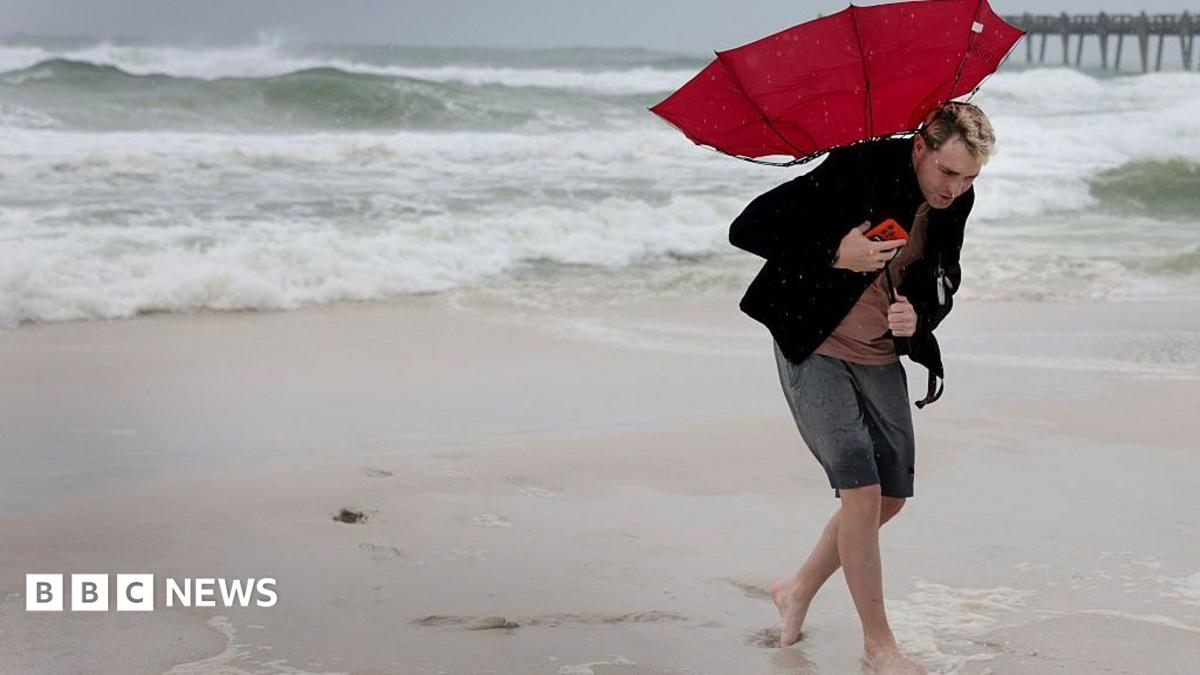
Hurricane Isaias Brings Life-Threatening Flooding and Strong Winds to Florida
Hurricane Isaias is expected to make landfall in Florida, bringing life-threatening flooding and strong winds and forcing thousands of people to evacuate.
Hurricane Isaias Reaches Florida Panhandle
Isaias weakened slightly to become a Category 2 hurricane, with winds of 110 mph (175 kph), as it entered Florida’s western panhandle late Friday night.
Florida, Alabama and Georgia each declared states of emergency as meteorologists warned of life-threatening storm surges that could cause up to 9 feet (2.7 meters) of flooding in some areas.
The National Hurricane Center warned that the storm could bring a “life-threatening storm surge” to the US Gulf Coast.
Mandatory Evacuations Ordered in Florida and Alabama
Florida and Alabama issued mandatory evacuation orders because of the storm.
In Florida, residents in coastal areas were evacuated from areas directly threatened by the powerful hurricane. “Don’t wait! Get out now!” Florida Senator Rick Scott warned in a social media post, urging people in designated areas to leave as soon as possible.
Alabama Governor Kay Ivey ordered the mandatory evacuation of all non-residents, tourists and visitors in major counties likely to be affected by Isaias.
Storm Expected to Move Across Alabama and Tennessee Valley
The National Weather Service announced late Friday that Isaias’ center was expected to move across Alabama and into the Tennessee Valley on Saturday and Sunday after reaching Florida.
As of Friday night, hurricane-force winds extended up to 35 miles (55 kilometers) from Isaias’ center, while tropical storm-force winds reached as far as 205 miles (335 kilometers).
First Hurricane of the Atlantic Season
Hurricane Isaias is the first hurricane of the Atlantic hurricane season, although the season was significantly delayed due to El Niño in the Pacific.
This was the first time in more than 30 years that no hurricanes had formed until October.
Isaias was one of three storm systems affecting North America over the weekend. The other two were expected to hit Mexico and Southern California in the warm Pacific waters caused by El Niño.
Source: www.bbc.co.uk