


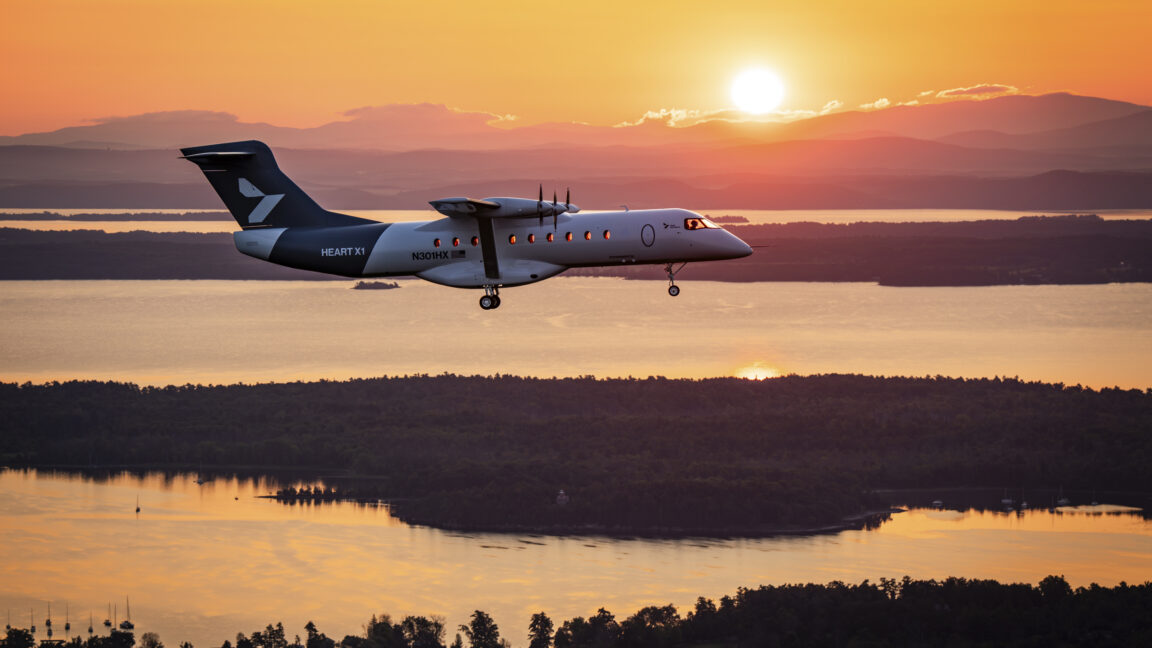
The world’s largest battery-electric aircraft has completed its first flight, remaining airborne for nearly 30 minutes while using approximately $5 worth of electricity. The milestone comes as rising jet fuel prices and geopolitical uncertainty increase interest in more efficient and sustainable aviation technologies.
Heart Aerospace’s test flight featured the company’s X1 electric aircraft demonstrator. Comparable in size to a small regional airliner, the X1 has a maximum takeoff weight of more than 25,000 pounds and is powered by four electric motors mounted on its wings. During its maiden flight, the battery-electric propulsion system delivered more than 1 megawatt of power.
Battery-electric aircraft can offer quieter and cleaner flights by eliminating emissions from burning jet fuel. They may also significantly reduce operating costs, particularly when compared with conventional aircraft exposed to volatile fuel prices and geopolitical disruptions.
However, the successful X1 demonstration does not mean Heart Aerospace plans to commercialize a fully electric passenger aircraft. Current battery technology generally supports only relatively short flights of around 100 to 200 miles. As a result, battery-electric aircraft have largely been limited to emerging air taxi operations from companies such as Joby and Archer.
Instead, testing the X1 and its planned successor, the X2, will support development of Heart Aerospace’s primary commercial aircraft: a 30-seat hybrid-electric regional airliner called the ES-30.
The production aircraft is designed to combine two electric motors with a conventional turboprop engine powered by jet fuel. Heart Aerospace says the ES-30 will be capable of flying up to 125 miles in all-electric mode and reaching approximately 500 miles of range in hybrid-electric operation.
Hybrid-electric aircraft gain momentum as jet fuel prices rise
The ES-30’s 500-mile hybrid range could enable the aircraft to serve popular short-haul routes between major cities in the United States and Europe. United Airlines has committed to eventually purchasing 100 aircraft from Heart Aerospace, while other major airlines have also signed letters of intent, according to Flying magazine.
Source: arstechnica.com