


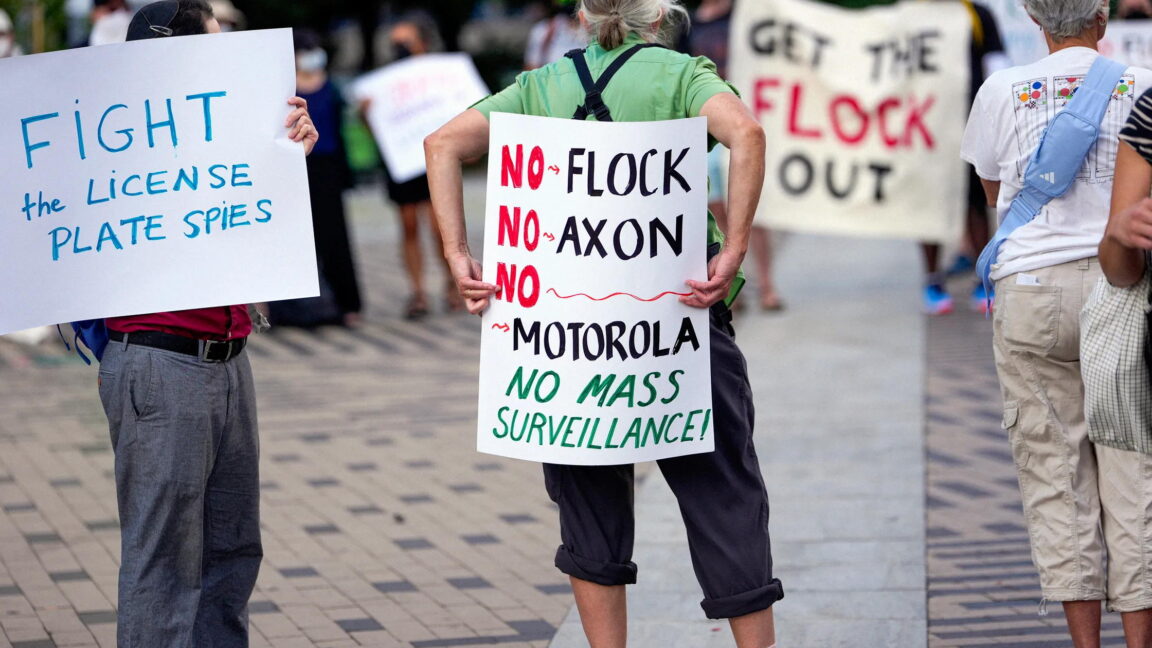
Lawmakers Want States to Restrict Flock Cameras—or Risk Losing Federal Funds
The Department of Transportation calculates the amount of surface transportation funding it provides to states using factors such as the number of roads they have and the volume of traffic they carry. Congress has repeatedly threatened to withhold that funding to pressure states into adopting security measures.
This approach helped establish a national minimum drinking age, standard rules for defining drunk driving and regulations governing billboards along highways. Now, lawmakers are considering using the same strategy to address the use of Flock automatic license plate reader cameras.
Bipartisan bill would block federal funding for Flock cameras
A recently introduced bipartisan bill would prohibit states from using federal funds to purchase Flock cameras. Federal records show that Flock’s lobbying spending in Washington, DC, has remained stable over the past 18 months. The company recently hired a fifth firm to assist with its lobbying efforts.
Growing backlash against surveillance technology
The proposal comes amid broader concerns about emerging technologies, including rogue AI systems, data center construction and the misuse of Flock cameras by law enforcement.
Those concerns have also become a political issue with the upcoming US midterm elections less than two months away. However, it remains unclear whether legislation addressing voters’ concerns will pass Congress, much less receive approval from President Donald Trump.
Police misuse has intensified privacy concerns
The president has expressed support for Flock. The company has told reporters on camera that it supports law enforcement. Lawmakers generally agree that the cameras can assist public safety efforts, but they are frustrated by cases in which police officers allegedly used Flock footage for personal reasons, including stalking a former romantic partner.
At least one report identified 100 alleged instances of abuse involving automatic license plate reader systems over the past eight years.
“Taxpayers should not be forced to shred their own civil liberties or fund the growth of a surveillance state,” Cloud said in a statement. “Flock cameras enable mass surveillance of Americans and violate the Fourth Amendment.”
States have varying rules for automatic license plate readers
Approximately 25 states and US territories have laws governing automatic license plate readers. According to New York University School of Law’s Policing Project, those policies may require greater transparency and the immediate deletion of unnecessary data. However, few measures limit how automatic license plate reader systems can be used.
Cloud called the bill “a first step toward curbing unchecked surveillance” and said it could “protect Americans’ public safety without sacrificing their privacy.”
This story was originally published by Wired.
Source: arstechnica.com