


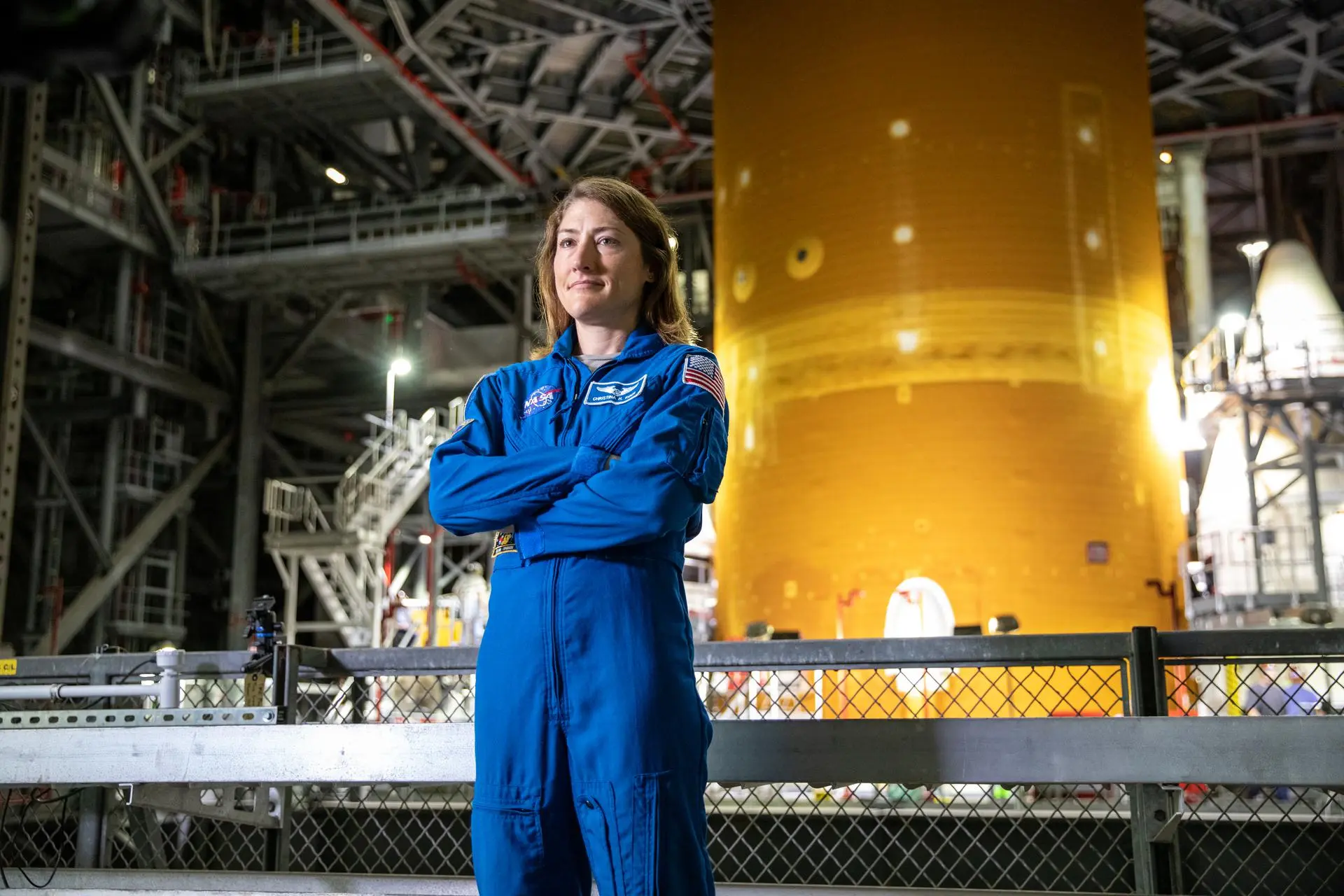
Christina Koch Named NASA Acting Deputy Chief Engineer After Katherine Van Hooser’s Retirement
NASA engineer and astronaut Christina Koch will become NASA’s acting deputy chief engineer on Sunday, Nov. 1, following the retirement of Katherine Van Hooser, who will conclude more than 35 years of service to NASA on Wednesday, Oct. 21.
Christina Koch to Lead NASA Engineering Efforts
In her new role, Koch will lead NASA’s engineering community and support technical oversight, mission readiness, and engineering excellence across NASA programs and projects. The appointment will make Koch an administrative astronaut, making her ineligible for future spaceflight missions.
“Christina has seen NASA engineering from both sides of the equation: developing complex systems on Earth and committing those systems to life in space,” said NASA Administrator Jared Isaacman. “After living and working on the International Space Station for nearly a year and helping lead America into lunar orbit on Artemis II this year, she brings an extraordinary combination of technical expertise, operational experience, and judgment to this role. I look forward to the impact she will have across NASA as we develop the capabilities to return Americans to the moon, build a lunar base, launch nuclear power in space, and ultimately go to Mars.”
“Katherine has been an exceptional leader throughout her career, bringing technical expertise, sound judgment and an unwavering commitment to mission success to some of NASA’s most complex engineering challenges,” said Amit Kshatriya, NASA Deputy Administrator and Chief Engineer. “Her leadership has strengthened our engineering community and helped guide the agency through critical milestones and transitions. Christina brings a unique combination of engineering expertise, operational experience, and proven leadership, both on the ground and in space. I am grateful for Katherine’s outstanding service, and I am confident that Christina will continue the tradition of technical excellence that is essential to everything we do at NASA.”
Christina Koch’s NASA and Spaceflight Experience
Koch most recently served as a mission specialist on NASA’s Artemis II mission in April, where she helped conduct the first crewed lunar orbit in more than 50 years. She previously spent 328 consecutive days on the International Space Station, setting a record for the longest single spaceflight by a woman. She also participated in the first all-female spacewalk.
Koch began her NASA career as an electrical engineer at Goddard Space Flight Center in Greenbelt, Maryland, where she developed scientific instruments for space missions. Before being selected as an astronaut in 2013, her experience also included scientific field engineering in the Antarctic and Arctic.
Since becoming an astronaut, Koch has held leadership positions at NASA’s Astronaut Office and at NASA’s Johnson Space Center in Houston. Her new role brings together her technical expertise, operational experience, and firsthand understanding of the demands of human spaceflight.
Katherine Van Hooser’s NASA Career
Van Hooser joined NASA’s Marshall Space Flight Center in Huntsville, Alabama, in 1991 and began a distinguished career in propulsion engineering and technical leadership. Her early work focused on the turbomachinery of liquid rocket engines before she became chief engineer for the Space Shuttle’s main engines, leading engineering efforts through the final 21 shuttle flights.
She later served as the first lead engineer for the liquid engine element of the Space Launch System, contributing to propulsion systems supporting NASA’s Artemis mission.
As Marshall’s chief engineer and, starting in 2023, NASA’s deputy chief engineer, Van Hooser provided technical leadership and oversight across NASA programs. Her guidance through complex engineering challenges and organizational transitions helped maintain continuity, strengthen collaboration, and keep mission readiness at the forefront of NASA’s work.
For more information about NASA’s mission, visit the NASA website.
George Alderman / Cheryl Warner
Headquarters, Washington
202-358-1600
[email protected] / [email protected]
Source: www.nasa.gov