


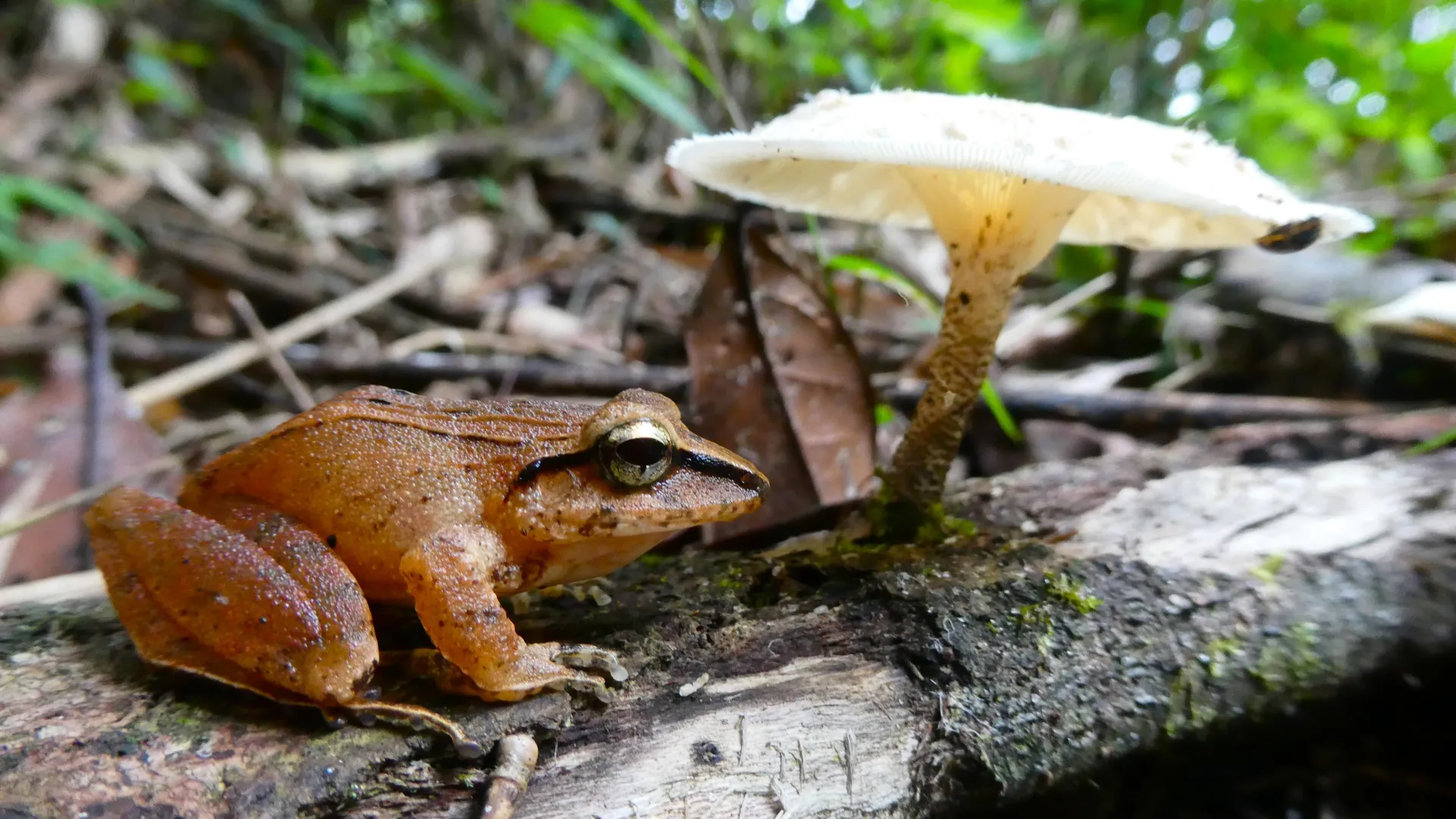
After nearly 50 years of uncertainty over the disappearance of frogs from Brazil’s Atlantic Forest, researchers have found compelling evidence that the fungal disease chytridiomycosis caused a major local decline. By analyzing more than 370 amphibian specimens preserved in museums, scientists linked the arrival of Batrachochytrium dendrobatidis to the collapse of frog populations at Brazil’s Boraceia Biological Station in the late 1970s and early 1980s, while new field surveys suggest that many surviving species have since recovered.
A 50-year-old mystery in Brazil’s Atlantic Forest
The Atlantic Forest is one of the world’s richest regions for amphibians. Researchers recorded a dramatic decline in frog populations there in the early 1970s, but the cause remained unclear.
Now, a study by researchers at the Smithsonian’s National Zoo Conservation Biology Institute (NZCBI) and the Center for Conservation Genomics at Pennsylvania State University (PSU), published in Molecular Ecology, points to chytridiomycosis as a likely explanation.
Chytridiomycosis is caused by the microscopic fungus Batrachochytrium dendrobatidis, commonly known as B. dendrobatidis or Bd. Scientists believe the pathogen originated in Asia and spread around the world during the 1970s and 1980s. However, the fungus was not formally identified and described until 1999, long after amphibian populations had begun to collapse.
By then, hundreds of amphibian species worldwide had been driven to extinction, and some had already disappeared. Because so many populations declined before scientists knew the fungus existed, determining whether Bd was responsible proved especially difficult.
“Nearly 50 years later, we are still uncertain as to what caused many amphibian extinctions throughout history, making these declines one of the most persistent cold cases in wildlife epidemiology,” said Jack Boyett, an NZCBI graduate fellow and PSU doctoral candidate who led the study.
One of these long-standing mysteries centers on Boraceia Biological Station in Brazil’s Atlantic Forest, where amphibian populations declined significantly between 1979 and 1982.
Some researchers have suggested that climate change or extreme weather events may have triggered the disappearances. The new findings, however, indicate that the emerging fungal disease was prevalent in the area at approximately the same time.
“Although environmental factors may play a role, our findings most directly relate to the chytrid fungus and reveal that regional introductions of this pathogen coincide with these unexplained disappearances of amphibians,” Boyett said.
Museum specimens reveal a fungal outbreak
To investigate what happened, the researchers turned to an unexpected source of evidence: frogs preserved in museum collections decades ago.
The Smithsonian National Museum of Natural History houses specimens collected by William Ronald Heyer, a former curator of amphibians and reptiles. Heyer conducted five collecting expeditions at Boraceia—two in the 1970s, before the major population decline, and three in the 1980s, after it occurred.
These preserved animals gave scientists a rare opportunity to examine the period before and after the disappearances. By testing samples collected at different times, the researchers could investigate when the pathogen arrived and how quickly it spread.
The team analyzed samples from more than 370 preserved amphibians representing 17 species, looking for evidence of chytrid infection and tracking how frequently the fungus appeared over time.
No evidence of chytrid infection was found in specimens collected before 1979. More than half of the specimens collected during the 1980s, however, tested positive for the fungus.
This rapid increase suggests that the pathogen arrived in and spread through local amphibian communities around the same time that frog populations were collapsing.
The researchers also found an unexpected pattern: species that suffered the most severe declines showed no detectable signs of infection in the preserved specimens, while species whose populations remained relatively stable frequently carried the fungus.
At first glance, this may appear to contradict the idea that chytrid caused the disappearances. The researchers believe the pattern may reflect differences in how species respond to the disease.
Some frogs may be naturally resistant to infection and able to survive while carrying the fungus. More vulnerable species, by contrast, may have had few or no infected individuals collected because they died soon after becoming infected.
“It’s important to keep in mind that not all species suffered catastrophic losses at Boraceia,” Boyett said. “The species that did not decline may have been naturally resistant to the fungus and were able to become infected without suffering mass mortality. In contrast, the species that declined most dramatically were so susceptible that the infected frogs may have died before Heyer collected them.”
Taken together, the results suggest that chytrid can spread rapidly among frogs with little previous exposure to the disease, with potentially devastating consequences for species that cannot survive infection.
Decades-old collections help solve wildlife mysteries
For Michael Campana, an NZCBI genomicist who contributed to the research, the study demonstrates the scientific value of natural history museums.
Specimens preserved decades ago may contain biological evidence that researchers at the time had no way to recognize. Modern testing methods allow scientists to revisit these collections and investigate outbreaks that occurred long before the causative pathogen was discovered.
“Museum collectors could never have predicted how important their collections would become to modern conservation challenges, but without them we would never have been able to detect pathogens that went unnoticed for decades or reconstruct disease outbreaks that remained mysterious,” Campana said.
Understanding past outbreaks may also help scientists anticipate future threats. One growing concern is Batrachochytrium salamandrivorans, also known as B. salamandrivorans or Bsal. The fungus threatens salamander populations in Europe and may pose a serious risk to salamanders in North America.
By reconstructing how fungal diseases emerged, spread and affected different species, researchers hope to improve the ability to identify and respond to similar threats before they cause widespread damage.
Brazilian frogs show signs of recovery
Despite the severe losses recorded decades ago, the latest findings also offer evidence of recovery.
Working with researchers from the University of São Paulo, the team visited Boraceia six times between 2022 and 2024 to survey the amphibians living there today.
Researchers found 12 of the 17 species represented in Heyer’s museum collection. The remaining five have not been found, and their current status is uncertain. Some may have disappeared from the site altogether.
Nevertheless, the surveys indicate that most amphibian species at Boraceia have recovered from the severe declines of the early 1980s.
The fungus has not disappeared. Chytrid infections remain present among local frogs, but the infection patterns suggest that species previously hit hardest by the disease may have developed greater resistance over successive generations.
This increased resistance may help explain why many populations have survived and recovered despite continued exposure to the pathogen.
The finding highlights an important distinction between infection and death. A species can carry a dangerous pathogen without experiencing fatal population losses, particularly if its members can survive the infection.
What the findings mean for amphibian conservation
Although the evidence strongly implicates chytrid in Boraceia’s historical decline, the researchers caution that the findings apply specifically to this location. They cannot automatically explain amphibian disappearances elsewhere in the Atlantic Forest.
Even so, the study provides a convincing explanation for a long-standing local mystery and demonstrates how historical specimens can help reconstruct poorly understood disease outbreaks.
The investigation is continuing. Researchers are examining DNA recovered from museum specimens to identify the genetic mechanisms that influenced how amphibians responded to chytrid infections in the past. These analyses could help explain why some species became extinct while others survived.
Another project is using ancient environmental DNA to fill gaps in the historical specimen record. This approach searches for genetic traces left by organisms in their surroundings, potentially revealing evidence of species and pathogens that were never directly collected.
Together, these efforts may provide a clearer history of how chytrid fungi emerged, spread and influenced amphibian biodiversity over the past century.
By identifying the biological changes that helped some frogs survive and recover, scientists may also gain insights that could help protect vulnerable species from future fungal outbreaks.
Source: www.sciencedaily.com