


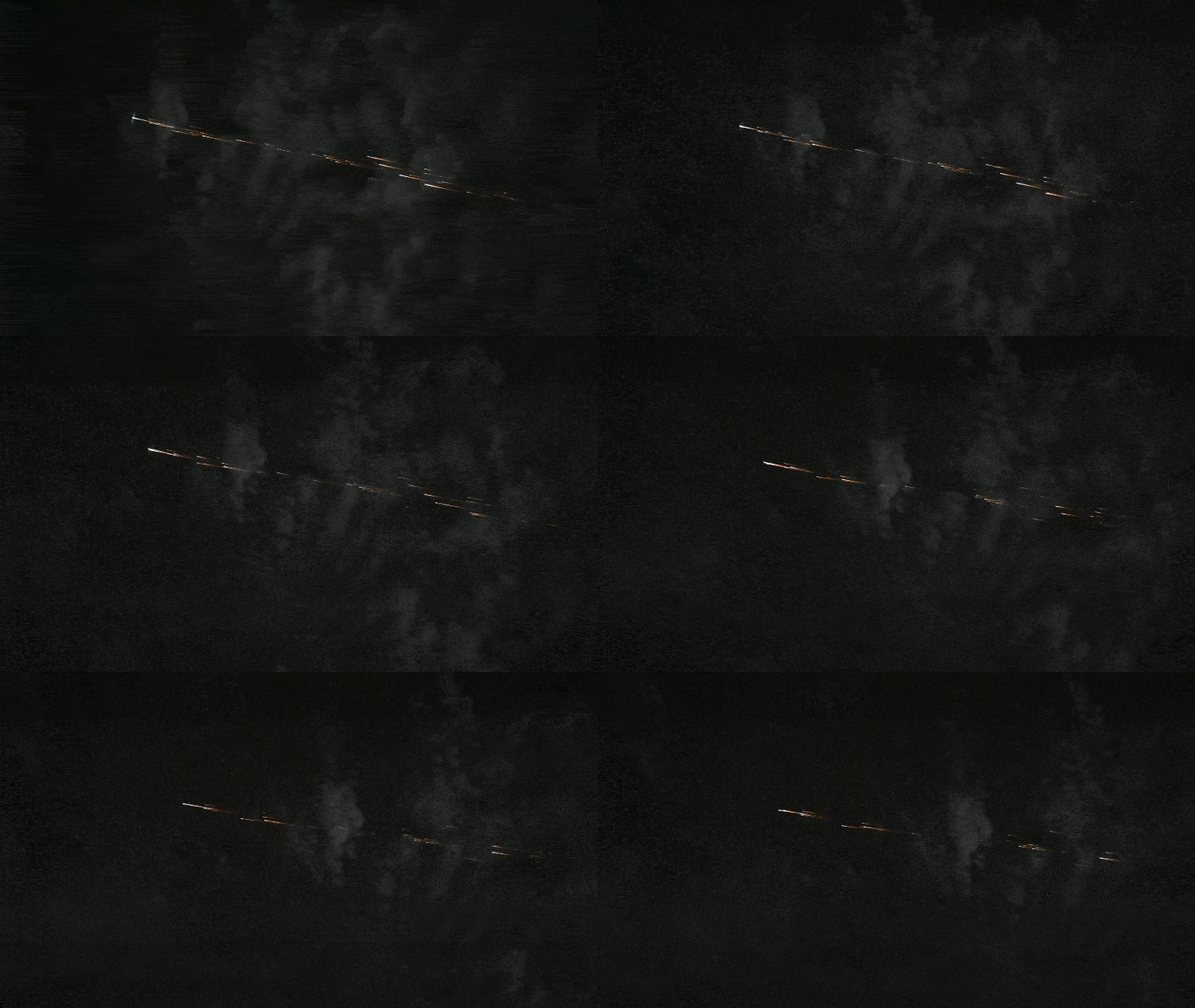
NASA astronaut Chris Williams photographed a bright fireball streaking over West Africa from the International Space Station on April 27, 2026. The object was initially thought to be a meteor or breaking-up satellite, but it was later identified as the burning remains of the Soyuz rocket that launched the Russian Progress 95 cargo spacecraft to the station.
A fireball seen from orbit
Williams was aboard the ISS from November 2025 to July 2026. From the station’s cupola—a large, nearly dome-shaped set of windows that looks down on Earth—he captured photos and video of the debris spreading across the night sky.
“We were just passing over West Africa when we saw a bright object penetrating the upper atmosphere directly below us,” Williams wrote in a post on X. “We saw its tail grow and then break up into a shower of smaller pieces,” he added. “It was a very light show!”
Williams had been looking toward Earth to watch the Russian Progress 95 cargo spacecraft, which had delivered food, fuel, supplies and additional equipment to the ISS earlier that day. He initially thought the fireball might have been “orbital debris or a satellite that broke up as it entered the atmosphere.”
Live Science sister site Space.com later reported that Williams had actually seen the remains of the Soyuz rocket that carried Progress 95 into orbit from the Baikonur Cosmodrome in Kazakhstan.
Why the rocket broke apart
After the rocket deployed the resupply spacecraft into low-Earth orbit, its fairing and booster began falling back toward Earth. The components overheated as they entered the upper atmosphere, broke into smaller pieces and were largely vaporized by intense aerodynamic friction, according to Space.com.
A similar fireball was observed over Australia in August 2023 when another Soyuz rocket re-entered the atmosphere.
Russia’s previous resupply mission, Progress 94, also made headlines earlier in 2026. One of its antennas failed to deploy after the spacecraft separated from its Soyuz rocket, forcing cosmonauts to use a remote-control backup system to dock the vehicle with the ISS.
More than a visual spectacle
Fireballs in Earth’s skies have historically been associated mainly with meteors. A fireball seen over the United States this spring produced a massive sonic boom over Ohio, while another object reportedly broke through the roof of a house in Houston. In a NASA statement, Williams said the object he saw could also have been caused by meteor activity, although he considered a Soyuz rocket more likely.
Fireballs caused by human-made objects may become more common as the number of spacecraft orbiting Earth continues to grow. As the saying goes, “What goes up must come down.”
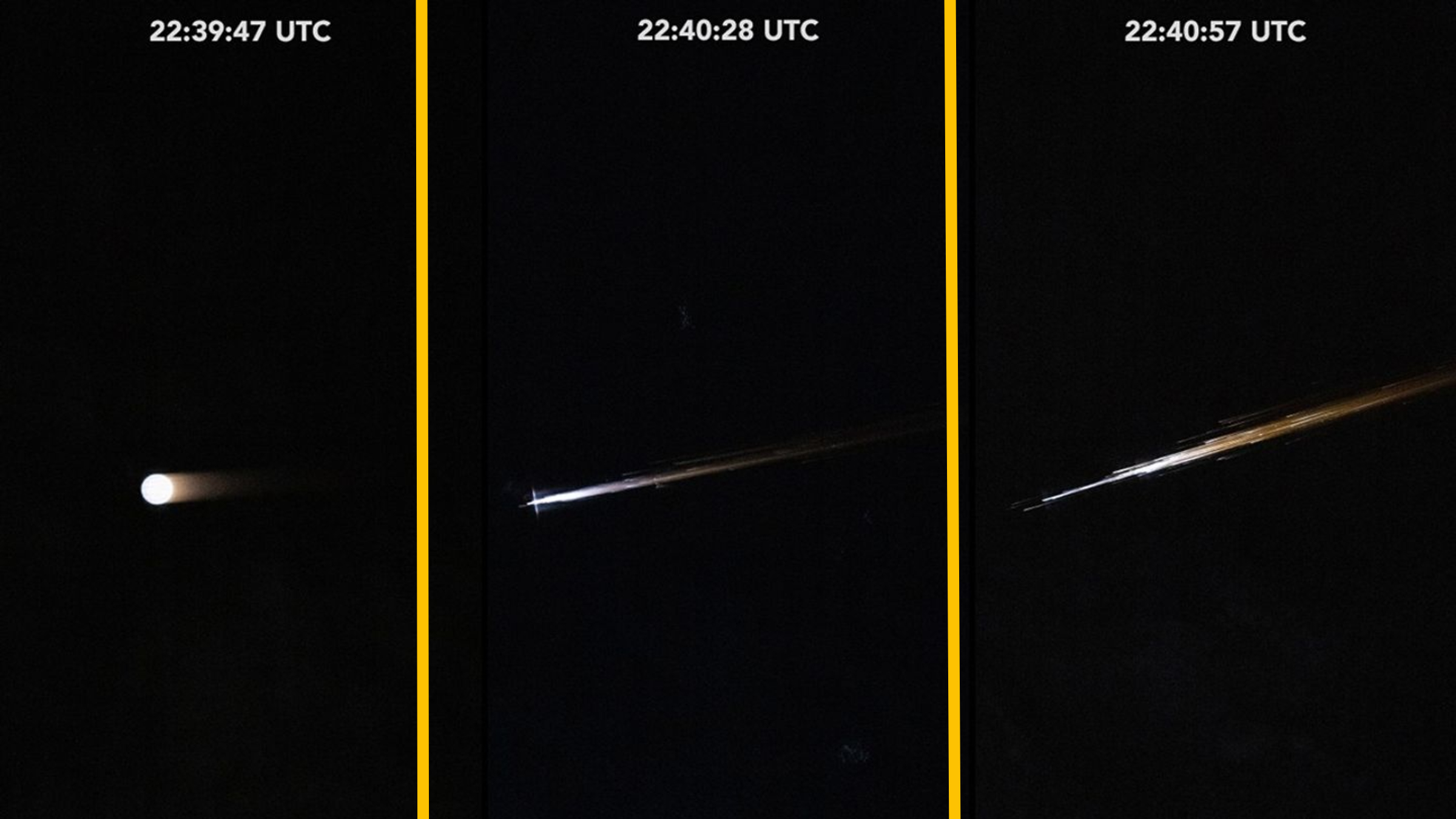
Most spacecraft and large pieces of space debris burn up about 50 miles (80 kilometers) above Earth’s surface, just below the Kármán line, an imaginary boundary commonly used to mark the edge of space. Although re-entries can create spectacular scenes like Williams’ photograph, scientists are increasingly studying their effects on the upper atmosphere.
Researchers have detected a sharp increase in metal pollution in the atmosphere from spacecraft that evaporate during re-entry. The consequences remain uncertain, but some scientists have suggested that the material could affect the ozone layer or even alter Earth’s magnetic field.
As more spacecraft return through the atmosphere, the chance of debris reaching the ground also rises. The risk is higher when objects do not burn up completely. In March 2024, the remains of a 3-ton battery pack discarded from the ISS survived re-entry and crashed into a Florida home.
Related topic
Earth seen from the International Space Station
Source: www.livescience.com