


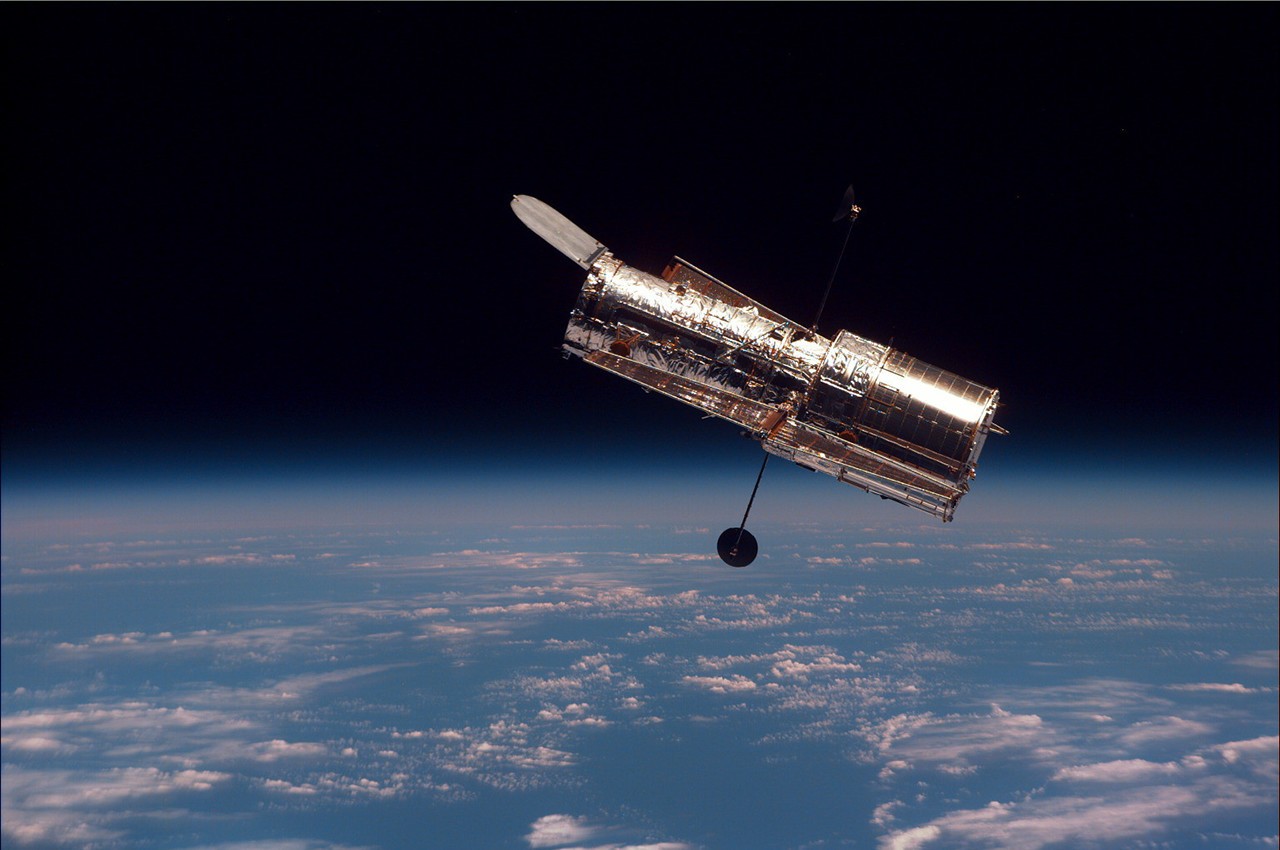
NASA is seeking information from commercial space companies about ways to extend the Hubble Space Telescope’s scientific mission, including raising its orbit, enhancing its capabilities, and safely disposing of the telescope when its mission ends. The agency issued the request on Oct. 29 and expects any servicing mission to be completed by 2032, before Hubble is projected to re-enter Earth’s atmosphere in 2033 or 2034.
“There is still important science ahead of Hubble, and we must consider every reasonable opportunity to continue delivering it for as long as possible,” NASA Administrator Jared Isaacman said. “If there are innovative, cost-effective ways to extend the life of assets already in orbit, we have a responsibility to the American taxpayer and the scientific community to explore it. Extending Hubble’s life means more discoveries, more science, and more opportunities to expand our understanding of the universe.”
NASA explores commercial servicing options
The request for information asks industry to provide details about capabilities for space services supporting Hubble. Potential proposals could include a mission to move the telescope to a higher orbit and extend its scientific life, services to enhance its capabilities, or a safe, controlled re-entry into Earth’s atmosphere or decommissioning in orbit at the end of the mission.
“Hubble is a national icon that has fundamentally changed the way humanity views space for more than 35 years,” said Nicki Fox, deputy administrator for the Science Mission Directorate at NASA Headquarters in Washington. “In recent years, the commercial industry has evolved rapidly, providing new capabilities for in-space satellite acquisition and servicing. Given the time until the expected Hubble reentry, we hope to explore a wide range of possibilities for pushing Hubble to higher orbits while developing a follow-on flagship mission.”
The request for information is available online. Responses will be accepted until Monday, November 30, at 3:00 p.m. EST.
Hubble’s declining orbit
Like all spacecraft in low Earth orbit, Hubble’s altitude gradually decreases because of atmospheric drag. The telescope does not have a propulsion system to maintain its orbit, and analysis predicts that it will likely re-enter the atmosphere sometime between 2033 and 2034. NASA therefore anticipates that any mission to service or reposition Hubble would need to be completed by 2032.
The Hubble Space Telescope has operated for more than 30 years and continues to make groundbreaking discoveries that shape scientists’ fundamental understanding of the universe. Hubble is an international cooperation project between NASA and ESA, the European Space Agency.
NASA’s Goddard Space Flight Center in Greenbelt, Maryland, manages telescope and mission operations. Denver-based Lockheed Martin Space also supports mission operations at Goddard. The Space Telescope Science Institute in Baltimore, operated by the Association of Universities for Astronomical Research, conducts Hubble science operations for NASA.
Media contacts
Alyse Fisher
Headquarters, Washington
202-358-2546
[email protected]
Claire Andreoli
Goddard Space Flight Center, Greenbelt, Maryland
202-286-1940
[email protected]
Source: science.nasa.gov