


I have dedicated over 20 years to studying climate tipping points1. My growing concern is that these critical issues, which threaten society, are often overlooked by scientists. The potential collapse of key Earth system components—such as ice sheets and ocean circulation—could dramatically alter our warming planet and lead it into an irreversible state2. However, the most significant risk may not be this endpoint.
Is this monstrous web of ocean currents heading for collapse? The race is on to find it
The process of how we arrive at such a situation is crucial. The urgency to understand this transition is missing from current analyses, as the phenomena occur at the intersection of climate and weather scales. While slope analysis tends to focus on large global climate changes over decades, weather events happen quickly and locally. Analyzing their interaction reveals that transitioning from one climate state to another is unstable and not linear.
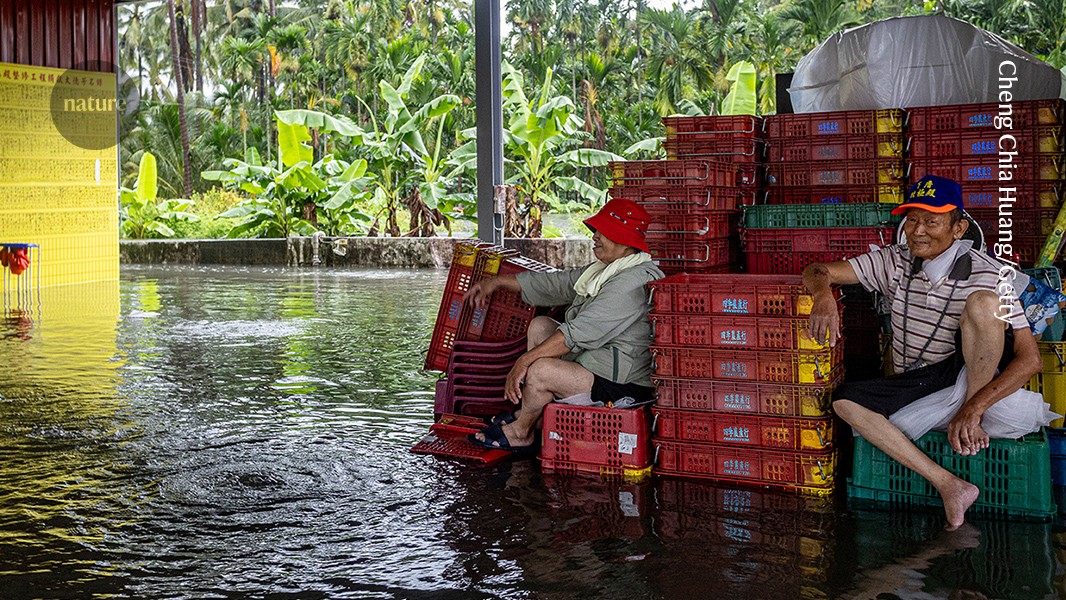
Consequently, climate change will result in periods of increasingly dramatic weather fluctuations instead of abrupt changes in average conditions. This shifting climate leads to fluctuations in crop yields, flash floods, and extreme storms, straining the economy through disrupted supply chains and heightened insurance losses. Society is ill-prepared since risks related to tipping points are often excluded from assessments.
The urgency of this issue cannot be overstated. Earth’s subsystems—encompassing oceans, cryosphere, and biosphere—are already appearing destabilized. Our planet is on a trajectory towards climate free fall.
The Climate is Becoming Unstable
By definition3, a tipping point is reached when a series of interconnected changes amplify each other, leading the whole system to become unstable and uncontrollably shift to a new state. An example of this is the loss of polar sea ice, which reduces sunlight reflection, further heating the Earth’s surface and accelerating ice loss. This vicious feedback loop exemplifies a tipping point beyond which the climate cannot revert to its previous state.
Are we all doomed? How to deal with the terrifying uncertainty of climate change
Before tipping points are reached, the climate system becomes increasingly unstable, leading to notable fluctuations. Increased variability is a well-documented characteristic of these “nonlinear dynamical systems” nearing critical thresholds4,5. Unfortunately, many scientists and policymakers have not yet recognized the intensity of these transitional changes.
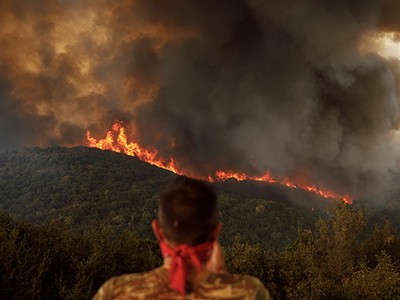
The Earth will experience a progressively unstable climate. This instability will lead to significant variations in meltwater flows, ocean circulation, and sea ice extent. Such changes will increase the frequency and severity of extreme weather events, including heat waves, droughts, cold waves, and floods.
Initially, the scale of the impact may not be apparent. Ice sheets and ocean currents are colossal, leading to relatively slow and delayed responses to warming. However, once critical temperature thresholds are surpassed, these systems will take longer to collapse—but collapse is inevitable (see Getting into Trouble).

Source: A. Leverman
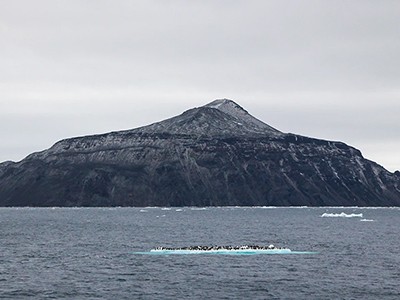
The West Antarctic Ice Sheet6 and Greenland7 have already surpassed their tipping temperatures. Arctic sea ice is expected to reach this threshold within a few years. Scientific understanding regarding the Atlantic Ocean’s tipping point remains incomplete8. The time between crossing the conversion temperature and hitting the tipping point is marked by dramatic variability increases.
A recent study on early warning signals for tipping points highlighted that escalating climate change serves as an indicator of diminishing stability. Unfortunately, the role of instability-induced variability in climate impacts has largely been ignored.
Modern economies have adapted to a relatively stable climate baseline. Agricultural productivity, infrastructure design, insurance pricing, and financial risk management all depend not only on expected average conditions but also on the predictability of fluctuations.
Protect Antarctica – or risk accelerating planetary meltdown
Farmers must prepare for potential yield losses, while architects and urban planners need to account for extreme temperatures, winds, and rainfall. Financial institutions and insurance companies should factor in the cost and scale of potential losses. When these factors become unpredictable, normalcy evaporates—life becomes uninsurable, and the world becomes unsafe.
Communities are already experiencing the effects of increased extreme weather events9. Once a climate subsystem begins to disintegrate, such events can spiral into a vicious cycle. For instance, as the Greenland ice sheet nears its tipping point, it becomes more susceptible to surface melting. This regional instability leads to variable amounts of meltwater being introduced into the North Atlantic Ocean.
These injections could amplify variability in ocean convection and mixing, resulting in an increased extent of Arctic sea ice. Ultimately, this will lead to significant fluctuations in sea surface temperatures in the Atlantic Ocean, affecting the stability of the jet stream and, consequently, weather patterns across Europe, North America, and Asia.
The Climate is Changeable and the Weather is Unpredictable
Source: www.nature.com