


New Prehistoric Animal from Tanzania May Rewrite the Timeline of Dinosaur Evolution
An international research team has identified a previously unknown prehistoric animal that lived in what is now Tanzania during the Triassic period, approximately 240 million years ago.
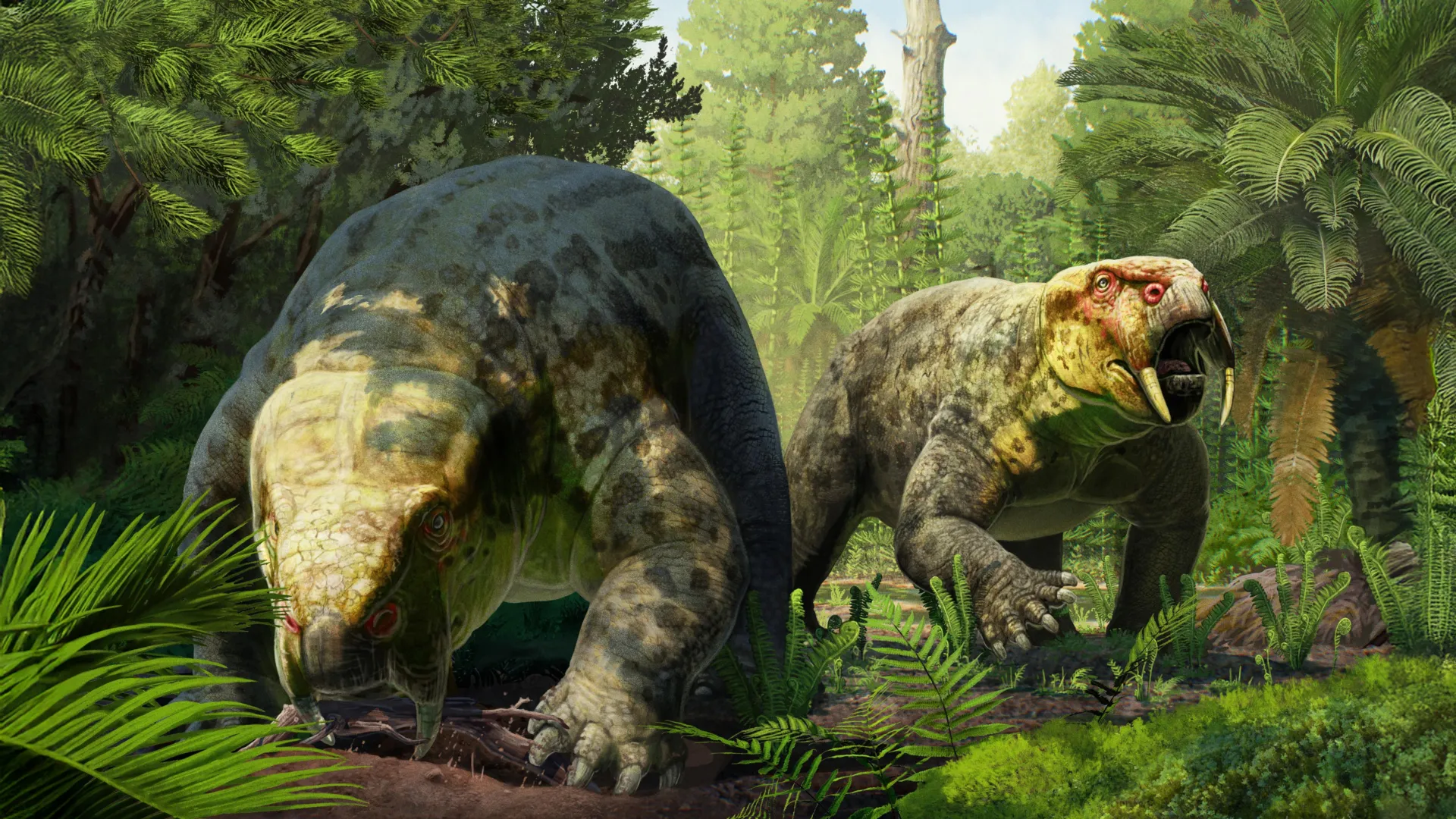
Named Dinodontosaurus ishyavamanda, the new species could do more than expand the fossil record. Researchers led by the University of Bristol say the discovery may help scientists date one of the world’s most important fossil sites more precisely and refine the chronology of the earliest stages of dinosaur evolution.
The findings were published on September 15 in the Journal of Vertebrate Paleontology. They suggest that some Tanzanian fossils once considered possible evidence of the oldest dinosaurs may be younger than previously thought.
A Fossil Mystery Dating Back More Than 60 Years
The story began in 1963, when a British expedition collected large quantities of synapsid fossils from what is now Tanzania. Synapsids are vertebrates that formed a diverse and widespread lineage long before dinosaurs came to dominate terrestrial ecosystems.
The fossils eventually became part of the collection at the Natural History Museum in London. Although many have been studied, others have only been partially examined, leaving unanswered questions about the animals they represent and what they reveal about ecosystems from approximately 240 million years ago.
Among the material was an undescribed skeleton belonging to a group of plant-eating synapsids known as dicynodonts. Researchers examined the specimen alongside recently discovered skull fragments.
Their analysis showed that both specimens belonged to the genus Dinodontosaurus. This was unexpected because, until now, confirmed examples of the genus had been found only in South America.
Detailed anatomical comparisons showed that the Tanzanian fossil represented a species previously unknown to science. Researchers named it Dinodontosaurus ishyavamanda. The species name refers to the land of the Wamanda people in the Tanzanian region where the fossils were discovered.
A New Link Between Fossils in Africa and South America
The rocks containing Dinodontosaurus ishyavamanda are the same geological deposits that also produced a fossil proposed to be one of the earliest possible dinosaurs.
Scientists had previously linked these Tanzanian rocks to deposits in South Africa because the two regions appeared to contain some of the same fossil genera. The South African rocks were thought to date to the Middle Triassic.
The discovery of the new Dinodontosaurus species changes that comparison.
Because the same genus is now known from Tanzania and South America, researchers have a new way to correlate sequences of fossil-bearing rocks in the two regions. The presence of Dinodontosaurus indicates that the deposits at both locations are likely to be similar in age.
Recent radiometric dating of South American rocks suggests that the lineage containing these early dinosaurs is 10 million years younger than comparable rocks in South Africa.
This strengthens the argument that the Tanzanian deposits should not be considered the earliest potential evidence of dinosaurs. Scientists may now need to reconsider both the timing and geography of the first stages of dinosaur evolution.
What the Discovery Reveals About Dinosaur Origins
“Our discovery marks the first confirmed record of this genus, Dinodontosaurus, outside of South America,” said lead author Heidi George, a PhD student in the School of Earth Sciences at the University of Bristol. “The discovery links fossil-bearing rocks from Tanzania and South America, showing they are of comparable age.”
“This helps confirm that Tanzania’s earliest dinosaur candidate is probably no older than South American dinosaurs and refines the chronology of dinosaur origins. Future research projects will examine remaining fossil material and investigate the biomechanics and ecology of Triassic dicynodonts.”
A 30-Year Journey from Discovery to Publication
The discovery also has an unusually long scientific history.
Nigel Larkin, a palaeontologist, co-author and visiting research fellow in the School of Biological Sciences at the University of Reading, studied dicynodont skeletons decades ago and suspected that they represented a new species.
“Although I studied this dicynodont skeleton in 1994 for my master’s thesis at University College London and determined that it was a new species to science, it took me nearly 30 years to write it up for publication,” Larkin said. “I’m glad I waited, because the international team led by Heidi George has done an amazing job of fleshing out this story in far more detail and depth than I could have achieved alone.”
“Technology has also improved tremendously over the past 30 years. Using things like micro-CT scans, we can now examine many more specimens than we could have imagined in the 1990s, and international collaboration has become much easier. And what’s 30 years? That’s a blink of an eye compared to the age of this prehistoric specimen.”
Why Museum Fossils Still Matter to Science
The study highlights the scientific value of revisiting fossils that have been stored in museum collections for decades.
Dr Mike Day, Curator of Non-Mammalian Tetrapods at the Natural History Museum in London, said: “This fossil specimen from Tanzania has been in our care for over 60 years, and it’s great that its true identity has now been revealed. Dinodontosaurus from this ancient site in South America and eastern Africa offers a glimpse of what Earth looked like 240 million years ago.”
“This shows how revisiting museum collections can change our understanding of the past as much as discovering new fossils in the field, and demonstrates the importance of looking after these precious records of life on Earth.”
Scientists still have substantial material to study. Large portions of the Tanzanian Dinodontosaurus remains, especially the postcranium—the body bones other than the cranium—have not yet been examined in detail.
Future research will investigate these sites more closely and compare the Tanzanian fossils with Dinodontosaurus specimens from South America.
The research team will also study Dinodontosaurus and related dicynodonts. The work could help explain how several large herbivores coexisted in Triassic ecosystems millions of years before the rise of dinosaurs.
Source: www.sciencedaily.com