


A groundbreaking review published in Appetite challenges the long-held notion that drinking water suppresses appetite at the dining table. Conversely, a related study in Food Quality and Taste reveals that spicy salsas, which dieters often avoid, can actually lead to reduced food consumption.
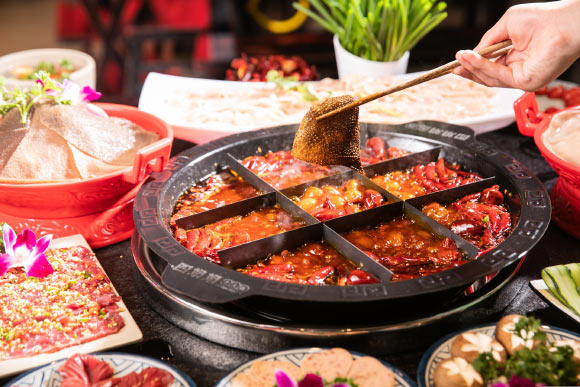
Recent findings challenge two prevalent nutritional beliefs: that water aids in appetite suppression and that dieters should avoid spicy foods. The evidence suggests the opposite: drinking more water might actually increase food intake, while spicy foods can slow eating speed and promote less consumption. Image provided by: Yukuaikuai.
Universal dietary advice encourages individuals to drink more water to regulate weight and energy levels.
This strategy is widely accepted, with a 2019 survey revealing that increasing water intake ranked as the third most popular method for weight management, utilized by 42% of participants attempting to lose weight.
The logic behind this recommendation seems straightforward: consuming water before or during meals is believed to induce a feeling of fullness, thereby reducing overall caloric intake.
As noted by Professor Paige Cunningham from Cornell University, “The claim that drinking water can lead to sustained fullness is commonly accepted.” However, she adds, “Water exits the stomach quickly, meaning it may not keep you full for long.”
Interestingly, Cunningham argues that water might actually facilitate increased consumption by helping us eat faster and enhancing our enjoyment of food by reducing dry mouth.
The researchers compiled data from two crossover studies where participants consumed 650 grams of either beef chili or chicken tikka masala along with 450 grams of water, all while being recorded.
In these experiments, varying spice levels were integrated by adjusting the proportions of spicy and sweet paprika.
Analysis of the recorded videos assessed sip counts, bite sizes, overall food intake, and the frequency of switching between food and drinks.
Each additional 100 grams of water consumed corresponded with an increase of about 39 grams in food intake and an increase of roughly 49 calories.
Moreover, participants who frequently alternated between bites of food and sips of water consumed even more; each switch added approximately 4.4 grams to their total consumption.
A separate investigation involved 49 adults who were offered tortilla chips accompanied by either mild or spicy salsa over two weeks. The only variation in the study was the cayenne content in the salsa.
The spicier salsa led to a 28% reduction in total snack intake, despite the chips remaining constant. Participants consumed the spicier snacks approximately 30% more slowly, which the researchers suggest could account for the decreased intake. The heat from the spices likely contributed to this slower eating pace, ultimately leading to lower consumption.
Water consumption was consistent across both spicy and mild snacks; hence, it was not a factor in the intake reduction.
Professor Cunningham concluded, “The findings from both studies affirm that food characteristics and eating habits significantly influence our consumption, often without our awareness. We found that increased water intake correlated with higher consumption, while spicier snacks did the opposite, encouraging slower eating and reduced overall intake.”
_____
Paige M. Cunningham and John E. Hayes. 2026. Fluid intake, sip-to-sip switching, and drinking behavior are associated with food intake during meals of varying spiciness: a secondary analysis of two randomized crossover studies. Appetite 226: 108698; doi: 10.1016/j.appet.2026.108698
Paige M. Cunningham et al. 2026. Increasing the spiciness of snacks slows eating speed and reduces food and energy intake. Food Quality and Taste 143: 105951; doi: 10.1016/j.foodqual.2026.105951
Source: www.sci.news