



Every week, new polls generate alarming headlines about the future. More people than ever fear that their children will be less wealthy, that their countries are moving in the wrong direction, and that the world is becoming less secure.
Pessimism about the future is particularly common in Western countries. At first glance, that outlook seems understandable. People face numerous reasons for concern, including the threat of war, the risks associated with artificial intelligence, and climate change.
AI has a democracy problem — here’s why
In 2026, two out of five Americans told pollsters that they did not think the United States would still exist in 2276, the year of the nation’s 500th anniversary (go.nature.com/4gdgmvx). Another poll found that most respondents believed the United States would be less influential, more politically divided, and economically weaker in 2050 than it is today.1 Britain and France, along with Lebanon and Morocco, ranked well below the global average in a 2025 survey examining people’s views of their countries’ economic prospects (go.nature.com/4x5zrmc).
Elsewhere, however, the future looks considerably brighter. Research by UNICEF, the United Nations children’s charity, involving 55 countries, found that attitudes towards the future vary widely, even when people face similar global challenges.2
These findings suggest that optimism about the future depends less on objective conditions than on personal characteristics, including where people live, their income, culture, and age. Here’s how these factors shape people’s expectations.
How demographic trends shape optimism about the future
Optimism is not simply a rational assessment of what is likely to happen, as some scientists believed until the 1960s. Instead, it is “a mood or attitude associated with expectations about the social or material future — that is, what the evaluator considers socially desirable”, wrote anthropologist Lionel Tiger in Optimism (1979).
This mood focuses more on possibilities and direction than on present-day happiness. As a result, a person’s current wealth and well-being do not necessarily determine how optimistic they feel about the future.
This helps explain why optimism is often strongest in low- and middle-income countries (see ‘Mixed outlook’). For example, 82% of young people in Indonesia aged 15–24 believe that the world is improving with each generation. In France, only 42% of young people share that view.2

Source: Reference 2
This geographical divide is partly related to age. As people grow older, they become 1% less likely to believe that the future will be better.2 Around age 55, pessimists begin to outnumber optimists. Western countries also have some of the world’s oldest populations: 31% of people in the United Kingdom, 30% in the United States, 38% in Germany, and 34% in France are aged over 55. This helps explain why these countries tend to be more pessimistic on average.
The countries with the most positive outlooks generally have younger populations. In 2025, these included Kenya, where 7.5% of the population was aged 55 or older; Syria, at 11%; South Africa, at 12%; Saudi Arabia, at 13%; and Colombia, at 18% (go.nature.com/4g6xufy). By contrast, European countries dominated the group with the lowest levels of hope. Bulgaria, Bosnia and Herzegovina, Austria, and Belgium were among the five most pessimistic countries, and each had more than one-third of its population aged 55 or older.
Even in pessimistic Western countries, younger people remain more hopeful than older generations about a range of issues, including the prospects for peace and economic growth (go.nature.com/4g6xufy).
Income is another factor that can work against optimism in wealthy countries. Up to a certain point, greater wealth is associated with greater happiness. At the same time, however, wealthier people can become more pessimistic about the future of their countries and the world. Western countries often rank highly in global happiness surveys (go.nature.com/4x7qfI1), yet their citizens also express some of the greatest doubts about the future.4
Why we need to measure people’s happiness — lessons from a global study
Expected economic growth appears to be more important for optimism than economic growth that has already occurred.5 This suggests that optimism is driven more by possibilities and expectations than by present circumstances (go.nature.com/4x7qfI1). In other words, optimism depends more on where people believe they are heading than on how wealthy or happy they are today.
People with lower incomes may have more room for improvement, but poverty alone does not create optimism. What matters is whether people recognize a realistic opportunity for their lives and communities to improve.
A sense of personal agency also influences optimism. The more control people believe they have over their future, the more likely they are to feel hopeful about it.5 This may explain why countries that place a greater emphasis on individualism also tend to report higher levels of optimism.6
Although optimism about a country can change significantly, optimism about one’s own life is generally more stable (refs. 7 and go.nature.com/4qvezam). People may worry about the next generation while remaining hopeful about their own children. Researchers describe this contrast as local optimism combined with national pessimism.
How political systems influence optimism
To understand these contrasting views, researchers often divide optimism into three categories: personal optimism, or the belief that “my future will be better”; social optimism, or the belief that “my country is heading in the right direction”; and historical optimism, or the belief that “the future will be better than the past”.
Across countries and time periods, people tend to report high levels of personal optimism but lower levels of social and historical optimism. Paradoxically, pessimism is often more pronounced in democracies, even though democratic societies have generally improved people’s lives through civil liberties, social mobility, and economic opportunity.5

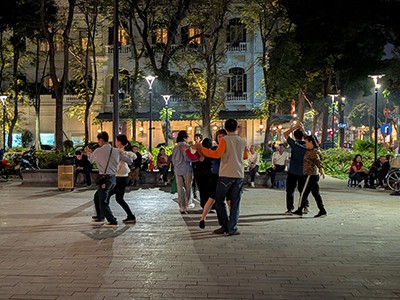
People in Bulgaria are among those with the lowest levels of hope for the future. Credit: Insights/UIG/Getty
Democracy aims to make the future more equal, give citizens greater influence, and create predictable rules. However, it can also produce side effects that shape how people view the future.
Elections encourage politicians to promise improvements, while a free media constantly highlights problems and compares a country’s performance with that of other nations. Citizens are told that they can influence public policy, which creates expectations that governments will solve major social problems. Rights-based political cultures also lead people to expect high-quality public services, fairness, and responsive institutions — standards that are difficult to meet consistently.
Authoritarian regimes, by contrast, often promote messages of stability, long-term economic growth, national pride, and security. This can create a more hopeful public outlook, particularly when rapid economic growth supports those promises and government control of information limits exposure to opposing views. If people are also reluctant to express dissent honestly, surveys may overestimate public optimism.
Source: www.nature.com