


Close Menu
HitechubHitechub
    What's Hot
    Science

    Scientists Decode Burnt Scrolls Without Unfolding Them

    Science

    Single-Molecule Spin–Photon Interface for Quantum Communication | Nature

    Science

    FDA-Approved Epilepsy Drug May Help Reverse Osteoarthritis Damage, Study Finds

    Important Pages:
    • About Us
    • Privacy Policy
    • Terms & Conditions
    Facebook X (Twitter) Instagram Pinterest
    Facebook X (Twitter) Instagram
    HitechubHitechub
    Friday, November 27
    • Shop
      • Fashion
        • Mens
        • Womens
        • Accessories
          • Handbags
          • Keychain
          • Masks
          • Money clicps
          • Neck Pillow
          • Rings
          • Towels
          • Wallets
        • Jewelry
        • Watches
        • T-shirts
        • Hawaiian shirts
        • Vests
        • Swim trunks
        • Swimsuits
      • Fun
        • Magic cubes
        • Magnifiers
        • Misc
        • Photo books
        • Puzzles
        • Toys
      • Home
        • Cleaning/Care
        • Mailbox covers
        • Mugs
        • Pot Holders
        • Spoon
      • Office and Electronics
        • Chairs
        • Office Supplies
        • IPad cases
        • Laptop stickers
        • Mouse pads
        • Notebooks
        • Pencil bags
        • Pens
        • Phone cases
      • Personalized
      • Pets
      • Sports
        • Cycling
          • Balaclava Mask
          • Bike Bell
          • Bike Computer
          • Bike Fender
          • Bike Grips
          • Bike Kickstand
          • Bike Light
          • Bike Locks
          • Bike Mitts
          • Bike Pumps
          • Bike Repair Stand
          • Bike Seat
          • Bike Trainer
          • Bike Wheels
          • BIKES
            • Folding Bikes
            • Road Bikes
          • Carbon Fiber Bike Products
          • Cycling Mask
          • Kid’ Bike Helmets
          • Inner Tube
          • Motorcycle Bag
          • Nylon Pedals
          • Adult Helmets
          • Photochromic Sunglasses
          • Soft Coolers
          • Suction Cup Bike Rack
          • Tool accessories
          • Winter Cloth
          • Heart Rate Monitor
        • Outdoors/Camping
          • Outdoor Bags
        • Sweatband
    • Technology
      1. AI
      2. Gadgets
      3. View All

      This is the most popular CEO in the world

      Sectors in which “Chat-GPT” is most often used

      Artificial intelligence has begun to “swallow” professions

      The unusual robot conductor of a concert in Seoul

      Here’s how you can tell if your phone is being tapped

      PlayStation 5 becomes a completely silent console and gets more space

      This is the first phone that can be used to park a car

      Best Gaming Laptops 2023: Powerful Portables for PC Games

      Why Is There a Shortage of Elevator and Escalator Mechanics?

      NordVPN Black Friday 2026 Deal: Save 78% on VPN Plans

      OpenAI Warns GPT-6.2 Astra Will Hit Usage Limits 40% Faster After Bug Fix

      Ars Staff Home Offices: From Minimalist to Maximalist Designs

    • Science
      1. Space
      2. Wheels
      3. View All

      Space Perspective: A Journey to the Edge of Space

      5 Fascinating Facts About Space

      Space Exploration: Unveiling the Wonders of the Universe

      Toyota wants to make a new generation battery with a range of up to 1,200 km

      Meet Toyota’s lunar “baby” that could make exploring the Moon easier

      What does a night drive look like with one of the most beautiful cars in the world: the Rolls-Royce Ghost

      Alpha-Gal Syndrome: Why Tick-Bite Red Meat Allergy Is Puzzling Scientists

      How to Overcome Sadness in Academia and Find Balance

      Stephen Colbert-Named Tiny Spider Has a Genome 50% Larger Than the Human Genome

      Oldest Male Killer Whale on Record May Have Been Identified Using Historic Atomic Bomb Test Data

    HitechubHitechub
    Home » Why Does Star Formation Collapse Despite Abundant Hydrogen in the Universe?
    Science

    Why Does Star Formation Collapse Despite Abundant Hydrogen in the Universe?

    Share Facebook Twitter Pinterest WhatsApp
    Share
    Facebook Twitter LinkedIn Pinterest WhatsApp

    The universe is forming far fewer new stars than it did billions of years ago. Over the past 4.5 billion years, the cosmic star-formation rate has fallen to less than half its previous level. Surprisingly, however, the supply of neutral atomic hydrogen—the primary raw material for star formation—has changed very little.

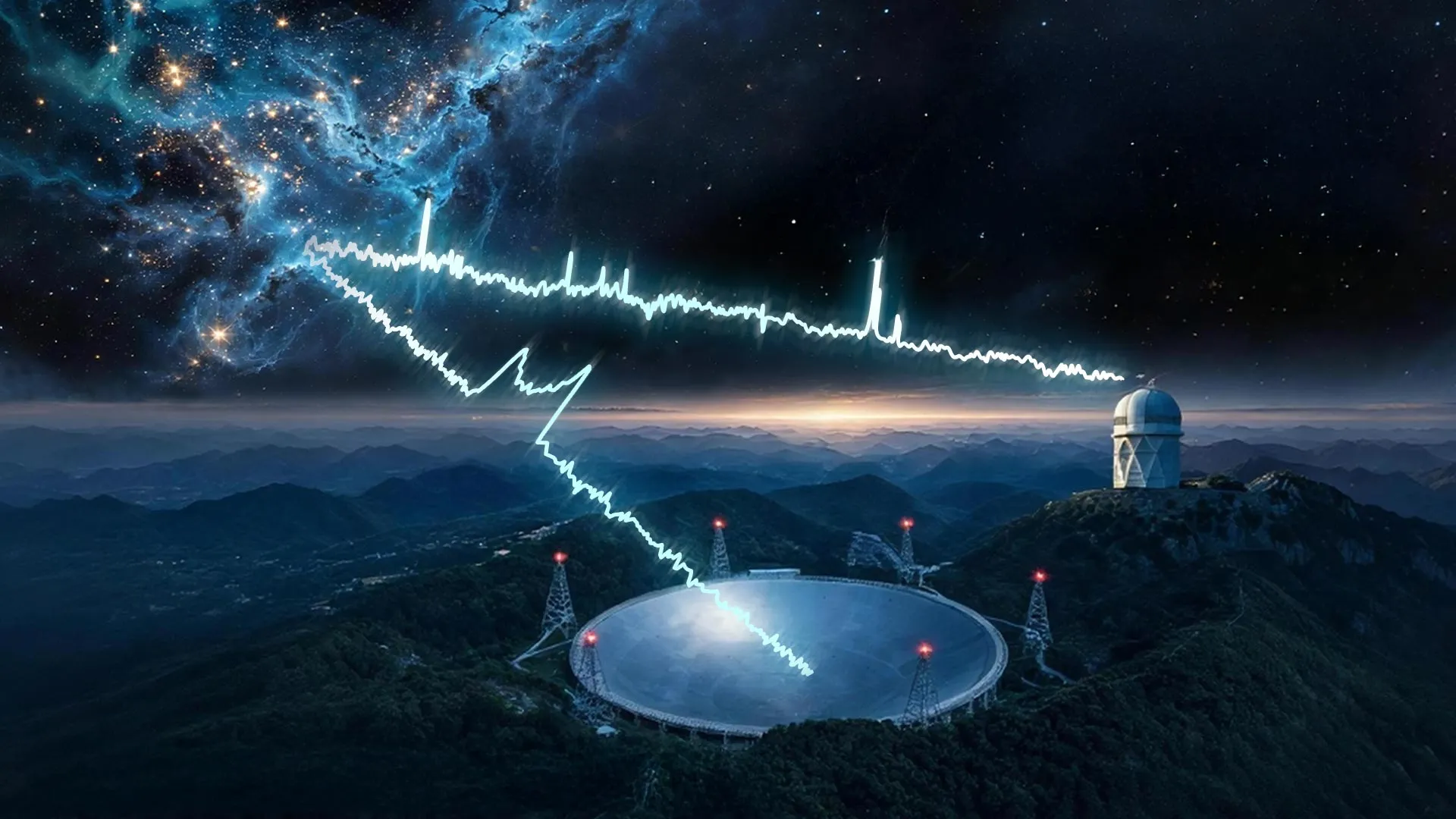
    The discovery was reported by an international research team led by scientists from the Chinese Academy of Sciences (CAS), in collaboration with the Dark Energy Spectroscopic Instrument (DESI) project. Using China’s 500-meter Aperture Spherical Radio Telescope (FAST), the researchers made precise measurements of neutral atomic hydrogen across the universe over the past 4.5 billion years.

    The results reveal a significant mismatch between star formation and the availability of hydrogen gas. Although the rate of new star formation has declined sharply, the amount of neutral atomic hydrogen (HI)—a major gas reservoir within galaxies—has decreased only slightly.

    The study was published online in Nature Astronomy on September 1.

    Why is star formation declining in the universe?

    Understanding why star formation slows as the universe ages is one of the central challenges in research on galaxy formation and evolution. A straightforward explanation would be that galaxies have gradually consumed the cold gas required to create new stars.

    However, if the declining supply of cold gas were the main cause, astronomers would expect the dramatic decrease in star formation to be matched by a similarly large reduction in the amount of available gas. Observations have not shown such a steep decline.

    Neutral atomic hydrogen plays a key role in this mystery. It acts as an important reservoir of cold gas inside galaxies, connecting the broader cosmic gas supply with the processes that eventually produce new stars. Astronomers primarily detect HI through its extremely faint 21-centimeter radio emission line.

    Detecting this signal from distant galaxies is challenging because it is often buried beneath background noise.

    FAST and DESI survey millions of galaxies

    For decades, astronomers have faced a difficult trade-off when studying cosmic hydrogen. Deep radio surveys can reach the sensitivity needed to detect weak signals, but they typically cover only limited regions of the sky. Surveys covering much larger areas, meanwhile, have generally lacked the sensitivity required to detect faint HI emissions.

    Because of these limitations, scientists have struggled to directly and reliably measure how the total mass of neutral atomic hydrogen has changed from low to intermediate redshifts.

    The new study addresses this challenge by combining FAST’s exceptional radio sensitivity with DESI’s extensive optical spectroscopic data. The research team examined approximately 2.5 million galaxies covering nearly one-third of the sky.

    The researchers applied a technique known as HI spectral stacking to combine radio signals that were too faint to detect in individual galaxies. Using each galaxy’s precisely measured redshift, they aligned the weak signals and stacked them together. This allowed the average HI emission to emerge from the background noise.

    The method enabled the scientists to analyze an unprecedented number of galaxies and measure the evolution of neutral hydrogen across cosmic time with exceptional statistical precision.

    Star formation has declined much faster than the hydrogen supply

    The findings show a major difference between the evolution of star formation and the abundance of neutral atomic hydrogen.

    Approximately 4.5 billion years ago, the universe’s star-formation rate was about 2.5 times higher than it is today. During the same period, the density of neutral atomic hydrogen was only about 1.4 times its current level.

    In other words, star formation has fallen dramatically without the cosmic HI reservoir being depleted to the same extent. The results indicate that the gradual loss of neutral hydrogen alone cannot explain the sharp decline in the formation of new stars.

    A new mystery in galaxy evolution

    The findings shift the central question from “Is the universe running out of gas?” to “Why is it becoming more difficult to form stars despite the continued presence of substantial neutral hydrogen reserves?”

    Stars do not form directly from mostly neutral atomic hydrogen. Instead, they are born primarily within dense clouds of molecular gas. Neutral atomic hydrogen occupies a crucial intermediate position between the universe’s broad gas supply and the molecular hydrogen that directly fuels star formation.

    The researchers suggest that the most important changes in the recent universe may involve the movement of gas through the baryon cycle rather than a major decrease in the total amount of HI.

    As the flow of gas from the cosmic web weakens and the density of gas decreases, galaxies may become less efficient at converting neutral atomic hydrogen into molecular hydrogen. In this scenario, the overall HI reservoir can remain relatively stable while the supply of molecular gas available for star formation gradually declines.

    Why the universe’s star factory is slowing down

    The implications of this research extend beyond measuring the amount of hydrogen in the universe. The discovery offers important new clues about why the universe’s vast star-forming engine has gradually slowed over time.

    The researchers say the combined FAST and DESI observations establish a new benchmark for studying the circulation of cosmic gas, the long-term decline in star formation, and the large-scale processes that shape galaxies during the later stages of cosmic evolution.

    The study was led by scientists from the National Astronomical Observatory of China, the CAS Shanghai Astronomical Observatory, Shanghai Jiao Tong University, and researchers involved in the DESI project.

    Contributors came from research institutions across Asia, North America, and Europe. The collaboration highlights the scientific potential of combining highly sensitive radio observations with large-scale optical spectroscopic surveys.

    Source: www.sciencedaily.com

    Share. Facebook Twitter Pinterest LinkedIn WhatsApp
    Previous ArticleIndonesia Peatland Fires Darken Skies and Worsen Air Pollution
    Next Article Google Gemini 3.8 Flash Is Built for AI Agents and Uses Cyber Twin to Find Vulnerabilities

    Related Posts

    Science

    Alpha-Gal Syndrome: Why Tick-Bite Red Meat Allergy Is Puzzling Scientists

    Science

    How to Overcome Sadness in Academia and Find Balance

    Science

    Stephen Colbert-Named Tiny Spider Has a Genome 50% Larger Than the Human Genome

    Science

    Oldest Male Killer Whale on Record May Have Been Identified Using Historic Atomic Bomb Test Data

    Science

    345-Million-Year-Old Fossil Fooled Scientists for Decades

    Science

    Has AI Cracked Internet Encryption? Rumored Breakthrough Claim Surprises Scientists

    Science

    Indonesian Wildfires Threaten Orangutans and Their Future

    Science

    Hidden Underground Caves in Australia May Reveal Otherworldly Secrets

    Add A Comment
    Leave A Reply Cancel Reply

    Stay In Touch
    • Facebook
    • Twitter
    • Instagram
    • Pinterest
    Top Picks
    Technology

    GLM-5.3’s Advanced Cyber Capabilities: Critical Vulnerabilities Reportedly Found in Cursor

    Z.ai Launches GLM-5.3 With Major Coding and Cybersecurity Improvements Chinese AI company Z.ai has released…

    FCC Plans Robocall Scorecard to Rate Phone Companies on Spam Call Blocking

    Inside AvisLoader: A Resilient Windows Malware Loader Designed to Survive Interruptions

    Families Travel to Nepal in Search of 33 Missing British Nationals

    Study Finds Raindrops Create Tiny Lightning Bolts That Corrode Cars

    Most Popular
    Science

    Award-Winning AI-Generated Microscopic Image Sparks Controversy in Prestigious Photography Competition

    Science

    Amelia Earhart Search Crew Discovers Remote Island Inhabited by Carnivorous Crabs

    Categories
    • AI (9)
    • Gadgets (6)
    • Science (3,601)
    • Space (3)
    • Technology (3,032)
    • Wheels (3)
    Our Picks
    Science

    Neanderthal Extinction Explained: How Modern Fears Shape the Science and News Coverage

    Science

    Michael Sheen’s Campaign Against Hazardous Waste Sites Wins Senedd Support

    © 2026 Hitechub.
    • Home
    • About Us
    • Privacy Policy
    • Terms & Conditions

    Type above and press Enter to search. Press Esc to cancel.

    GDPR Cookie Banner

    We are using cookies to give you the best experience on our website.

    You can find out more about which cookies we are using or switch them off in .

    Ad Blocker Enabled!
    Ad Blocker Enabled!
    Our website is made possible by displaying online advertisements to our visitors. Please support us by disabling your Ad Blocker.