


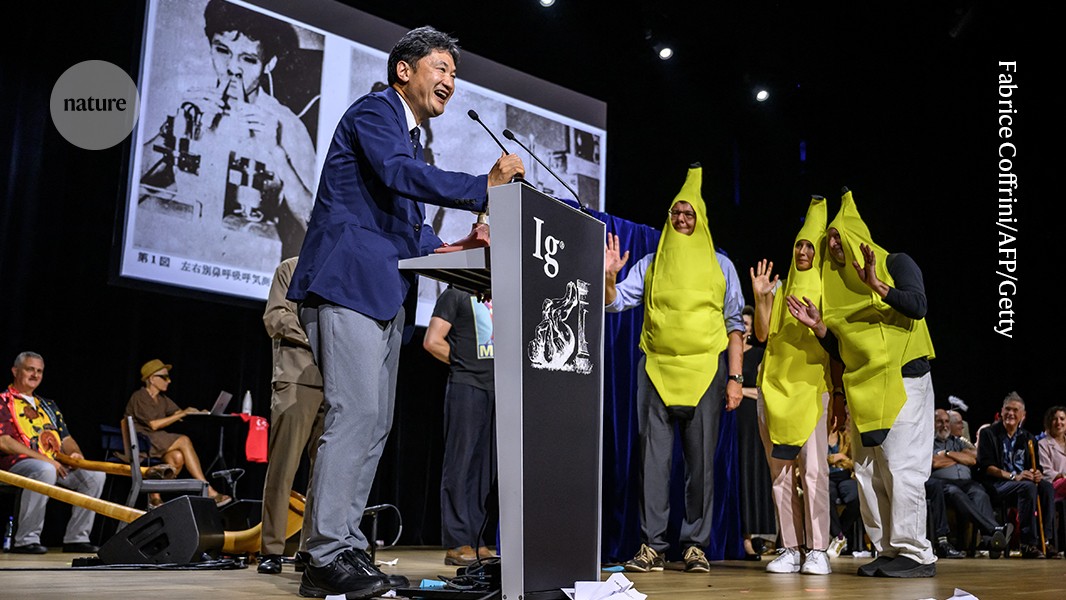
Researcher Miki Takahara will accept the Ig Nobel Prize on behalf of the late Tokuji Unno.Credit: Fabrice Coffrini/AFP/Getty
Traditional science award ceremonies are often associated with black-tie dinners, formal speeches and carefully measured applause. The Ig Nobel Prize ceremony takes a very different approach, celebrating scientific discoveries that make people laugh first and think afterward.
Now in its 36th year, the Ig Nobel Prize ceremony combines science, comedy, theatre and musical performance. Held on September 3, the 2026 event featured a fungi theme, the customary mass release of paper airplanes and a strict 60-second limit for acceptance speeches. Some scientific leaders even appeared on stage dressed as bananas.
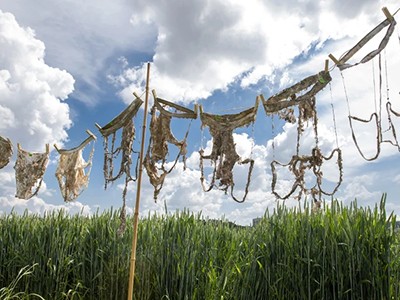
Buried pants and a new definition of kissing win 2026 Ig Nobel Prize
Long before TikTok and YouTube Shorts, the Ig Nobel Prize introduced its own version of short-form science communication. Its famous “24/7 lectures” require speakers to explain a complex idea in 24 seconds and then summarize it in just seven words.
The 2026 Ig Nobel Prize ceremony also marked the first time the event was held outside the United States. Founder Mark Abrahams announced in March that the country was “no longer safe for guests”, prompting the awards to move to Europe.
The Ig Nobel Prize recognizes research across many categories that broadly mirror the traditional Nobel Prizes. The 2026 Medical Prize was awarded posthumously to Japanese respiratory physiologist Tokuji Unno for research into the aerodynamics of nose blowing.1 The Economics Prize went to researchers who examined whether wealthy people were more likely than poorer people to take sweets from children’s jars. Their findings suggested that they were.2 The Peace Prize recognized research showing that people value not only kind friends, but also friends who are hostile toward their enemies.3
Some Ig Nobel awards have no direct equivalent among the traditional Nobel categories. A citizen-science project that asked volunteers to bury hundreds of pairs of trousers to study soil health received the Soil Science Prize.4 Although the research is deliberately unconventional, every award is presented by an actual Nobel laureate. Laureates may also receive unusual gifts in return, including the now-famous autographed pair of trousers.
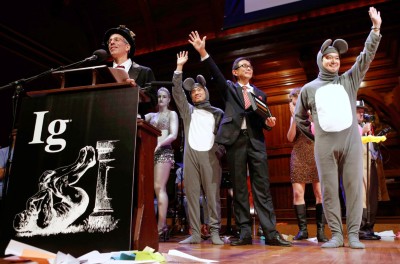
How a silly science award changed my career
The Ig Nobel Prize is also a celebration of scientific creativity and playfulness. Physicist Andre Geim remains the only researcher to have won both an Ig Nobel Prize and a Nobel Prize, recognizing his work in physics.56 In an interview about scientific creativity, Geim described how scientists can become trapped on a “perfectly straight railway from the cradle of science to the coffin of science”, with little room for experimentation or detours.
The Ig Nobel Prize is “an unashamed, geeky celebration of the fun of science: discovering things”. A Nature reporter who attended the ceremony wrote in Nature Briefing on September 4 that, after the final paper airplane had been launched and the last fungi-themed opera had ended, conversations turned to the challenges facing researchers worldwide. “In difficult times, a sense of humor is a survival skill,” the reporter observed.
The Ig Nobel Prize will remain in Europe for the foreseeable future, alternating between Zurich, Switzerland, which hosted the 2026 ceremony, and another European city. Representatives from next year’s host city, Antwerp, Belgium, attended the event dressed as national symbols, fries and beer. They joked that Belgium reflects the Ig Nobel Prize’s playful description of itself as an institution that “first makes you laugh, then makes you think”.
Irreverent, surreal and warmly connected to the humor found in laboratories, the Ig Nobel Prize celebrates scientific knowledge while gently challenging academic hierarchy. Its self-deprecating spirit helps explain why the awards remain popular after more than three decades. The ceremony honors researchers and their discoveries without taking prestige too seriously—a form of scientific friendship and mutual support that researchers may need now more than ever.
Source: www.nature.com