


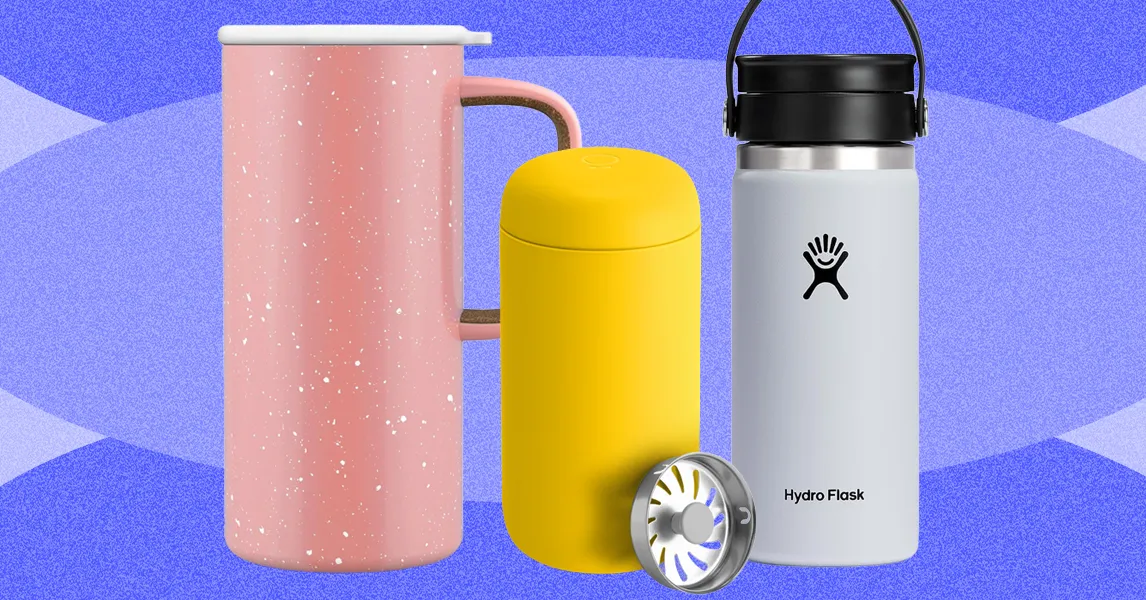
Travel mugs can vary widely in heat retention, leak resistance, cleaning needs, and durability. The models below include several reasonable alternatives, such as the glass KeepCup and highly insulating Zojirushi mug, as well as two products that fell short in testing. The guide also explains concerns about lead soldering, the materials and features to consider, and how WIRED evaluated travel mugs with hot and cold drinks.
Honorable mentions
Some travel mugs perform well enough for everyday use but do not match the strongest options in the broader guide.
KeepCup 12 oz coffee cup, $31: This double-walled, insulated mug is designed to replicate and replace a paper coffee-shop cup. It is a solid choice for anyone seeking a glass cup, although its rubber grip is plastic. However, it is not the best at keeping drinks hot, and its lid feels somewhat wobbly.
OXO Good Grip Thermal Mug, $29: WIRED reviewed this mug in 2022 and gave it high marks for its sturdy construction and dishwasher-safe design. Because it is an older product, however, it is often out of stock.
REI Co-op Camping Mug, $23+: REI’s stainless steel cups are competent but do not stand out among travel mugs. Testers found that the exterior coating was durable enough to survive being knocked over several times outdoors.
Zojirushi stainless steel mug, $40: An effective lid lock helps prevent accidental spills, and the mug is highly capable at controlling temperature. One reviewer unintentionally left tea inside for 18 hours and found that it was still hot when the lid was opened. The drawback is a cover made from three separate parts—the mouthpiece, gasket, and lid—with deep grooves that make cleaning difficult.
Avoid these mugs
These two cups fell short compared with the guide’s preferred options.
Greens Steel Beast 20oz Insulated Tumbler, $23: The Beast Tumbler has more than 81,000 positive reviews on Amazon, but the rubber seal around its lid comes off easily. In testing, it leaked heavily.
Toaks Titanium Double Wall 450ml Cup, $40: WIRED often recommends Toaks gear for affordable titanium camping cookware. This mug costs $12 more than the Hydro Flask mentioned above and has a rougher finish.
Travel mug FAQ
What you need to know about lead soldering
While testing reusable water bottles and travel mugs, WIRED editors found that some brands use lead soldering to seal insulated bottles. The potential for exposure is low because removing the lead pellets would require dropping or damaging the bottle or mug. Even so, WIRED considers lead an unnecessary risk, particularly because many leading options use safer sealing methods. The publication removed mugs from brands that admitted to using lead in their products.
What to look for in a travel mug
There is no shortage of travel mugs, and the best choice depends on your priorities and how you plan to use it. Important considerations include:
- Leak-proof design: For a mug that will be carried around, the ability to prevent leaks and spills may be its most important feature. Some models use patented locking technology designed to prevent drips, while others are less secure but may be more functional for drinking on a morning walk or camping trip. A person who puts a mug in a laptop bag may need stronger leak protection.
- Material: Travel mugs are commonly made from stainless steel, ceramic, BPA-free plastic, or a combination of these materials. Glass models are also available, although they are less common.
- Stainless steel: Double-walled stainless steel is effective at retaining heat while keeping the exterior comfortable to hold. These mugs are often dishwasher-safe, but they are not microwave-safe and can give drinks a slightly metallic taste.
- Ceramic: Ceramic interiors can preserve a drink’s taste and prevent lingering coffee odors from affecting later drinks. They also avoid the metallic smell associated with some stainless steel mugs.
- Plastic: Plastic is often used for lids. Choose products that are free of known endocrine disruptors such as bisphenol A (BPA).
- Glass: Like ceramic, glass has a neutral taste, but it is heavier and typically less durable than other materials, creating a greater risk of breakage.
- Shape: A mug for commuting should fit in a car’s cup holder. A model intended for walking may be more useful with a handle.
- Price: The recommended travel mugs in the guide range from under $20 to nearly $200. An expensive model may be worthwhile if precise coffee temperature control is important, but most options cost about $30.
How the mugs were tested
The tester had been drinking caffeine since the age of 12 and had informally used travel mugs for most of their life. For the formal testing, the tester and other editors drank coffee and tea both piping hot and ice cold.
The evaluation considered heat retention and taste, including whether drinks developed a metallic flavor. Testers also assessed shape and design, such as how comfortable each mug was to hold and whether it fit in a car’s cup holder. They examined additional features, tested leak resistance, and evaluated durability by dropping the mugs onto wood and concrete surfaces from approximately 4 feet. Ease of cleaning was also considered, since travel mugs can be difficult to scrub.
Ultimately, a suitable travel mug needs to keep coffee hot, protect a bag from leaks, and make everyday use easier.
Source: www.wired.com