


Determining the Largest Sauropod Dinosaurs: Challenges and Insights
:focal(1154x654:1155x655)/https://tf-cmsv2-smithsonianmag-media.s3.amazonaws.com/filer_public/d2/d7/d2d7bd63-6592-4eb8-bc5e-846f5cb6cae4/gettyimages-870596224.jpg)
The newly identified Nagatitan stands tall as the largest dinosaur discovered in Thailand, measuring over 88 feet and weighing nearly 30 tons. Despite its immense size, the fossil record yields limited remains, making precise measurements difficult. The uncertainty surrounding its dimensions illustrates the challenges paleontologists face in determining the largest dinosaurs.
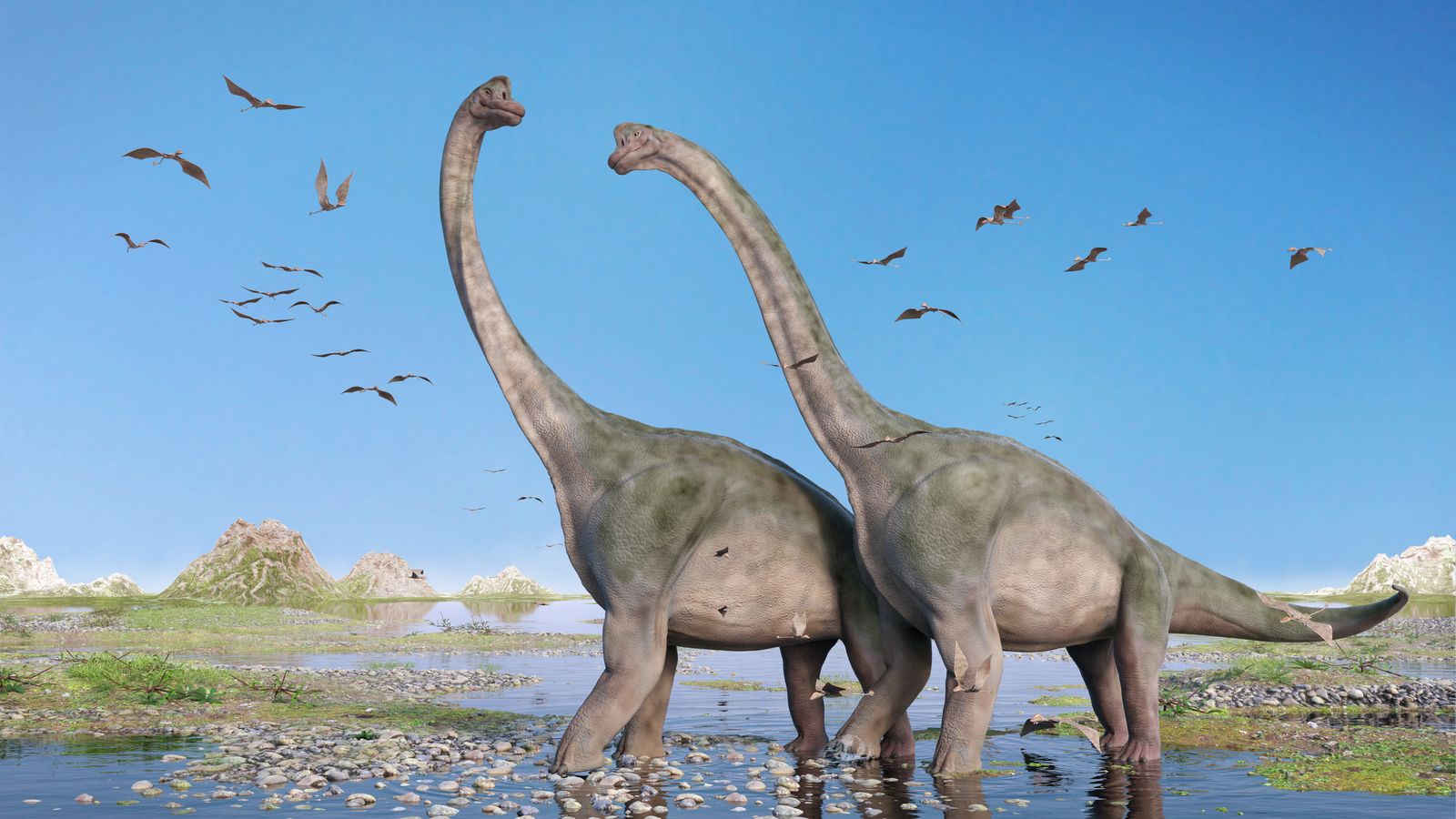
Throughout history, the title of the “largest dinosaur” has often changed hands. The biggest dinosaur is usually classified as a sauropod, characterized by its long neck and tail, four-legged stance, and herbivorous diet. While Brachiosaurus was first discovered in 1900 and frequently credited as the largest, recent studies have challenged this designation.
The nomenclature race among the giants of the past led to names like Ultrasaurus, “Seismosaurus”, and Supersaurus, none of which remain relevant today. With advancements in research methodologies, previously inflated size estimates have been recalibrated. Among the contemporary contenders for the largest known dinosaurs are Argentinosaurus, Phthalo Gunkosaurus, and Patagotitan, all represented by incomplete fossils.
The problematic aspect of estimating sauropod sizes arises from missing bones, complicating our understanding of their dimensions. Consider the Patagotitan, a leading candidate for the largest dinosaur based on the size of its neck vertebra, potentially nearing 4 feet. The variations in vertebra numbers across species can significantly skew size estimates, demonstrating that our current knowledge is still evolving.
Most of our size estimates rely on the correlation between limb bone dimensions and body size, a principle that holds true even among modern animals. Heavier animals possess thicker limbs to support their mass, but even among similarly sized dinosaurs, significant weight differences exist due to differing body proportions.
/https://tf-cmsv2-smithsonianmag-media.s3.amazonaws.com/filer_public/79/cf/79cf53e2-5dc8-4c41-88da-d5ee5eac283d/patagotitan_mayorum.jpg)
A colossal dinosaur extending 100 feet in length would necessitate significant debris for proper burial and conservation following death. Common environmental factors like intense flooding during rainy seasons could create conditions favorable for fossilization.
“A substantial amount of debris is needed for burial,” points out paleontologist Julia McHugh. She emphasizes the necessity of a powerful flood to effectively cover large sauropods such as the Apatosaurus.
McHugh recounts the exceptional flooding that exposed the challenges of dinosaur fossil preservation, revealing that extensive sediment can be crucial for safeguarding these immense creatures. Yet, despite favorable conditions, exposure to the elements can lead to significant bone loss before burial occurs.
/https://tf-cmsv2-smithsonianmag-media.s3.amazonaws.com/filer_public/78/a1/78a127df-0c1f-478e-846c-68a44ce3c49d/dry_season_at_the_mygatt-moore_quarry.png)
Large dinosaur carcasses attract a plethora of scavengers, leading to significant ecological interactions. Paleontologists have discovered many fossilized bones bearing evidence of such interactions, including scratches and bite marks from numerous scavengers, including various carnivorous dinosaurs.
Despite sufficient sediment cover, the weight of debris could still devastate fragile bones, suggesting that conditions conducive to fossilization could inadvertently distort our understanding of sauropod history. Michael Demick highlights that the potential for damage exists even when preservation conditions appear ideal.
Surprisingly, paleontologists continue to unearth sauropod bones, providing invaluable insights despite the uncertain fossil record. A recent study proposes that the perceived “sauropod hiatus” in North America may stem from a scarcity of suitable environments for fossil preservation. Factors influencing the discovery of the largest specimens range from preservation challenges to the locations where paleontologists conduct their searches.
Quick Fact: Hell Creek Formation
Famous for its Cretaceous fossils, the Hell Creek Formation spans Montana, the Dakotas, and Wyoming, revealing treasures such as Tyrannosaurus fossils alongside stunning fossilized plants and pterosaur specimens.
While potential giants may still lurk beneath the surface, current findings suggest that some of the largest dinosaurs could measure over 100 feet long and weigh over 40 tons. Accurately categorizing these behemoths is fraught with difficulties since minor measurements can significantly change contenders.
Weight, however, is more straightforward to gauge. The thickness of sauropod bones provides insights into their mass, allowing for reliable estimates even if other skeletal remains are missing. Among the contenders, Argentinosaurus is likely the heaviest, estimated to weigh over 80 tons, marking it as a strong candidate for the title of the heaviest dinosaur.
/https://tf-cmsv2-smithsonianmag-media.s3.amazonaws.com/filer_public/73/23/732354e9-da47-437c-8aba-94bfc7f8eab9/argentinosaurus_skeleton_plos_one.png)
Identifying a single dinosaur as the largest may simplify a much more complex story. Variances in individual sizes exist even within the same species, making it challenging to ascertain average sizes across populations. Paleontologist Demick emphasizes our limited understanding of size distribution, indicating that exceptional specimens are likely rare and hard to uncover.
Even so, giants like the recent discovery of a 6-foot, 7-inch long Apatosaurus femur made headlines in 2014, marking the largest of its kind found. The exceptional conditions that allowed this fossil to survive provide hope for the unearthing of more skeletal remains in the future, and ongoing discoveries affirm that the hunt for the largest dinosaurs continues robustly.
Source: www.smithsonianmag.com