


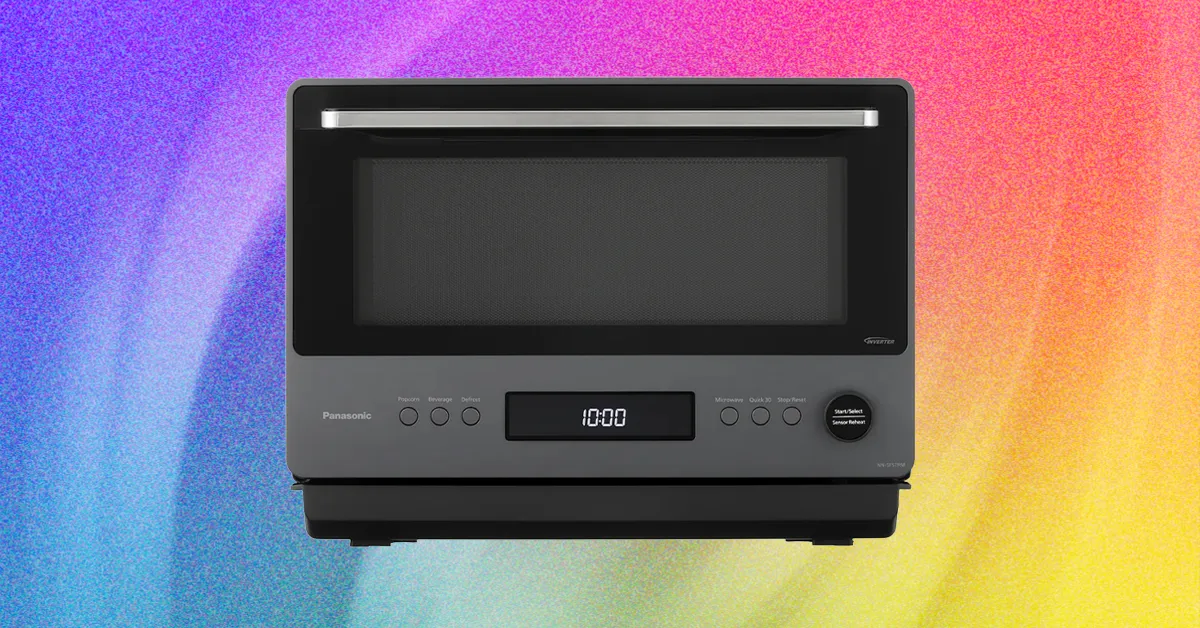
The front of the oven, closest to the door and about an inch from each side wall, operates at a lower temperature, approximately 20 degrees cooler. This is an impressive performance, particularly when compared to compact turntable models that occupy minimal space in your microwave.
It’s important to note that using the Sensor Cook feature while covering your food will not yield optimal results, as it disrupts the microwave’s ability to sense temperature accurately. Therefore, unless you’re utilizing the basic timed cooking option, it’s best to avoid covering food. While I’ve successfully heated eggs this way without mishaps, a cautious approach is to cover them and cook in controlled time increments.
Another limitation of oven temperature sensors is when using multi-layered bowls for reheating. For instance, when I warmed a Korean bowl with short ribs over cabbage and rice, the cabbage did not heat as effectively as the meat and rice, requiring a stir and additional heating. While this is typically expected in most microwave ovens, it’s notable that this model excels with flat dishes.
Key Features You’ll Love
Simplicity is at the heart of this microwave design, a major reason for my admiration. There’s no need to constantly monitor or adjust settings. Beyond a few exceptions, the main sensor reheat function consistently heats food to 180 degrees Fahrenheit (or less, depending on one of the five lower settings). I consider this a brilliant feature.
Additionally, the other core features perform exceptionally well. Pressing the “Drink” button successfully heats liquids to around 170 degrees Fahrenheit, which is my perfect drinking temperature for coffee and tea. When defrosting, I managed to thaw frozen chicken breasts in just 10 minutes, ensuring no part exceeded room temperature. (I did wait an extra 5 minutes for the chicken to rest, as suggested, to achieve even heating.)
The infrared sensor does not penetrate through popcorn bags, making the popcorn setting essentially a timer. Simply set the weight of the popcorn bag and let it be. Using Kroger bags yielded satisfactory results, with no burnt popcorn and only a few unpopped kernels left behind. Following the instructions from a popcorn maker in a high-powered microwave may jeopardize safety; I recommend using the popcorn button.
Traditional timed cooking options are available, along with the ability to manually adjust the microwave’s power level. Uniquely for the American market, Panasonic has introduced pre-programmed microwave scratch cooking recipes, including one-bowl chicken noodle soup and spaghetti bolognese with raw meat. Scratch cooking is particularly popular in Japan, where kitchens are compact. These features highlight the microwave’s capability to modify power settings for precise cooking, although microwave recipes still feel a bit nostalgic, reminiscent of the 1980s.
Source: www.wired.com