


Killer whales, known as orcas, are among the ocean’s most intelligent and formidable predators. These apex hunters have exhibited extraordinary hunting techniques, often targeting animals larger than themselves. Recently, researchers in the Gulf of California documented unprecedented behavior that had never been formally reported before.
“We observed one killer whale capturing a sunfish and releasing it just before another orca charged in at high speed, shattering the fish’s tissue into thousands of fragments,” said Dr. Kathryn Ayers, lead author of the study published in Frontiers in Ethology and a scientist at Beneath The Waves, an organization dedicated to promoting ocean health. “This behavior might assist young orcas in feeding more effectively, or it could simply be for play. Orcas are known for their playful interactions with food.”
Killer Whales Shatter Sunfish at High Speed
Sunfish, which can exceed 3 meters in length and weigh as much as 2,000 kg, frequently rise to the surface to rest, regulate their body temperature, and remove parasites, making them vulnerable to predators like killer whales.
In the Gulf of California, sunfish are among the primary targets hunted by orcas. The behavioral events were recorded during two separate incidents spaced over a year apart.
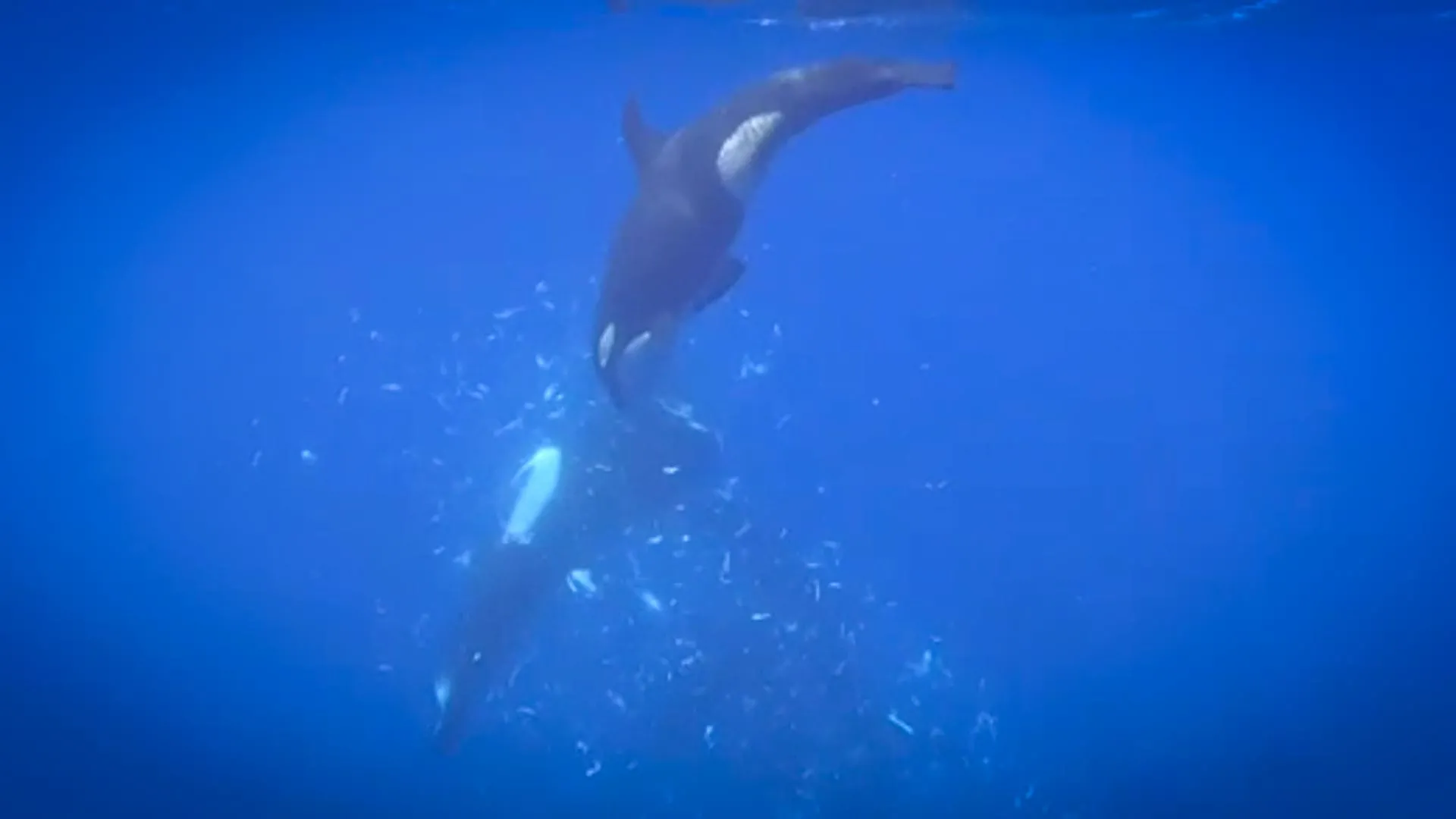
During July 2024, Ayers witnessed a pod of killer whales, including younger members, interact with a sunfish they had already killed. The female orca clasped the fish tightly with her caudal fin, while the male accelerated and charged towards the fish.
The female released the sunfish just before the male struck it. The force of this impact shattered the fish’s tissue, resulting in pieces floating in the water. Juvenile orcas consumed smaller fragments while the adults devoured the remainder of the carcass, leaving scattered remnants. [See link to video at the end of the article.]
The second incident, filmed by Hector Franz in September 2025, followed the similar pattern of seizing, releasing, ramming, and feeding.
Newly Documented Food Processing Strategies
The violent collision caused significant disintegration of the prey’s tissue. Researchers assert that ramming as a predation strategy has not been documented previously in killer whales.
In both occurrences, the animals displayed cooperative behavior. One orca secured the carcass, enabling the other to deliver a more precise attack. Since the sunfish was already deceased, researchers believe the force was used to dispose of the prey rather than to kill it.
Sunfish possess a gelatinous outer capsule layer and skin that harbor unique microbiomes. When the tissue is fractured, these microorganisms disperse into the water, altering its nutritional dynamics.
This fragmentation may enhance interactions between the sunfish and killer whale microbiomes, potentially offering nutritional and immunomodulatory benefits.
Smaller Fragments for Young Orcas
This behavior may also reflect a form of parental investment. Breaking up the carcasses into smaller portions makes feeding easier for calves and young orcas, aligning with established killer whale behaviors.
“Orcas typically tear apart their prey and share it with other pod members, including calves and juveniles,” Ayers noted.
However, the purpose may extend beyond feeding; the interaction could have a social dimension, or the killer whales may simply have been engaging in playful behavior.
Insights into Sunfish Behavior
This observation might also provide insights into the sharp-tailed sunfish. To date, such tissue fragmentation has only been documented in this species.
Researchers propose that the tissues of the sharp-tailed sunfish may uniquely respond to substantial impacts, unlike other large sunfish species.
Whether the same killer whale participated in both recorded events remains unknown. Higher-quality footage is needed to identify individual animals accurately, particularly capturing distinct dorsal fins and eye patches.
“Gathering the best photographic evidence is crucial. New techniques continue to emerge regarding how killer whales hunt and process their prey,” Ayers concluded. “These magnificent marine predators continue to surprise us.”
Source: www.sciencedaily.com