


Dietary sugars and carbohydrate-rich foods may have played a more important role than meat in the evolution of the human brain, according to researchers from the University of Sydney and the University of Glasgow. Their study suggests that access to fruit, honey and later cooked starches helped meet the increasing energy demands of the hominin brain, which expanded nearly fivefold over the past 4 million years—from about 300 grams in early relatives such as Australopithecus afarensis to approximately 1,500 grams in modern Homo sapiens.
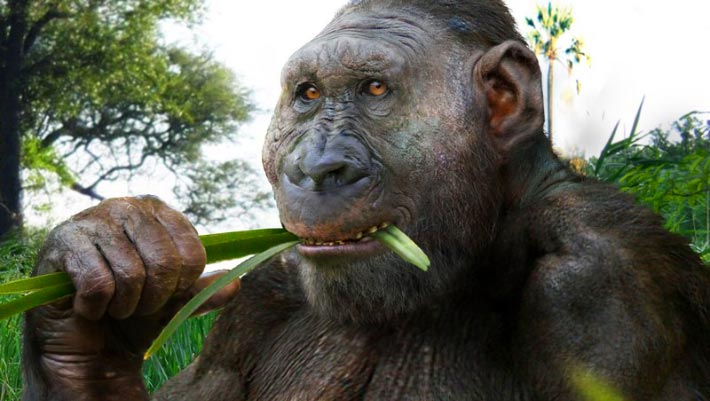
Paranthropus boisei. Image credit: © Roman Yevseyev.
The human brain accounts for only about 2% of an adult’s body weight, yet it uses approximately one-fifth of the body’s resting energy. In young children, its energy consumption can reach as much as two-thirds of total resting energy expenditure.
Glucose is the brain’s primary fuel. Although the human body can produce some glucose from proteins and other sources, this process is limited and inefficient. The researchers therefore suggest that early humans required a reliable supply of carbohydrate-rich foods to support brain growth.
“The human brain is unusually large for our body size and requires substantial amounts of energy,” said University of Sydney Professor Jennie Brand-Miller, the study’s lead author.
“Glucose is the brain’s primary energy source, and for much of human evolution, would have come from carbohydrates found in foods such as fruit and honey.”
To investigate the role of diet in human evolution, the researchers estimated how much glucose would have been needed by the brain, red blood cells, kidneys and reproductive tissues at different stages of hominin development.
They compared those energy requirements with the likely carbohydrate content of ancestral diets, ranging from chimpanzee-like diets dominated by plant foods to the diets of modern warm-climate hunter-gatherers, which generally include a greater proportion of animal foods.
The analysis indicates that adults may require approximately 150 to 250 grams of glucose each day, depending on sex and reproductive status, while young children may need around 125 grams.
According to the study, early hominins may have obtained much of this energy from fruit, with sugars providing more than 65% of their dietary energy.
Later in human evolution, the controlled use of fire made cooked underground plant foods and other starches easier to digest. These foods may have become an increasingly important source of glucose alongside fruit, honey, protein and fat.
“People often think of carbohydrates as breads and cereals, but for most of human evolution carbohydrates came from fruits, honey and underground plant foods,” Professor Brand-Miller said.
“The earliest evidence of seed grinding is 65,000 years ago, when we see the first evidence of grinding stones to make flour.”
The researchers also identify several lines of evidence that may support a central role for carbohydrate-rich foods in human evolution. These include clues from fossil teeth, isotope ratios in ancient remains, color vision adapted to detecting ripe fruit, and genetic changes associated with sugar metabolism and taste perception.
They propose that seasonal changes in the availability of fruit and honey may have influenced early human foraging strategies. In some environments, hominin groups that could not reliably obtain enough carbohydrates may have faced increased nutritional stress and a greater risk of population decline or extinction.
The findings do not eliminate the importance of meat or other animal foods in the human diet. Instead, they suggest that dietary sugars and starches should receive greater attention in explanations of human brain evolution and in research into the origins of modern diet-related diseases.
“Understanding the role of carbohydrates alongside meat, fat and protein provides a more complete picture of the human evolutionary journey,” Professor Brand-Miller said.
“Our study suggests sugars and starches may have helped shape the development of the human brain and many of the traits that make us human.”
“The evidence suggests that carbohydrate-rich foods helped fuel the energy demands of our growing brains.”
“Rather than fearing carbohydrates, people should focus on high-quality sources, including whole fruits, legumes and nutritious grains, and prioritize a range of carbohydrate foods as part of a healthy diet.”
The findings appear today in the journal Science.
_____
Jennie Brand-Miller et al. 2026. A central role for dietary sugars in human evolution. Science 393 (6811): 574-581; doi: 10.1126/science.aed8437
Source: www.sci.news