


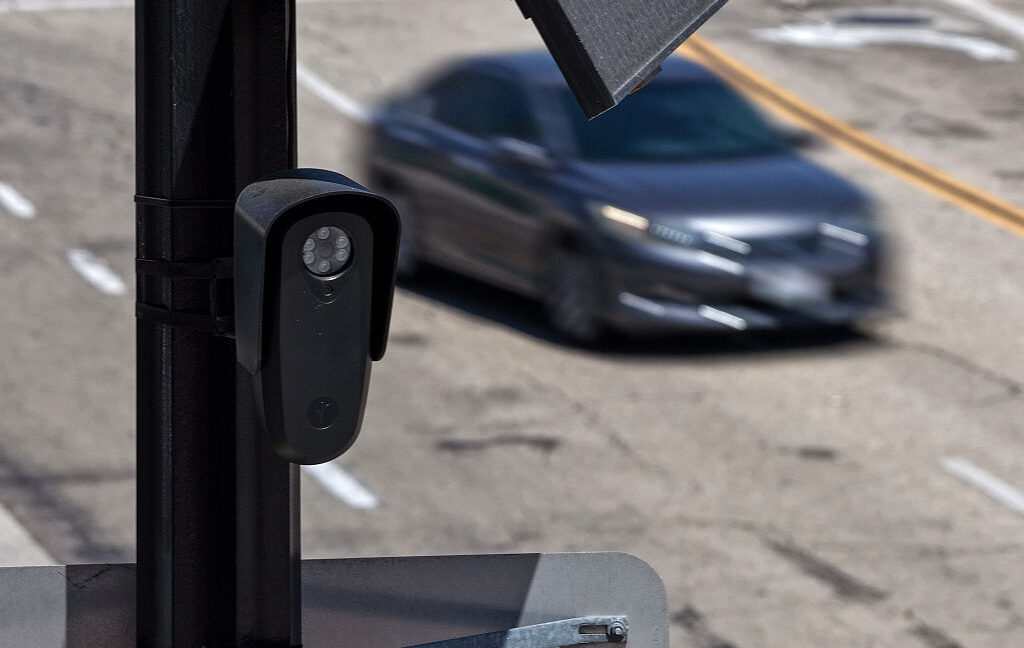
Flock Camera Transparency: Few Texas Agencies Publicly Share Police Surveillance Data
As Flock’s license plate reader cameras face growing constitutional and privacy scrutiny, the public often lacks basic information about how the systems operate—including where cameras are installed, who can view the footage, how frequently police access the data, and how long records are retained.
Flock’s transparency portal tracks camera and search activity
Public records requests can help answer those questions. Police agencies can also voluntarily share information through an optional Flock “transparency portal,” which the company builds for participating agencies.
The portals can record statistics such as the number of cameras in a particular area, the vehicles scanned, and the number of police searches. Flock spokesman Andrew Smith told the Texas Tribune that the portal “gives agencies a way to publicly share their information,” including ALPR policies, usage and access rules, and other programs that help communities understand how the technology is used.
Only a small number of Texas agencies share data publicly
However, few agencies appear to have opted in. Hundreds of agencies in Texas use Flock cameras, but only 59 use the company’s transparency portal, according to the Tribune. Just 16 of those agencies publicly share their data.
That limited participation makes it difficult for residents to determine how widely automated license plate recognition, or ALPR, is being used in their communities—and how police departments are accessing and applying the information.
Privacy advocates warn about AI-powered tracking
Advocates warn that unless courts require warrants or state and local officials impose stronger transparency requirements, Flock cameras could continue tracking vehicle movements in ways the public does not fully understand. Artificial intelligence could create additional privacy risks by making it easier to process information across increasingly broad networks.
Michael Soifer, an attorney with the Institute for Justice, has studied alleged abuses involving Flock cameras and filed several Fourth Amendment lawsuits, according to 404 Media. He said that without greater transparency into how police use the systems, Flock could develop tools that enable forms of policing many members of the public oppose.
Those tools could automate alerts for vehicle movements that generate false suspicions or contribute to wrongful arrests. Soifer told 404 Media:
“We repeatedly see situations where police would flag anything they called a suspicious pattern of behavior. Federal agents were using ALPR to monitor vehicles coming back across the border on day trips, stopping the vehicles, questioning the drivers, and creating a basis for searches. I think Flock will be able to use AI to automate that and allow officers to set alerts based on those movement patterns.”
Public access remains voluntary
Flock’s transparency portal offers a way for agencies to disclose information about camera networks and police searches, but participation remains optional. Until more agencies publish their data—or lawmakers and courts require broader disclosure—residents may have limited visibility into how Flock cameras monitor vehicle movements and how that information is used.
Source: arstechnica.com