


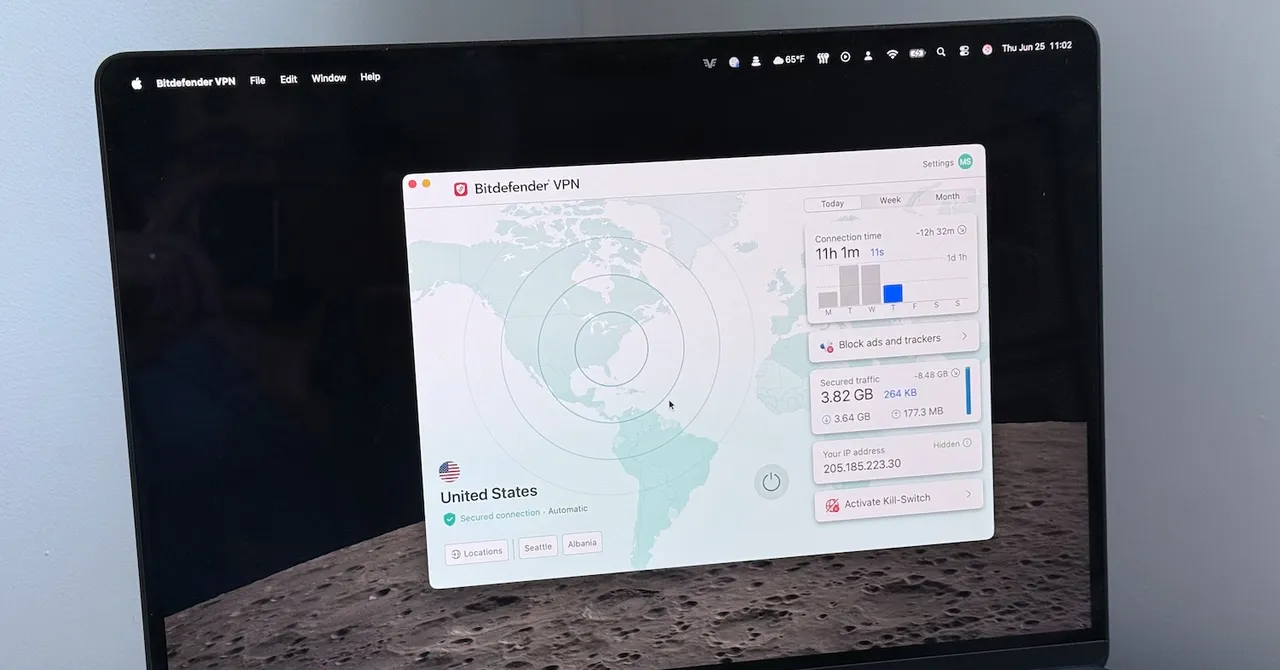
Bitdefender VPN performance was reliable throughout testing. I experienced no dropped connections or unusual performance issues, making it a dependable option for everyday browsing and online activities.
While Bitdefender VPN was not the fastest service tested, its results were solid. For comparison, IVPN using the WireGuard protocol reached speeds of up to 540 Mbps, which was close to my connection speed without an active VPN.
Even so, Bitdefender VPN is fast and stable enough that most users are unlikely to notice meaningful performance limitations outside of dedicated speed tests. For general browsing, streaming, downloading, and other routine tasks, Bitdefender VPN offers more than adequate data speeds.
Bitdefender VPN Privacy Promises and Limitations
Unlike Mullvad, Bitdefender VPN is not designed as an extreme privacy tool for users seeking maximum anonymity. Instead, it focuses on protecting users from common online threats, including ad tracking, cookies, Wi-Fi sniffing, and some forms of surveillance. It can also help users bypass certain geographic restrictions.
There is nothing wrong with this approach, but users looking for advanced privacy protections or near-total online anonymity may need to consider a different VPN provider.
Bitdefender VPN is offered through a partnership with IPVanish. IPVanish supplies the VPN infrastructure, while Bitdefender provides the client software, branding, customer support, and related services. This relationship is important because IPVanish received negative publicity after reportedly providing user logs to the US Department of Homeland Security. The incident was reported in 2018 and occurred despite IPVanish having a no-logs policy at the time.
Since then, IPVanish has changed ownership several times and is now owned by media company Ziff Davis. The provider has also completed multiple independent no-logs audits. The latest audit was completed in 2025. IPVanish also publishes a transparency report outlining law-enforcement requests and the information provided in response.
However, some privacy concerns remain. IPVanish is a US-based company and must comply with US laws governing data requests from law-enforcement agencies. Although the provider cannot hand over information it does not collect, privacy-focused users may prefer VPN companies based in jurisdictions with stronger protections against government data requests.
It is also unclear how Bitdefender’s services interact with IPVanish’s no-logs policy. You need a Bitdefender account to use the VPN, and subscription payments may require personal and billing information. Bitdefender provides information about its no-logs policy, although the wording may refer primarily to the IPVanish infrastructure and its independent audit.
The importance of these limitations depends on your privacy needs. If you want an additional layer of network security against trackers, unsecured Wi-Fi networks, and common online threats, Bitdefender VPN is a capable choice. However, users concerned about extensive government surveillance or seeking maximum anonymity may find that Bitdefender VPN does not provide enough protection.
Conclusion: Is Bitdefender VPN Worth It?
Bitdefender VPN is an easy-to-use service for people with basic VPN requirements. It includes the most common VPN features, delivers stable network performance, and is available at a competitive introductory price. However, it is not the strongest choice for advanced privacy protection and lacks features that some users may expect, including Linux support and a static IP address option.
Price is likely to be the main reason many users choose Bitdefender VPN, particularly during the first year. The introductory price of approximately $35 for one year offers good value. Renewal pricing is less competitive, so check the current cost before your subscription renews.
Source: www.wired.com