


Near-Total Lunar Eclipse to Create a “Blood Moon” Over the Americas
Just two weeks after a total solar eclipse captivated skywatchers across southern Europe, a near-total lunar eclipse is set to illuminate the night sky over the Americas on Thursday.
A lunar eclipse occurs when Earth moves directly between the sun and the moon, causing Earth’s shadow to fall across the moon’s surface. During this week’s event, nearly the entire moon—about 96.2% at the eclipse’s peak—will pass through Earth’s shadow.
Weather permitting, viewers across the continental United States will have some of the best opportunities to see the near-total lunar eclipse. The event will also be visible from other parts of North America, South America, Europe and Africa.
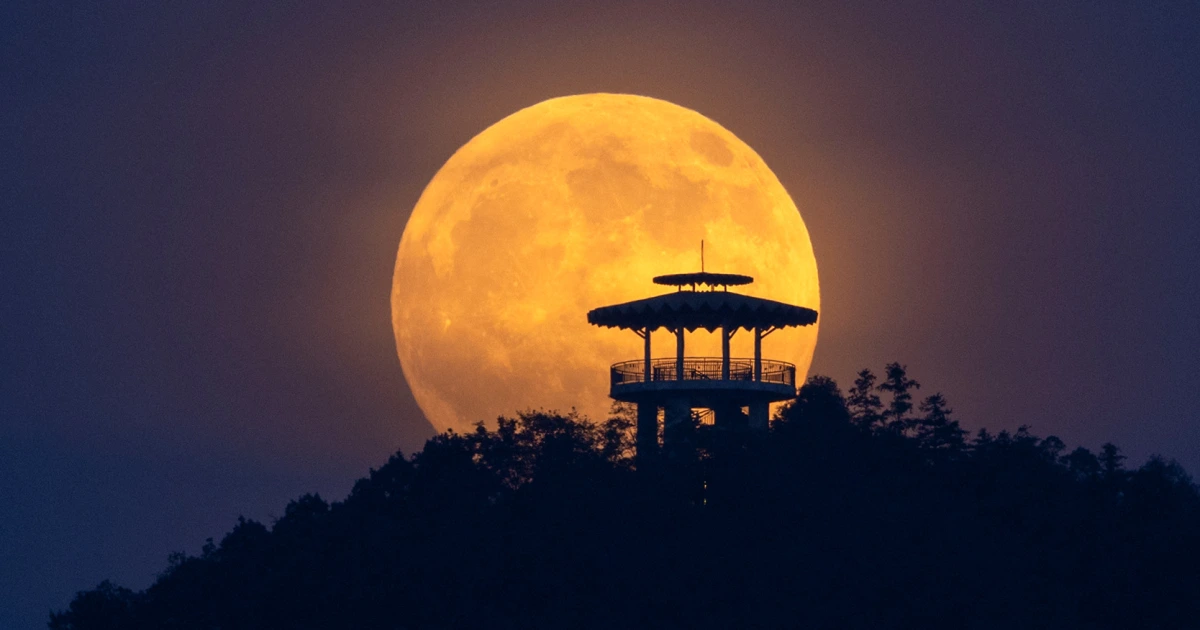
As the moon moves through Earth’s shadow, it may take on a reddish-orange color. This happens because Earth’s atmosphere scatters sunlight, allowing red and orange wavelengths to reach the moon. That effect is why a total lunar eclipse is often called a “blood moon.”
Thursday’s lunar eclipse begins at 9:23 p.m. ET, when the moon first enters the outer portion of Earth’s shadow. The most noticeable phase begins at 10:33 p.m. ET, when Earth’s darker shadow starts moving across the moon’s surface and appears to “bite” into the lunar disk.
The eclipse will reach its peak at 12:12 a.m. ET, when more than 96% of the moon will be covered by Earth’s shadow. The event will end at 3:01 a.m. ET as the moon exits the outer edge of the shadow.
Most people across the Americas, with the exception of viewers in Alaska and northernmost Canada, will be able to watch every phase of the lunar eclipse. In Europe and Africa, the eclipse will take place during the early morning hours on Friday, and the moon will set before the event is complete.
Unlike a solar eclipse, a lunar eclipse is safe to view with the naked eye. Binoculars and telescopes can also provide a closer, more detailed look at the moon as it changes color.
This lunar eclipse follows a total solar eclipse, an event that occurs when the moon passes between the sun and Earth and blocks the sun’s light. That eclipse darkened the skies over parts of Spain, Portugal, Greenland, Iceland and northern Russia.
Solar and lunar eclipses often occur in pairs because of the way the sun, Earth and moon align. The sun is about 400 times farther from Earth than the moon—and also about 400 times larger. As a result, the sun and moon appear nearly the same size in Earth’s sky, allowing the moon to occasionally block the sun during a solar eclipse.
A solar eclipse occurs during the new moon phase, while a lunar eclipse generally takes place during a full moon. Lunar eclipses often occur about two weeks after the moon has moved to the opposite side of Earth from the sun.
The next solar eclipse is scheduled for February 6 and will be visible from parts of South America and Africa. The next lunar eclipse will occur overnight from February 20 to 21 and should be visible across the Americas, Europe, Africa, Asia, Australia and Antarctica, according to NASA.
Source: www.nbcnews.com