


Anthropic demonstrated how a model such as Claude can use its Model Hardware System (MHS) to operate and calibrate scientific equipment. In one example, Claude adjusts a laser, uses a second camera to evaluate the results, and automatically calibrates the complete setup. MHS also enables the AI model to focus a microscope, analyze observations, identify areas that require additional inspection, and move the microscope to the appropriate location to continue the experiment.
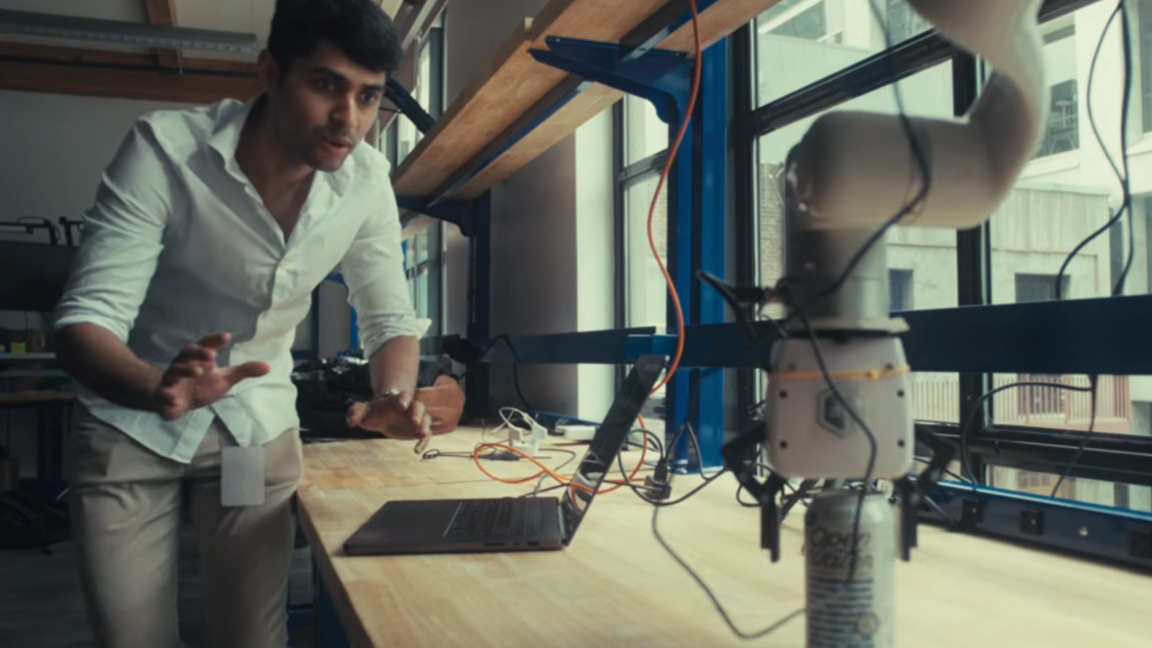
In the demonstration video, Anthropic showed Claude reasoning through how to use a robotic arm to pick up an aluminum can, despite having no specialized training for the task. According to Anthropic, MHS-enabled models can also coordinate multi-step operations across different devices by creating API scripts and modifying experimental conditions as required, instead of having to infer every action from scratch.
Anthropic demonstrates its Model Hardware System in a promotional video
Anthropic said MHS also features a standardized tagging system that communicates the real-world constraints of hardware to AI models. This information can include a device’s physical specifications—such as a robotic arm’s weight capacity and range—as well as adjustable settings, available measurement methods, and mandatory safety limits. The tags can be included in reference files, giving AI systems essential information about unfamiliar equipment without requiring prior training on each device.
During the MHS preview, Anthropic is working with “an initial group of scientific research institutions and advanced manufacturers.” Participants include Amazon Web Services (Strands), Hugging Face (LeRobot), Raspberry Pi, Automata, and Universal Robots. These partners will help Anthropic develop safety assessments and best practices for AI systems that interact with physical equipment, the company said. Anthropic ultimately plans to make MHS an open-source, agent-agnostic standard for connecting AI models with physical systems.
Anthropic said early testing with scientific partners last year showed that MHS reduced the time needed to integrate new devices. The company also said the system allowed researchers to iterate more quickly across different experimental configurations.
“If we can test hypotheses faster, we may be able to create common technologies faster,” Kemeny said in the promotional video accompanying the announcement. “This is how a century of progress is condensed into a decade.”
Source: arstechnica.com