


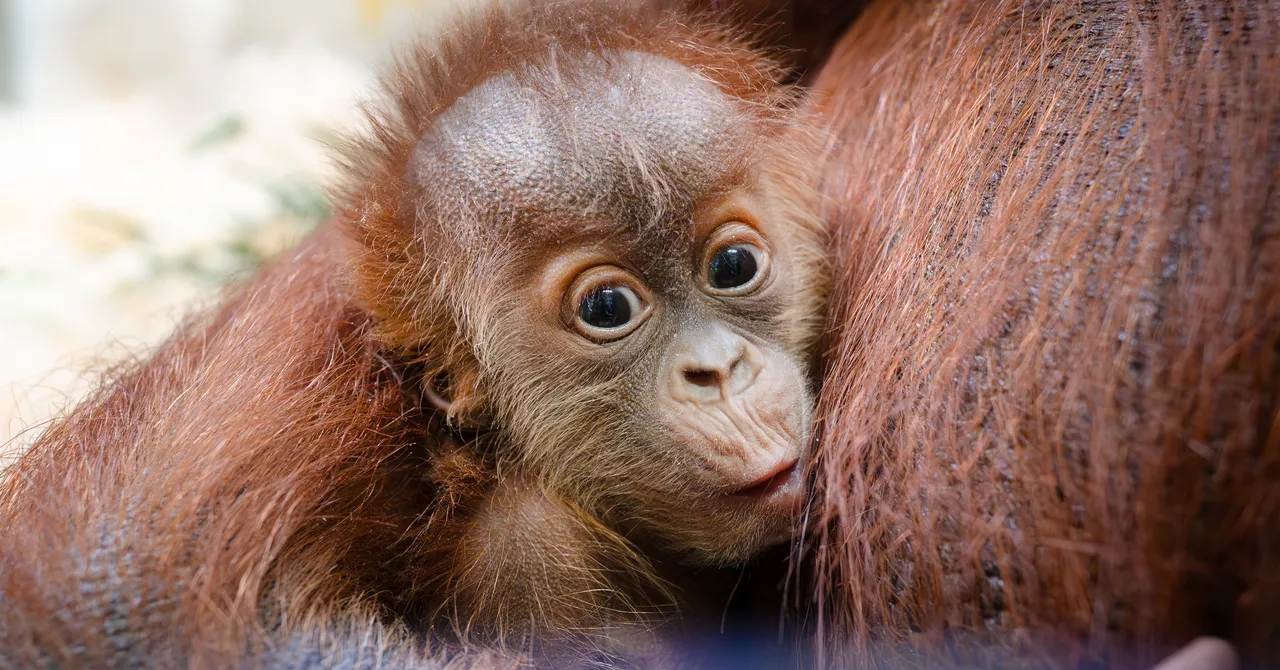
“It’s a girl!” Melissa Peterson exclaims.
As the delivery team leaves the operating room, cheers fill the hallway. Obstetrician and gynecologist Joseph DeWayne has just delivered a healthy baby by C-section. Neonatologist Autumn Joy Goodwin-Samson cares for the newborn, gently applying a protective, waxy coating to its wet skin.
The delivery was successful, much like any other birth—with one important difference: The patient was an orangutan.
Luhana, or “Lu” for short, is one of eight orangutan infants born at US zoos since the beginning of 2025. The surge is significant for these endangered great apes, and it is no coincidence. This baby boom is the result of carefully managed breeding programs and decades of conservation research designed to build a secure population one birth at a time.
“It may seem like a coincidence that so many orangutans were born around the same time, but every birth was carefully planned,” said Angie Selzer, a senior animal care specialist at the Fort Wayne Zoo in Indiana and the Orangutan Species Survival Planning (SSP) Program coordinator.
The SSP has coordinated orangutan breeding recommendations since 1985. Every two years, the program creates breeding and population-management plans for zoos accredited by the Association of Zoos and Aquariums (AZA). SSP geneticists study detailed “pedigree books” that document the ancestry of every animal in the managed population.
“We want to reflect the natural history of wild orangutans and maintain healthy, sustainable populations while supporting successful maternal care,” Seltzer told WIRED. The recommendations consider a range of factors, including underrepresented genetic lineages, each orangutan’s personality, social-group dynamics, and the genetic compatibility of potential breeding pairs. The goal is always to produce healthy offspring while minimizing relatedness between parents.
“We had a very good, happy outcome,” she says. The recent wave of orangutan births began in February 2025, when the Indianapolis Zoo welcomed a healthy male named Eddie. Weila was born at Utah’s Hogle Zoo in June, followed by Bintan at the Los Angeles Zoo and Ruhana at the Memphis Zoo in December. Peterson, an associate curator of primates at the Memphis Zoo, described Ruhana’s birth as an “amazing experience.”
The births continued in 2026, with female orangutans arriving at Cameron Park Zoo in Waco, Texas; Sedgwick County Zoo in Wichita, Kansas; and Fort Wayne Zoo in Indiana. Just a few months ago, the Denver Zoo welcomed a male infant named Rambutan.
Courtesy of Sedgwick County Zoo
Source: www.wired.com