


Roman Mosaic in Turkey Depicts Named Pets Emerald and Ocean
Archaeologists excavating the ancient city of Adramytteion on Turkey’s Aegean coast have uncovered a remarkably detailed Roman floor mosaic depicting two named animals: a cat called Emerald and a dog called Ocean. The colorful mosaic, created nearly 2,000 years ago, was discovered inside a luxurious Roman villa dating to the late second or third century A.D.
The Roman villa contained three halls arranged around a central atrium, along with several smaller rooms and an extensive network of pipes and drains. Archaeologists believe one of the halls served as the home’s main reception area. Its floor featured a large mosaic made up of 15 individual panels portraying real and mythical creatures.
In a study published in the Mosaic Research Journal, archaeologist H. M. Özgen, head of the Adramytteion research team at Mimar Sinan Fine Arts University, suggests that the mosaic may preserve memories of animals known to the villa’s residents.
Latest videos fromlive science
A Roman mosaic panel depicts a dog named Ocean.
(Image credit: HM Özgen/Adramytteion Research Archive)
Özgen began excavating Adramytteion in 2025, with excavations continuing into early 2026. During the Roman period, the city served as the capital of a province in Asia Minor and became an important trading center because of its position at the head of the Aegean Sea.
The newly discovered villa included three mosaic-paved halls, numerous smaller rooms and a system of pipes and drains that may have supplied toilets. Its largest mosaic measured approximately 16.4 by 11.8 feet, or 5 by 3.6 meters. The 15 panels were arranged in three rows and used white, black, red, orange, yellow, pink, burgundy, blue, turquoise and green tesserae.
Most of the panels show birds, fish and cats or other felines. Two panels feature creatures from Greek mythology: a gorgon, possibly Medusa, and a winged horse that may represent Pegasus. The mosaic’s prominent placement suggests that it was designed to impress visitors entering the villa from the central courtyard.

Archaeologists uncovered colorful Roman floor mosaics in a villa at the Adramytteion ruins in Turkey.
(Image credit: HM Özgen/Adramytteion Research Archive)
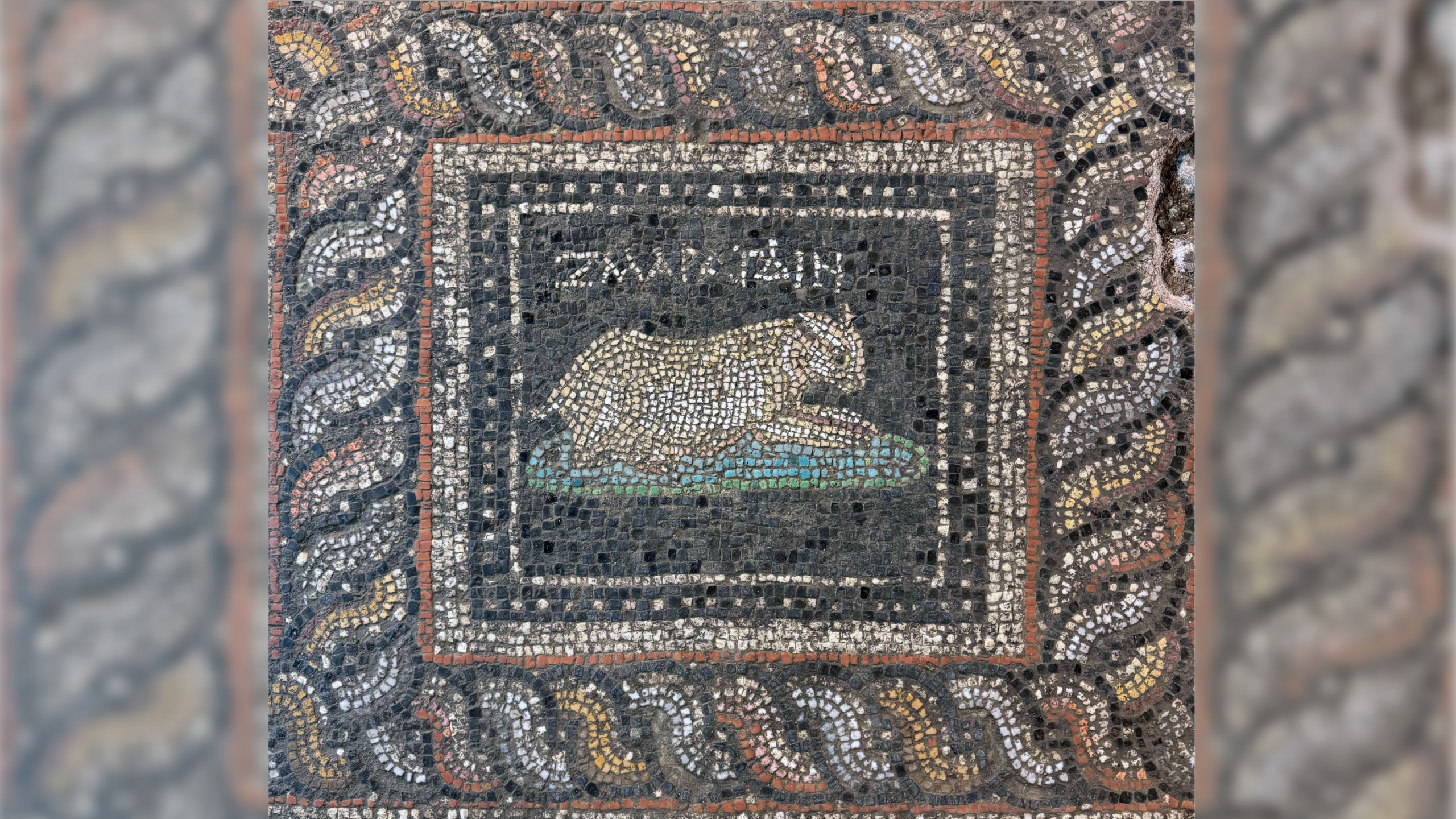
Only two of the animals in the Roman mosaic are identified by name. The first panel visible on the left as visitors entered the room shows a pale-colored cat sitting on a turquoise cushion. Above the animal is an inscription in Greek letters, ΖΜΑΡΑΓΔΙΝ, transliterated as “Zumaragdin” or “Emerald.”
The cat’s relaxed pose and position on a cushion suggest that Emerald may have been a household pet rather than a wild or stray animal. The name may also refer to emeralds mined in the deserts of Roman Egypt, raising the possibility that the villa’s owner had commercial connections with North Africa.
The panel to the right depicts a dog running or leaping. Its Greek inscription reads ΩΚΕΑΝΟΣ, or “Oceanos,” meaning “ocean” or “sea.” Because Adramytteion was a port city and a major maritime trading center, the dog’s name may have reflected the surrounding coastal environment.
Emerald and Ocean may have been pets, familiar animals or symbolic figures associated with the villa’s residents. Their names suggest that the mosaic was more than a decorative artwork: it may have communicated family identity, personal memories and the owners’ connections to the wider Roman world.
Excavations and research at Adramytteion are ongoing. Further work may reveal more about the villa’s architecture, its residents and the meaning of the animals portrayed in this exceptional Roman mosaic.
Özgen, H. M. (2026). Mosaic program and architectural transformation of an atrium-centered Roman residence in the Adramytteion: North Hall, East Hall, South Hall. Mosaic Research Journal 19.
How much do you know about ancient Rome’s most famous leaders? Test your knowledge with this article. Take the Roman emperor quiz!
Source: www.livescience.com