


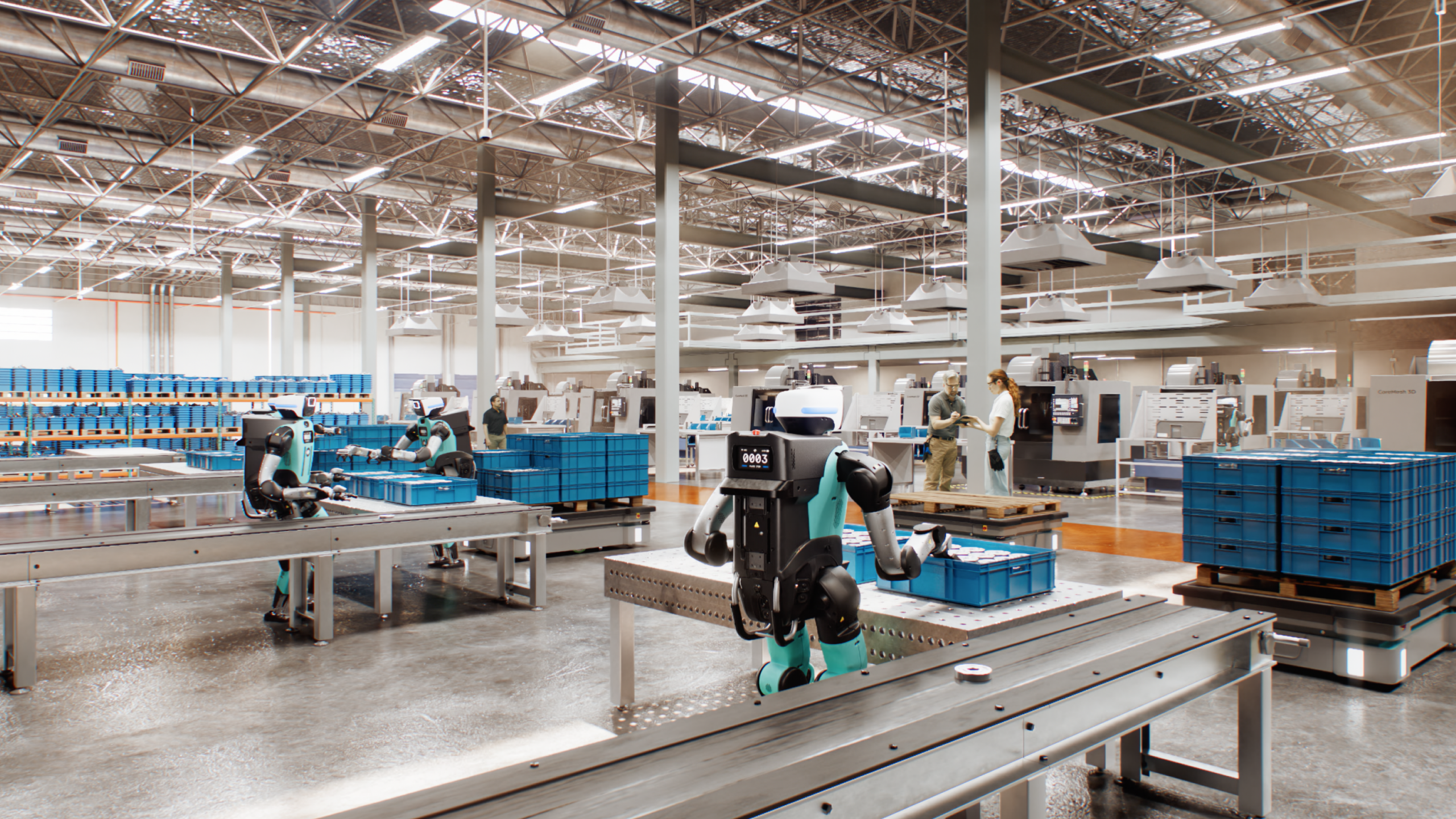
Agility Robotics Unveils Digit 5 Humanoid Robot Designed to Work Safely Alongside Humans
Agility Robotics has unveiled Digit 5, a humanoid robot designed to work safely near people without putting human colleagues at risk. The robot’s safety features could expand the use of humanoid robots in warehouses and automotive factories, reducing the need for isolated robot work cells and physical barriers.
Digit 5 can move, stop, or crouch around people
When Digit 5 detects a person nearby, it autonomously takes precautions based on the situation. It can move out of the person’s path or stand still while the person passes. If someone approaches more closely, the robot can crouch and assume a sitting position.
“The robot is designed with a complex safety operating system that can take different mitigation measures depending on exactly what kind of human presence is detected,” Plus Velagapudi, Agility Robotics’ chief technology officer, told Ars.
The safety system is intended to help Digit 5 operate cooperatively with people in industrial environments rather than requiring complete physical separation.
Digit 5 availability and production plans
According to the company, customers will receive early access to Digit 5 during the first half of 2027. General availability is expected by the end of 2027, following Agility’s announcement.
Agility is retooling its RoboFab facility in Salem, Oregon, to produce its latest humanoid robots.
Agility’s growing commercial humanoid robot experience
Although Agility Robotics is one of the earliest companies in the humanoid robotics industry, its leadership has consistently identified safety as a key limitation for operating humanoid robots around people.
The Salem-based company was the first in the world to introduce a humanoid robot for full-time commercial work at a GXO warehouse in Atlanta in 2024.
Since then, early versions of Digit have logged more than 65,000 hours in warehouses and factories across North America. Companies that have piloted or deployed Digit robots include GXO, Schaeffler, Amazon, and Toyota Motor Manufacturing Canada.
Source: arstechnica.com