


Form Energy’s Iron-Air Batteries Could Store Renewable Power for 100 Hours
Form Energy is developing cheaper, longer-duration energy storage technology for power grids. The company has created a battery that uses iron—an abundant, relatively inexpensive metal—and can store energy for up to 100 hours.
Form calls the process “reversible rusting.” During discharge, oxygen in the air converts iron into rust and releases electrons. When the battery is charged, an electrical current converts the rust back into iron.
Form Energy’s First Commercial Battery Projects
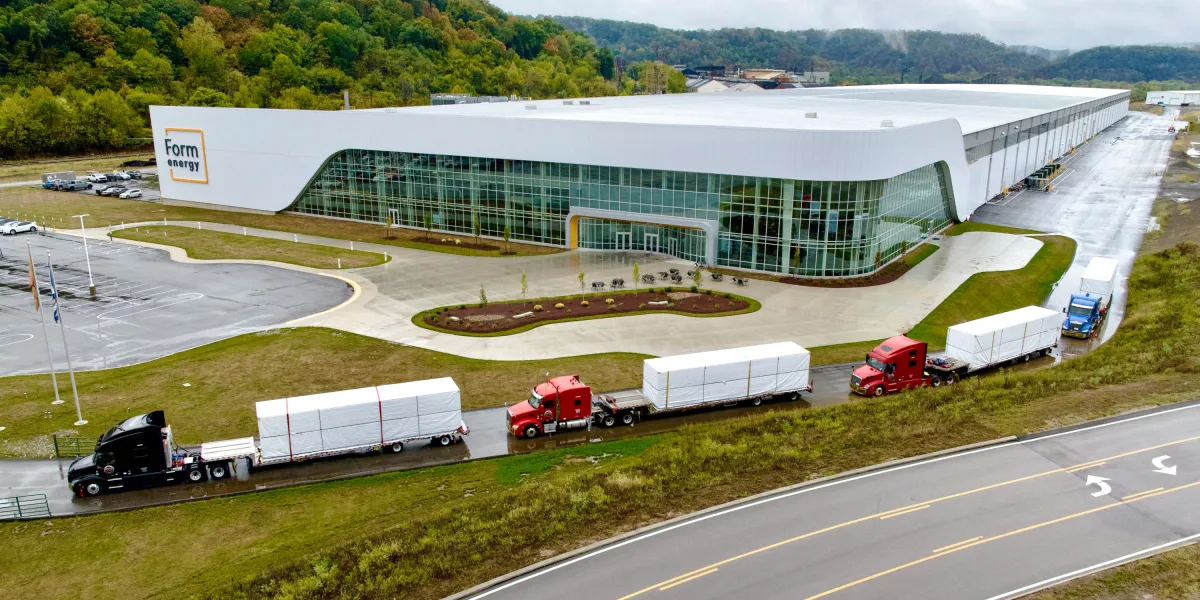
Over the past two years, Form Energy has attracted growing commercial interest. The company has begun producing batteries at its West Virginia factory for its first commercial deployment: a 150-megawatt-hour system for Minnesota utility Great River Energy. The project is scheduled to go online in 2027.
Form also has contracts with several other power companies. Its largest announced project is with Minnesota-based utility Xcel Energy. The project will use 30 gigawatt-hours of battery-backed wind and solar power to supply new Google data centers. It is scheduled to begin operating in phases from 2028 through 2031.
Key Indicators
- Industry: Energy storage
- Established: 2017
- Headquarters: Somerville, Massachusetts, USA
- Notable fact: Once completed, Form’s proposed 30-gigawatt-hour energy storage system for Google data centers in Minnesota could become the world’s largest battery project by energy capacity.
How Form’s Batteries Could Support Renewable Energy
Wind and solar power play a major role in curbing the growth of global carbon dioxide emissions. However, power grid operators still rely on fossil fuel plants—especially natural gas plants—to fill supply gaps during periods of weak renewable generation or high electricity demand.
Form’s batteries are designed to address multiday mismatches between electricity supply and demand, including those caused by heat waves, extreme cold, or extended periods with little sunlight or wind.
The company has not disclosed the battery system’s current cost. Its goal is to reach $20 per kilowatt-hour, which would make the technology cost-competitive with natural gas alternatives.
Form’s technology could also help reduce emissions linked to the growing energy demand from AI data centers. AI’s electricity consumption is already contributing to the construction of new natural gas plants and has raised concerns about higher prices for consumers. Affordable, long-duration energy storage could help renewable power meet that increase in demand.
The expansion of AI data centers is delaying the closure of some aging coal-fired power plants, while growing electricity demand is contributing to higher prices for consumers.
Challenges Facing Iron-Air Energy Storage
The long-duration energy storage market is still in its early stages. Form’s iron-air technology faces competition from a range of alternatives, including pumped storage, compressed gas, fuel cells, gravity-based systems, and flow batteries that store energy in liquids.
The economics of multiday batteries remain challenging because they require substantial capital investment and may sit idle frequently. Funding from data center developers could provide an important boost, but Form must still demonstrate that it can manufacture and deploy the technology at scale.
Form’s current production capacity is 2 gigawatt-hours of battery storage per year—only a fraction of the 80 gigawatt-hours committed through its commercial agreements. Its success will depend on expanding production enough to meet that backlog.
The technology’s physical footprint is another concern. Form’s batteries are stacked in boxes the size of shipping containers, and each two to three megawatts of capacity requires approximately one acre. The Google project’s footprint would therefore be at least the size of 75 football fields.
What Comes Next for Form Energy?
Alongside completing its first commercial project, Form is equipping its factory with new machinery to scale manufacturing and meet its production backlog. The company will use new funding announced in August, along with grants from West Virginia and the U.S. federal government. These funds bring Form Energy’s total raised to more than $2 billion.
Source: www.technologyreview.com