


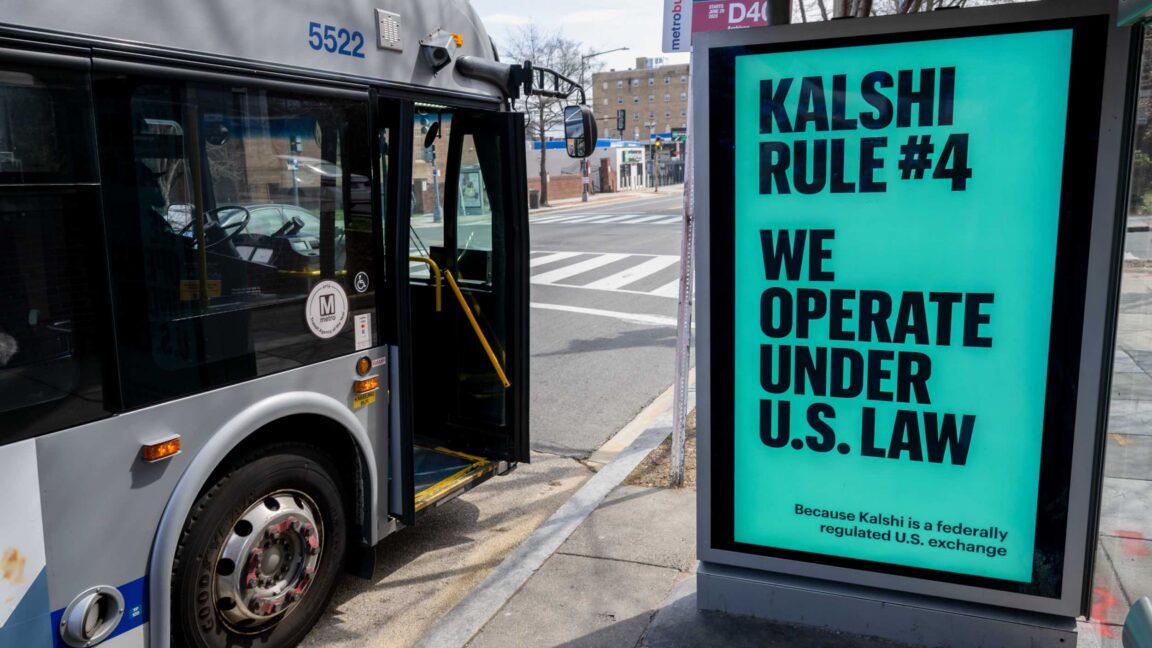
Kalshi has suffered another legal setback in its fight against state gambling regulations. The Second Circuit Court of Appeals upheld a lower court’s refusal to issue a preliminary injunction in Kalshi’s case against New York and Connecticut, finding that the company had not shown it was likely to succeed on the merits. The ruling adds to a series of defeats for the prediction-market operator, although Kalshi has also secured a significant victory in the Third Circuit.
Second Circuit rejects Kalshi’s request
Plaintiffs seeking a preliminary injunction must show that they are likely to succeed on the merits of their case. The judge ruled that Kalshi had failed to meet that standard, and the Second Circuit upheld the decision while considering Kalshi’s defeats involving New York and Connecticut in a single case.
“Appellants have failed to produce the evidence necessary to demonstrate the validity of the injunction pending appeal,” the three-judge panel said in its ruling on Tuesday.
The court also refused to overturn Coinbase’s loss to Connecticut, even though other lawsuits raised similar legal issues.
Kalshi suffered another major defeat in September, when an appeals court ruled that Ohio and Tennessee could enforce their gambling laws against prediction markets. A three-judge panel of the US Court of Appeals for the Sixth Circuit unanimously ruled against Kalshi in that case.
The Trump administration is backing Kalshi’s position
The Trump administration is also pursuing lawsuits against states seeking to enforce gambling laws against prediction markets. The Commodity Futures Trading Commission sued Arizona, Connecticut, Illinois, Kentucky, Minnesota, New Mexico, New York, Rhode Island, Utah and Wisconsin, arguing that it has sole authority to regulate platforms such as Kalshi and Polymarket.
Kalshi’s Third Circuit victory
Kalshi’s biggest victory came in April in the Third Circuit, where the Court of Appeals ruled that New Jersey could not regulate sports betting offered through prediction markets. The court held that Kalshi’s contract met the federal definition of a swap.
Under US law, a swap is an agreement in which payment is “dependent on the occurrence, or the extent to which, of an event or contingency that relates to a potential financial, economic, or commercial outcome.”
“Kalshi’s sports-related event contract is a swap traded on a CFTC-approved DCM” — a designated contract market — “Therefore, the CFTC has exclusive jurisdiction,” the Third Circuit judges wrote.
However, other courts that have ruled in cases involving Kalshi have found that at least some types of prediction-market bets are not swaps. Those courts have also concluded that US law may allow both state and federal governments to regulate prediction markets.
New Jersey asked the Supreme Court to reverse the Third Circuit’s decision, and 39 other states and the District of Columbia filed an appeal. The amicus filing supports New Jersey’s petition.
Source: arstechnica.com