


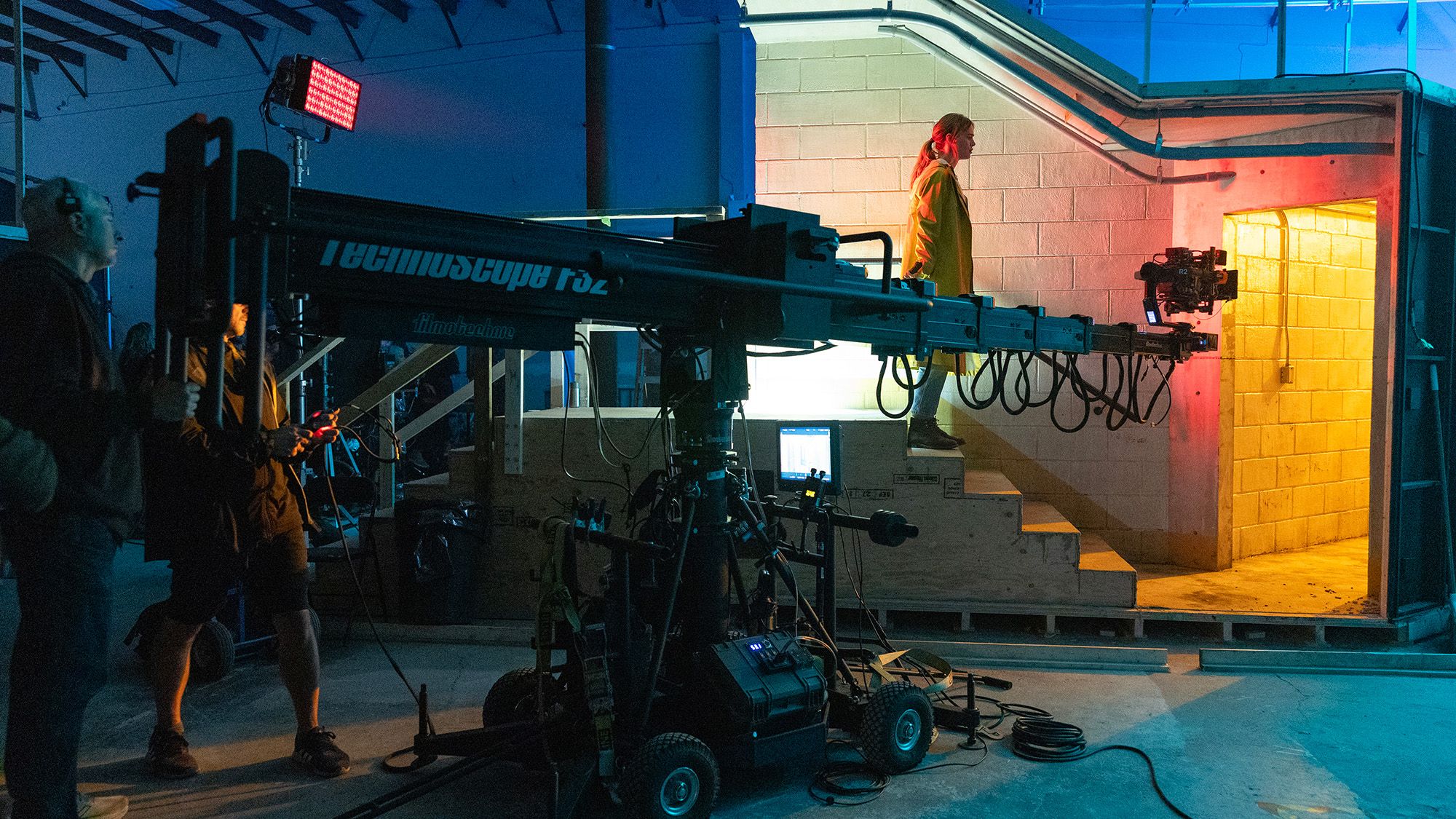
Netflix’s series Below follows a Newfoundland community threatened by an ancient, squid-like creature called Mudder, while a mysterious iceberg causes dangerous hallucinations among local residents. The show combines marine science, horror and environmental themes, drawing on Newfoundland’s long history of giant-squid encounters. Marine biologist Annie Mercier, a professor in the Department of Ocean Sciences at Memorial University in Newfoundland and Labrador, served as a scientific adviser before filming began in 2025, helping the production shape its depiction of cephalopod biology, laboratory work and scientific uncertainty.
Newfoundland has longstanding connections with giant squid (Architeuthis dux), with the first recorded sightings dating to the 1870s. Mercier’s research focuses on deep-sea and Arctic invertebrates, including their behavior, interactions and responses to environmental stressors such as climate change.
How Annie Mercier became a science adviser
Mercier heard in early 2025 that director Jesse Mckeown was looking for a scientific adviser based in Newfoundland. Memorial University’s communications team told her that the series would feature an ancient cephalopod.
“I’m not an expert in cephalopods,” Mercier said, but she has a broad background in marine biology and works at the university’s Ocean Sciences Centre. Her research centers on unusual marine organisms and curiosity-driven investigations, which she said resonated with the production team.
Mercier had also previously advised documentaries and television programs. She had worked with the BBC to explain video sequences, consulted on fiction series in Quebec, and written popular articles and books for general audiences. That experience helped her move between scientific accuracy and the demands of fiction.
Reviewing scripts and visiting the set
The advising process began with the scripts. Mckeown sent Mercier each episode securely and in sequence, beginning with the first. The production team asked her to comment on anything that stood out, particularly the scientific elements and how far the story departed from reality.
Her feedback covered Mudder, the portrayal of the scientists and subjects including climate change, icebergs and ocean currents. She reviewed each script, sometimes identifying details such as the timing of events or the migration patterns of marine animals. She returned written comments and links to additional information, followed occasionally by remote meetings about specific scenes.
When filming started, Mercier eventually visited the set on a Saturday while the production was working at the Ocean Sciences Centre. Filming took place on three or more sets around Newfoundland, making the visit difficult to arrange. At the centre, she spent time in the control room, met actor Mackenzie Davis and observed the production.
What the series got right about giant squid
Mercier said she initially worried that Mudder would behave like a conventional movie monster, with its arms reaching out of the water or a giant squid jumping onto a boat. She noted that similar imagery appeared in some 1800s drawings.
Instead, she found that the scripts generally tried to stay close to reality while allowing Mudder to be an ancient, social cephalopod with squid-like anatomy and some octopus-like behavior.
“Of course, when you’re asked about giant squids and you know it’s a fictional show, all sorts of things come to mind,” Mercier said.
She focused her advice on biology. Mudder’s enormous eye made sense, she said, because living giant squid are known to have one of the largest, if not the largest, eyes in the animal kingdom.
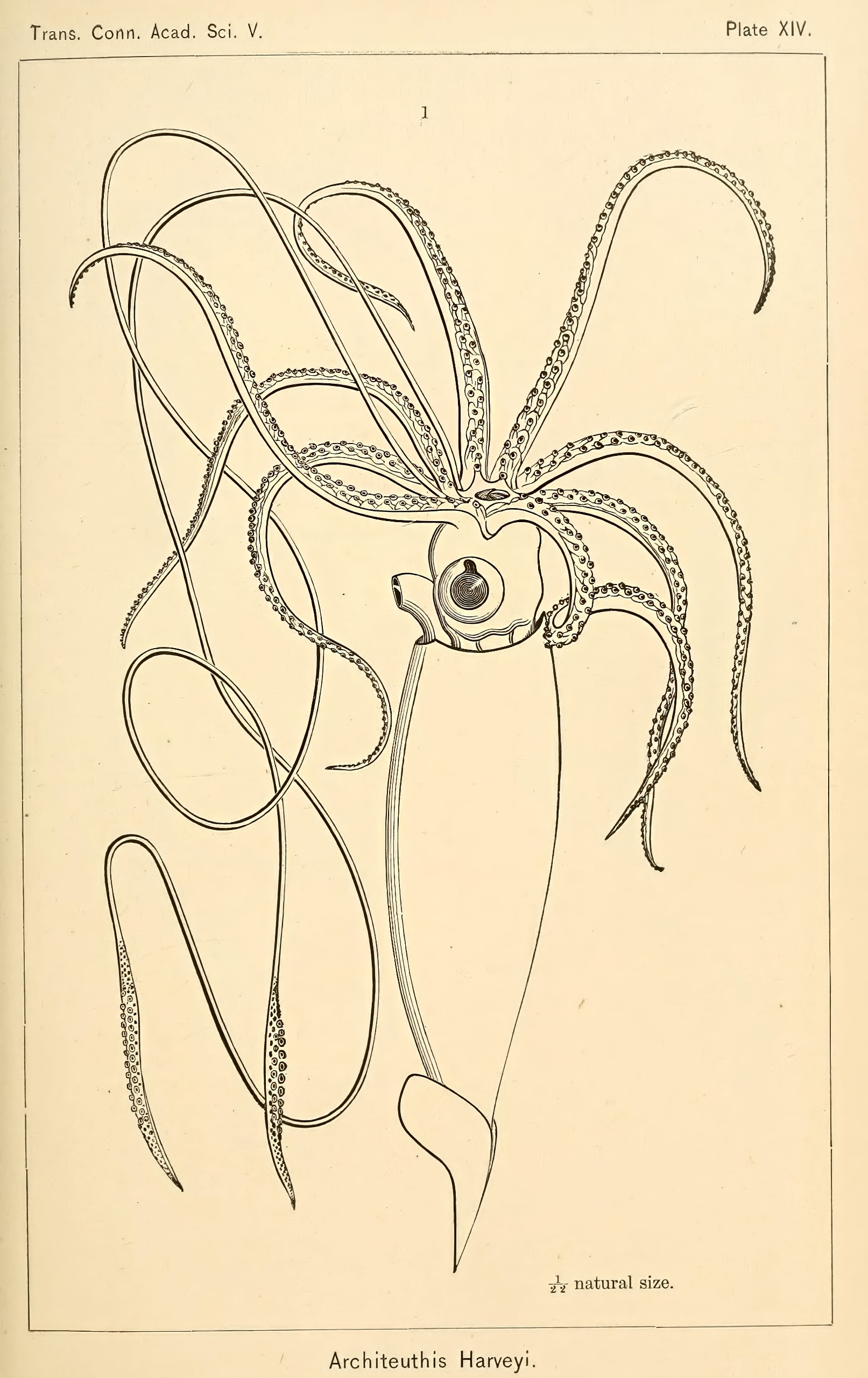
She also cautioned the production about how giant squid move. Their arms can be strong in water, but cephalopods are mollusks and lack bones to anchor muscles for the same kind of movement on land. Their motion outside the water would therefore be very different from the muscular, far-reaching movements often shown in movies.
Mercier shared images of an octopus moving across reefs outside the water as an example of the fluid motion that some cephalopods can achieve. She also discussed the kinds of scars giant squid might leave after interacting with sperm whales.
She was pleased that the series kept Mudder mysterious rather than showing too much of the creature. However, she pointed out that ocean-dwelling cephalopods cannot detect prey on shore: they cannot see or otherwise sense it from the water. That aspect of the story, she said, clearly enters the realm of fiction.
Giant squid and Newfoundland are linked by more than fiction, Mercier said. The region has produced remains, sightings and other encounters, and its history and physical setting likely helped inspire the series.
Could Mudder’s mucus cause hallucinations?
Mercier said she did not specifically advise the production about the hallucinogenic properties of Mudder’s mucus. Many marine animals produce toxins, she noted, not only cephalopods. But the idea that such a substance could become airborne, be associated with melting icebergs or be ingested through ice is fictional.
“I’m aware of toxic substances, but I’m not aware of any that produce hallucinations, per se,” she said, adding that this is not her area of expertise.
Portraying scientists and uncertainty
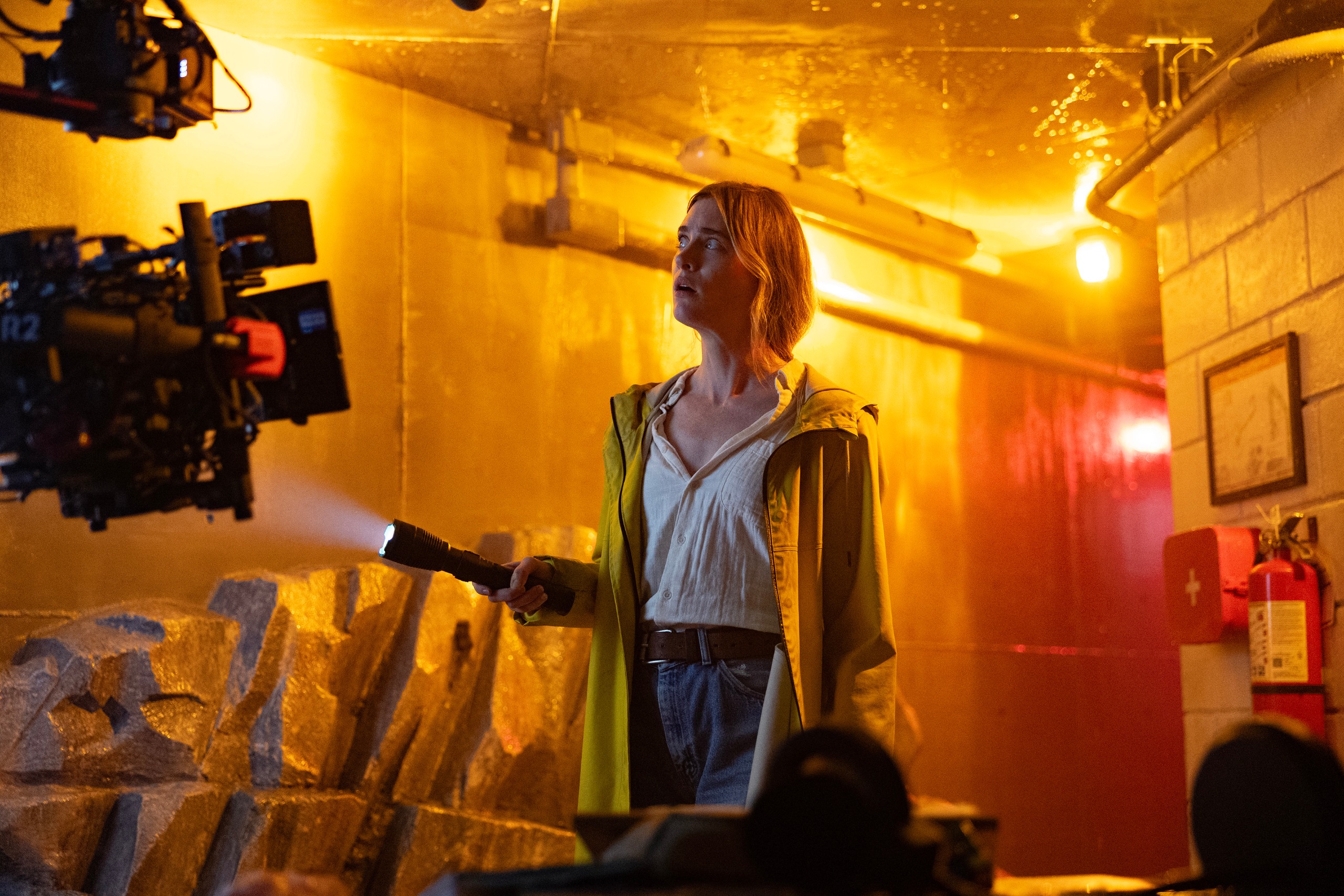
Mercier said the series avoided some familiar laboratory clichés. Rather than relying on colorful liquids and bubbling Erlenmeyer flasks to signal a laboratory, the production filmed in real laboratories at the Ocean Sciences Centre. The rooms contained nets, tanks, microscopes and other equipment, creating what she described as a more realistic, eclectic environment.
She also appreciated that the show did not present marine scientists as experts in every field. When the story turned to the health effects of an unknown substance, Mercier explained that a marine scientist might help diagnose a problem but would not necessarily be qualified to provide a medical assessment. The character Dr. Fonda Howander, played by Davis, even says, “I’m not a medical doctor.”
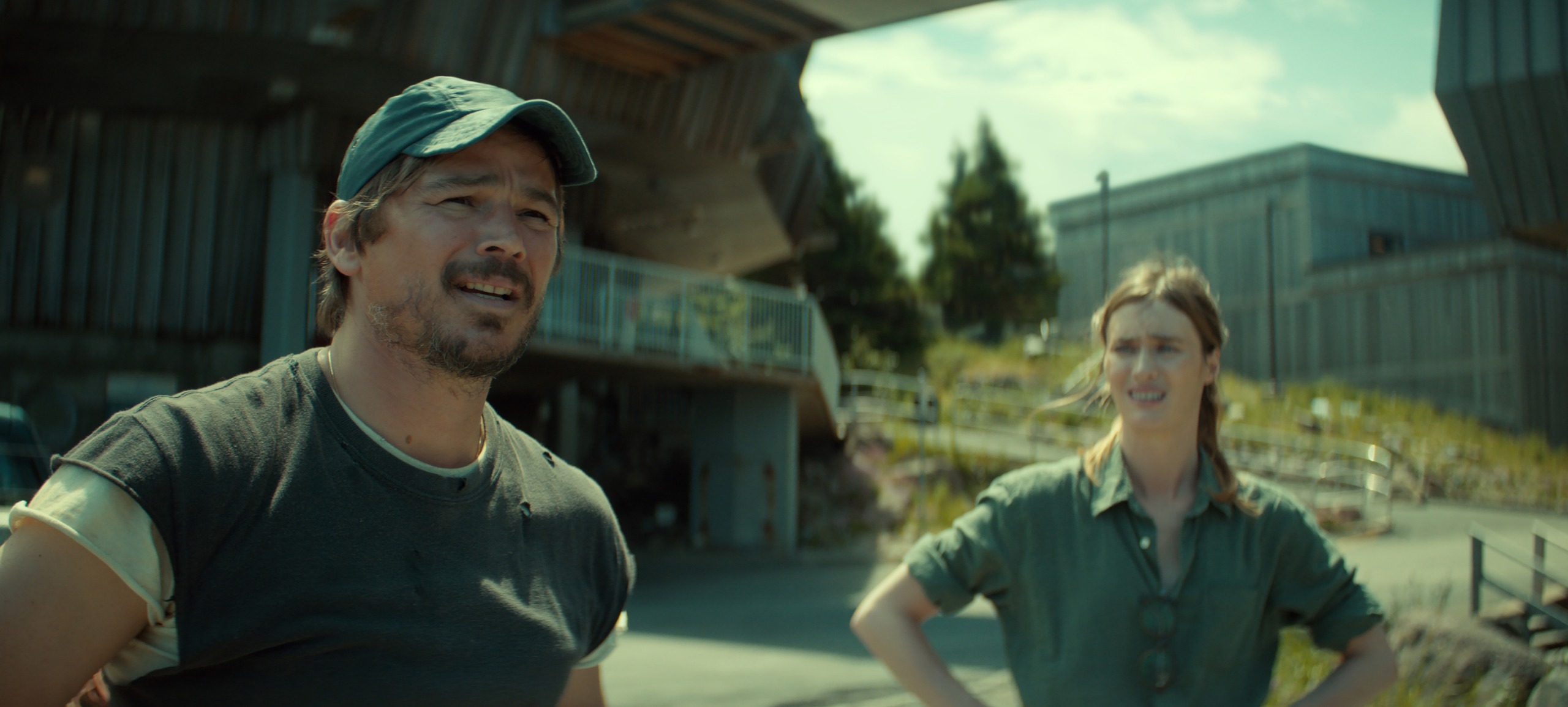
Scientific uncertainty was another element Mercier thought the series handled well. Researchers follow lines of inquiry without necessarily knowing the answer at the outset, and they need confirmation and further investigation. She said the show made Mudder frightening but also somewhat lovable, while using mystery to conceal the points where it took creative liberties.
She also praised the depiction of Newfoundland itself, including its landscapes, environments and people. The production appeared to treat the province almost as a character, she said. Students at Memorial University who were present during filming later watched episodes at the university and saw the laboratories where they work portrayed on screen.
Why real laboratory work takes time
Mercier also commented on smaller scientific details, including the use of tools and the time required for analyses. In one example, the writers were trying to date a block of ice. She explained that such work takes time and may require collaboration with other researchers; a laboratory test does not necessarily produce an immediate answer.
She also warned against presenting a microscope as an instrument that can reveal everything about a sample. A microscope provides magnification, but it does not supply chemical signatures or perform every other type of analysis.
The show retained a fictional device that can be inserted into an iceberg to instantly report its quality. In reality, determining the quality of ice or water requires multiple analyses and depends on what property researchers are investigating.
“In movies and television, it’s often the case that you put something into a machine and it spits out exactly what you want to know,” Mercier said. “But in real science, you have to ask the right question. You have to know what you’re looking for so the instrument can tell you whether something has a particular property or not.”
Mercier accepted that the production needed to take some creative liberties to advance the plot. The Ocean Sciences Centre’s fictional basement, where a door opens onto an ocean or a body of water, is one example. “Obviously, don’t look for that here!” she said. “That’s just about the only thing that isn’t real. The rest is pretty close to reality.”
Editor’s note: This interview has been condensed and edited for clarity.
Source: www.livescience.com