


Close Menu
HitechubHitechub
    What's Hot
    Science

    Climate Change and Health: How to Protect Ourselves From Its Impacts

    Science

    Storm Boerro Warning Upgraded to Amber as Scotland Braces for 80mph Wind Gusts

    Technology

    Urgent Update: 7-Zip Patches RCE Vulnerability Exploited by Malicious Archives

    Important Pages:
    • About Us
    • Privacy Policy
    • Terms & Conditions
    Facebook X (Twitter) Instagram Pinterest
    Facebook X (Twitter) Instagram
    HitechubHitechub
    Saturday, November 28
    • Shop
      • Fashion
        • Mens
        • Womens
        • Accessories
          • Handbags
          • Keychain
          • Masks
          • Money clicps
          • Neck Pillow
          • Rings
          • Towels
          • Wallets
        • Jewelry
        • Watches
        • T-shirts
        • Hawaiian shirts
        • Vests
        • Swim trunks
        • Swimsuits
      • Fun
        • Magic cubes
        • Magnifiers
        • Misc
        • Photo books
        • Puzzles
        • Toys
      • Home
        • Cleaning/Care
        • Mailbox covers
        • Mugs
        • Pot Holders
        • Spoon
      • Office and Electronics
        • Chairs
        • Office Supplies
        • IPad cases
        • Laptop stickers
        • Mouse pads
        • Notebooks
        • Pencil bags
        • Pens
        • Phone cases
      • Personalized
      • Pets
      • Sports
        • Cycling
          • Balaclava Mask
          • Bike Bell
          • Bike Computer
          • Bike Fender
          • Bike Grips
          • Bike Kickstand
          • Bike Light
          • Bike Locks
          • Bike Mitts
          • Bike Pumps
          • Bike Repair Stand
          • Bike Seat
          • Bike Trainer
          • Bike Wheels
          • BIKES
            • Folding Bikes
            • Road Bikes
          • Carbon Fiber Bike Products
          • Cycling Mask
          • Kid’ Bike Helmets
          • Inner Tube
          • Motorcycle Bag
          • Nylon Pedals
          • Adult Helmets
          • Photochromic Sunglasses
          • Soft Coolers
          • Suction Cup Bike Rack
          • Tool accessories
          • Winter Cloth
          • Heart Rate Monitor
        • Outdoors/Camping
          • Outdoor Bags
        • Sweatband
    • Technology
      1. AI
      2. Gadgets
      3. View All

      This is the most popular CEO in the world

      Sectors in which “Chat-GPT” is most often used

      Artificial intelligence has begun to “swallow” professions

      The unusual robot conductor of a concert in Seoul

      Here’s how you can tell if your phone is being tapped

      PlayStation 5 becomes a completely silent console and gets more space

      This is the first phone that can be used to park a car

      Best Gaming Laptops 2023: Powerful Portables for PC Games

      OpenAI Countersues Apple Over Alleged Trade Secret Theft Claims

      Pension and Welfare Services Suspended Following Cyber Incident

      New Linux NFS2ROOT Flaw Could Let Attackers Gain Root Privileges

      GTA 6 PC: AI Race to Clone the World’s Biggest Video Game

    • Science
      1. Space
      2. Wheels
      3. View All

      Space Perspective: A Journey to the Edge of Space

      5 Fascinating Facts About Space

      Space Exploration: Unveiling the Wonders of the Universe

      Toyota wants to make a new generation battery with a range of up to 1,200 km

      Meet Toyota’s lunar “baby” that could make exploring the Moon easier

      What does a night drive look like with one of the most beautiful cars in the world: the Rolls-Royce Ghost

      How a Dead Starling in a Garbage Bag Revealed the Secrets of Evolutionary Success

      Remington Highline Vision Now on Display for Group Access

      Dengue Fever Cases Surge Worldwide at an Alarming Rate

      HIV Prevention: A Critical Global Opportunity We Must Not Waste

    HitechubHitechub
    Home » Ancient Supermountain Beneath Antarctica May Have Fueled Complex Life on Earth, but Scientists Disagree
    Science

    Ancient Supermountain Beneath Antarctica May Have Fueled Complex Life on Earth, but Scientists Disagree

    Share Facebook Twitter Pinterest WhatsApp
    Share
    Facebook Twitter LinkedIn Pinterest WhatsApp

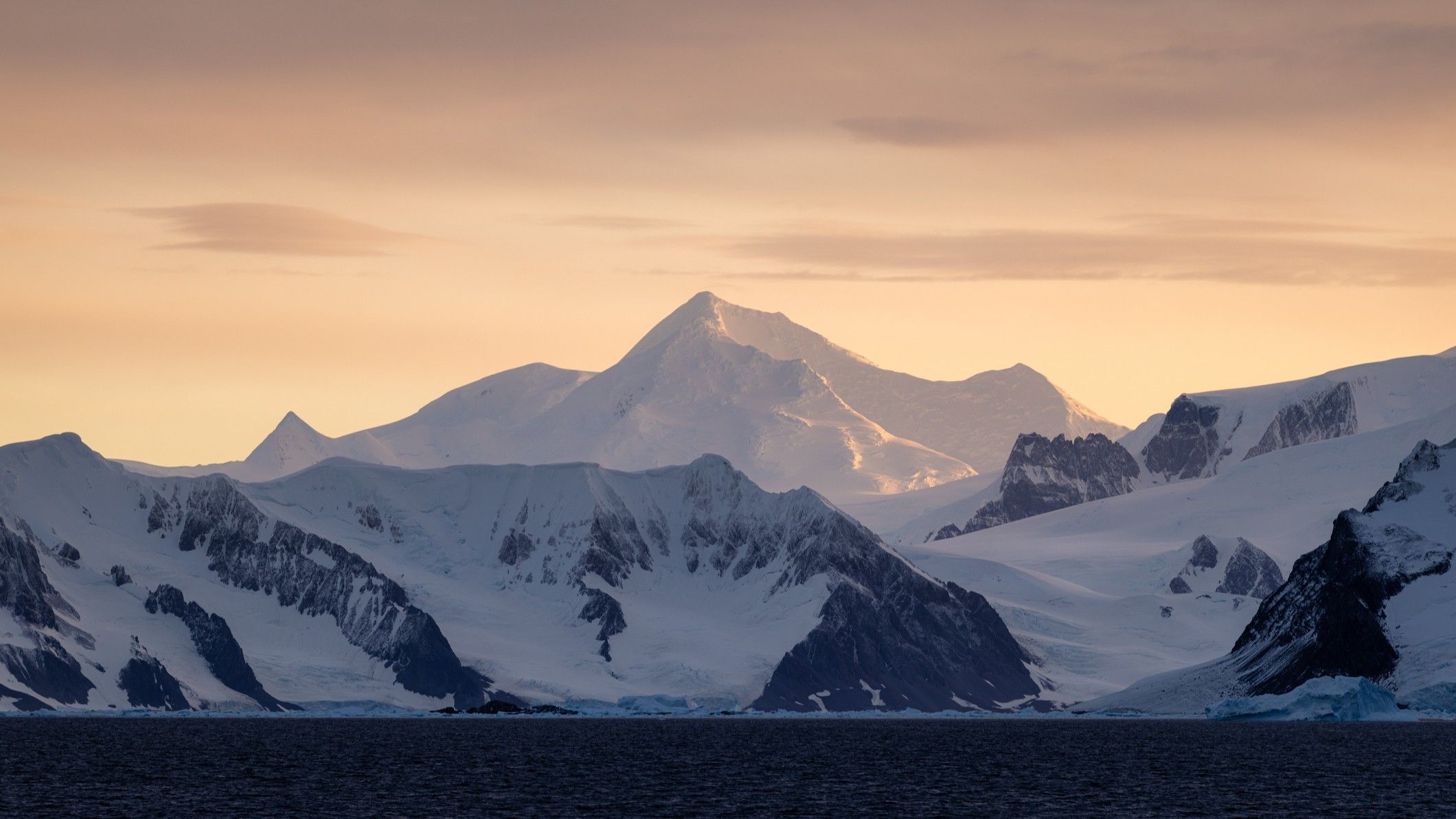
    Scientists have found evidence of a vast mountain system that once rose around what is now Antarctica, preserved in sediments on the surrounding ocean floor. The mountains formed as Gondwana assembled about 600 million years ago, and their erosion may have supplied nutrients that helped create conditions for the later diversification of complex life. However, researchers unaffiliated with the study say the evidence does not establish that the mountains caused the Cambrian explosion.

    Mountains formed during Gondwana’s assembly

    About 600 million years ago, landmasses in the Southern Hemisphere collided to form Gondwana, the supercontinent that eventually included South America, Africa, Arabia, Madagascar, India, Australia and Antarctica. Multicellular organisms already existed, but they were still relatively primitive.

    Previous research has suggested that these continental collisions created a huge, Himalayan-like mountain range in what is now Antarctica. In a study published online in Earth and Planetary Science Letters on Sept. 12, researchers reported finding sediment that accumulated in the ocean as the Gondwanan mountains eroded over thousands of years.

    “The results suggest that Gondwana’s formation involved multiple major continental collisions, producing a vast network of mountain belts comparable in size to the modern-day Himalayas and Tibetan Plateau,” Nathan Daczko, a petrologist at Australia’s Macquarie University who was not involved in the study, told Live Science via email.

    “This study highlights how much of Antarctica’s geological history is hidden beneath its surface,” Daczko said.

    Ancient minerals reveal Antarctica’s hidden past

    Most of Antarctica is buried beneath an ice sheet, making its geological and evolutionary history difficult to reconstruct. To investigate that history, the research team drilled into the ocean floor at 12 locations around Antarctica and extracted soil samples.

    The researchers were looking for detrital zircon, an ancient crystal that forms in rocks and can remain chemically intact even after those rocks erode. Zircon can also be dated precisely, and its trace elements can indicate the region where it formed.

    “We can date it very precisely, and from the geochemistry, especially trace elements, we can determine where the zircon came from,” Ian Campbell, a geochemist at the Australian National University and a co-author of the study, told Live Science.

    The team dated 1,712 zircon grains from marine sediments and compared the abundance of Antarctic zircons with a global zircon database across different time scales.

    “We used the zircon record to show that the mountain ranges that formed during the merger of Gondwana were the largest and most widespread mountains in Earth’s history, and they included some very tall mountains, like today’s Himalayas,” Campbell said.

    Alan Collins, a geoscientist at the University of Adelaide in Australia, said the scale of erosion indicated by the samples was surprising.

    “This provides excellent support for the idea that the mountain range formed by the coalescence of the Gondwana supercontinent was one of the largest on Earth throughout the distant past,” Collins told Live Science via email.

    The formation of Gondwana produced about one-fifth of the world’s zircons, according to the study. The researchers also found that 14% of those zircons formed about 320 million years ago.

    Elias Rugen, a geochemist at the University of Southampton in the U.K. who was not involved in the research, said he was surprised by the “abundance of zircon associated with Gondwanan assemblages in the Antarctic samples.”

    “It’s remarkable how much information about Antarctica’s geological past can be recovered from these tiny minerals, especially when large parts of Antarctica remain hidden under ice,” Rugen said.

    However, Rugen cautioned that zircon data cannot be used to directly determine the height of the mountains.

    “It’s very difficult to estimate the height of a mountain from this kind of data,” he said.

    A diagram showing what the supercontinent Pangaea looked like. (Image credit: Ianm35, Getty Images)

    Could mountain erosion have fueled complex life?

    The formation and erosion of Gondwana’s supermountains would have affected Earth’s environments and the organisms living in them, the study’s authors said.

    “We need nutrients to survive,” Campbell said. “At that time, most of life was in the ocean, so we need to get nutrients into the ocean.”

    The Himalayas provide a modern comparison. They are currently the world’s largest ongoing erosional system, with sediment washing down rivers and into the sea. Some of that sediment collects in the deep ocean in the Bengal Fan, the largest deposit of its kind on Earth.

    In a similar way, Campbell said, Gondwana’s giant mountains “pumped a lot of nutrients into the ocean,” which “significantly advanced the evolution of life” on Earth.

    Shortly after Gondwana formed, Earth entered the Cambrian Period, which lasted from about 541 million years ago to 485 million years ago. During this interval, life diversified dramatically in an event known as the Cambrian explosion. Chordates, the group that includes animals with dorsal nerves such as humans, and arthropods, the ancestors of insects and crustaceans, appeared during this period.

    The study’s authors identified a connection between the Gondwanan supermountains and the rapid evolution of complex life. The mountains do not directly explain the Cambrian explosion, Campbell said, but they “provide an opportunity for it to occur.” The paper proposes that nutrients released by erosion supported organisms at the base of the animal food web.

    A hypothesis, not a proven cause

    Daczko and Rugen said the proposed link should be treated cautiously.

    “The methods used in this study cannot directly prove that this particular mountain region is directly responsible for the increase in oxygen or the Cambrian explosion,” Rugen said. “However, there is growing evidence of a Gondwanan hypermountain that would have inevitably had a significant impact on the Earth’s biogeochemical cycles.”

    Daczko said he would describe the relationship between the Gondwanan supermountains and the Cambrian explosion as “a provocative hypothesis rather than an established causal relationship.”

    Even so, the findings suggest that Antarctica’s ice-covered interior may contain important evidence about Earth’s tectonic and environmental history.

    “Most intriguing is the possibility that some of the largest mountain systems in Earth’s history are effectively hidden beneath the East Antarctic ice sheet,” Daczko said. “Antarctica may hold some of the most important remaining evidence for understanding our planet’s tectonic and environmental evolution.”

    Source: www.livescience.com

    Share. Facebook Twitter Pinterest LinkedIn WhatsApp
    Previous ArticleJWST and Euclid Discover the Oldest Monster Black Hole at the Edge of the Universe, Challenging Cosmic Theory
    Next Article HIV Prevention: A Critical Global Opportunity We Must Not Waste

    Related Posts

    Science

    How a Dead Starling in a Garbage Bag Revealed the Secrets of Evolutionary Success

    Science

    Remington Highline Vision Now on Display for Group Access

    Science

    Dengue Fever Cases Surge Worldwide at an Alarming Rate

    Science

    HIV Prevention: A Critical Global Opportunity We Must Not Waste

    Science

    JWST and Euclid Discover the Oldest Monster Black Hole at the Edge of the Universe, Challenging Cosmic Theory

    Science

    Astrophysicist and Star Trek Science Advisor Erin MacDonald Reveals Her Success Secrets and Most Memorable Science Flubs

    Science

    Daily Briefing: Riemann Forecast Guide and Latest Insights

    Science

    Scientists May Have Misunderstood How Brain Cells Work for Decades

    Add A Comment
    Leave A Reply Cancel Reply

    Stay In Touch
    • Facebook
    • Twitter
    • Instagram
    • Pinterest
    Top Picks
    Technology

    Windows Server 2022 Mainstream Support Ends Next Month

    Windows Server 2022 Mainstream Support Ends in October 2026 Microsoft has notified customers that Windows…

    Apple’s New MacBook Features a 2,000-Nit OLED Display

    How NASA Squeezed the Treasury, Encrypted the Atmosphere, and Broke the Mold to Save Swift

    NASA-Funded Research Discovers Complex Life Capable of Withstanding Record Heat

    Native Hawaiians and Easter Islanders Share Ancestry in the “Ultra Voyager” Group

    Most Popular
    Science

    Ancient Etruscan High-Ranking Tomb Discovered North of Rome with Weapons, Jewelry and Rare Women’s Shoes

    Science

    Chinese Rocket Hit by Rare Midair Lightning Strike Moments After Launch, Leaving Onlookers Horrified (Video)

    Categories
    • AI (9)
    • Gadgets (6)
    • Science (3,637)
    • Space (3)
    • Technology (3,061)
    • Wheels (3)
    Our Picks
    Technology

    India’s First Privately Developed Rocket Achieves Historic Orbit in Dramatic Launch

    Technology

    Hugging Face Hack Raises Concerns About Cultural Issues at OpenAI

    © 2026 Hitechub.
    • Home
    • About Us
    • Privacy Policy
    • Terms & Conditions

    Type above and press Enter to search. Press Esc to cancel.

    GDPR Cookie Banner

    We are using cookies to give you the best experience on our website.

    You can find out more about which cookies we are using or switch them off in .

    Ad Blocker Enabled!
    Ad Blocker Enabled!
    Our website is made possible by displaying online advertisements to our visitors. Please support us by disabling your Ad Blocker.