


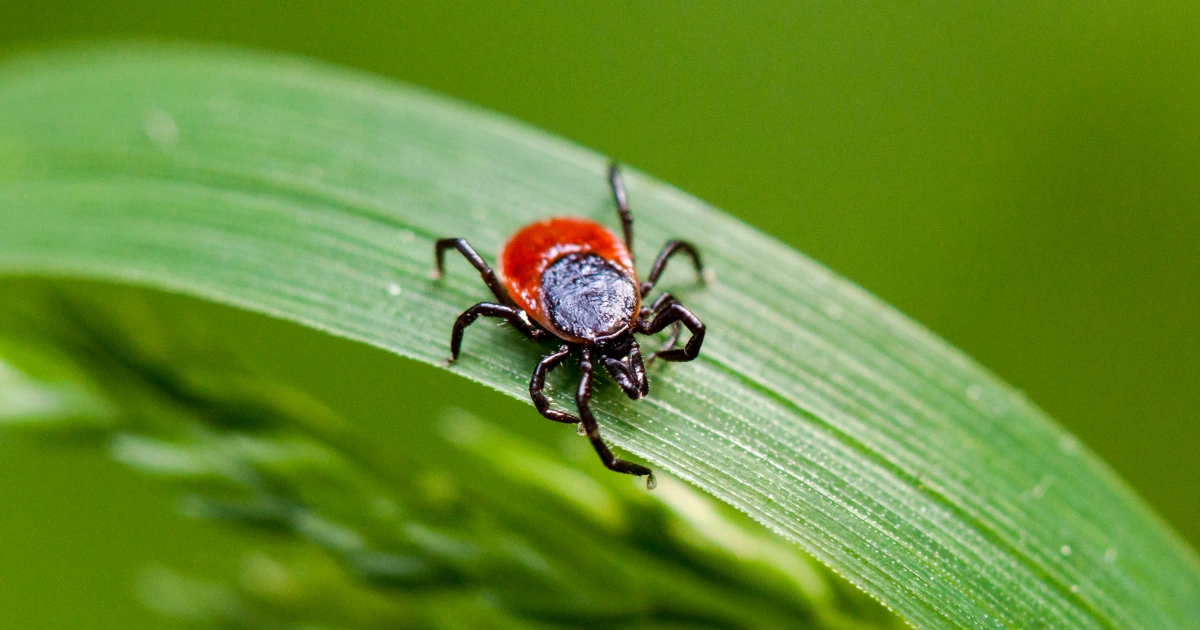
A newly identified strain of Lyme disease has emerged in New York State, raising concerns among health officials.
Subscribe to read this story without ads
Get unlimited access to ad-free articles and exclusive content.

Nearly all cases of tick-borne illnesses in the United States are caused by Borrelia burgdorferi, the corkscrew-shaped bacterium responsible for Lyme disease. However, a second species, Borrelia mayoni, is much rarer and has only been detected in Minnesota and Wisconsin. Both species are transmitted by deer ticks.
According to a Centers for Disease Control and Prevention report, a case of Lyme disease caused by B. mayoni was identified in upstate New York last July.
The new infection was found in an adult from Herkimer County, extending from Utica to the Adirondack Mountains. This individual had not traveled recently, according to reports.
The state’s health department detected several infected ticks on the person’s wooded property, yet a broader search across 24 New York counties yielded no additional findings among over 1,500 ticks tested.
The exact method of bacteria introduction into Herkimer County remains unclear.
“While this finding was unexpected, we recognize that tick populations and associated diseases can evolve geographically over time,” stated a spokesperson for the New York State Department of Health.
Douglas Norris, an expert in molecular microbiology from Johns Hopkins Bloomberg School of Public Health, indicated that while B. mayoni might have been present in New York ticks for some time, it appears limited in scope.
Same Disease, Different Symptoms
Research on B. mayoni remains limited compared to B. burgdorferi, given the latter’s discovery 35 years prior. Both pathogens can cause serious illness.
Infections typically begin with fever and headache. However, Lyme disease caused by B. mayoni is more likely to present with nausea and vomiting.
Norris noted that individuals infected with the rarer species might overlook the signature rash that usually appears at the tick bite site. Instead, they may develop a broader rash that resembles small red spots across larger body areas.
“There are neurological symptoms as well,” said Dr. Bobby Pruitt, a pathologist at the Mayo Clinic who was involved in the discovery of B. mayoni. “It is possible that there are additional symptoms yet to be identified.”
The health department has not disclosed the symptoms experienced by New Yorkers who contracted B. mayoni last year.
Lyme Disease Cases on the Rise
The incidence of Lyme disease has surged, according to recent data. From 2020 to 2024, Lyme disease cases in New York soared by nearly 450%, growing from around 37 cases per 100,000 people to approximately 165 cases per 100,000 people.
Additional instances of B. mayoni may arise across the Northeast, although these infections are still uncommon, according to Pruitt.
“I believe Borrelia burgdorferi will continue to be the dominant form of Lyme disease in the U.S.,” she added, emphasizing that B. mayoni does not account for the majority of Lyme disease cases.
In the upper Midwest, B. mayoni has been identified, yet represents a mere fraction of total Lyme disease cases. According to the Minnesota Department of Health, only about 2 out of 3,000 annual Lyme disease cases in the state are attributed to B. mayoni.
Research indicates that only 0.2% of larval ticks in New York carried B. mayoni, in contrast to approximately 1% of adult ticks. Conversely, around 25% of nymphs and half of adult ticks are infected with B. burgdorferi in the northeast.
Early detection is crucial, as it takes ticks 24 to 48 hours to transmit infectious bacteria after attaching to a host. Nymphs, which are typically the size of poppy seeds, are usually responsible for spreading Lyme disease.
“People often notice larger ticks, but these smaller nymphs typically go undetected,” Norris explained.
Climate Change and Lyme Disease
Norris remarked that climate change is altering the dynamics of tick-borne diseases, although it may not be the reason for B. mayoni’s recent emergence in New York.
“Unfortunately, it arrived at an opportune time,” he noted.
While the origin of the bacteria is uncertain, Norris suggested that it may have been transported by infected ticks on migratory birds arriving from Minnesota or Wisconsin.
New York and vast regions of the northeastern U.S. provide an ideal environment for ticks to thrive and reproduce, making it possible for them to infect humans. This “sweet spot” is shifting northward to areas like Maine and southern Canada due to climate change, resulting in increased Lyme disease cases in regions where it has long been endemic.
Pruitt advises individuals to minimize tick bite risks by staying in the middle of trails while hiking and avoiding tall grass. Wearing long sleeves and tucking pants into socks can also help prevent ticks from reaching the skin. Additionally, she recommends employing a repellent containing 30% DEET or lemon eucalyptus oil. Regularly checking oneself and pets for ticks while in tick-prone areas is essential, and showering upon returning home can aid in tick detection.
“While we don’t want to deter people from enjoying the outdoors,” she cautioned, “it’s vital to protect oneself against tick bites as these parasites can transmit various diseases, including other infections.”
Source: www.nbcnews.com