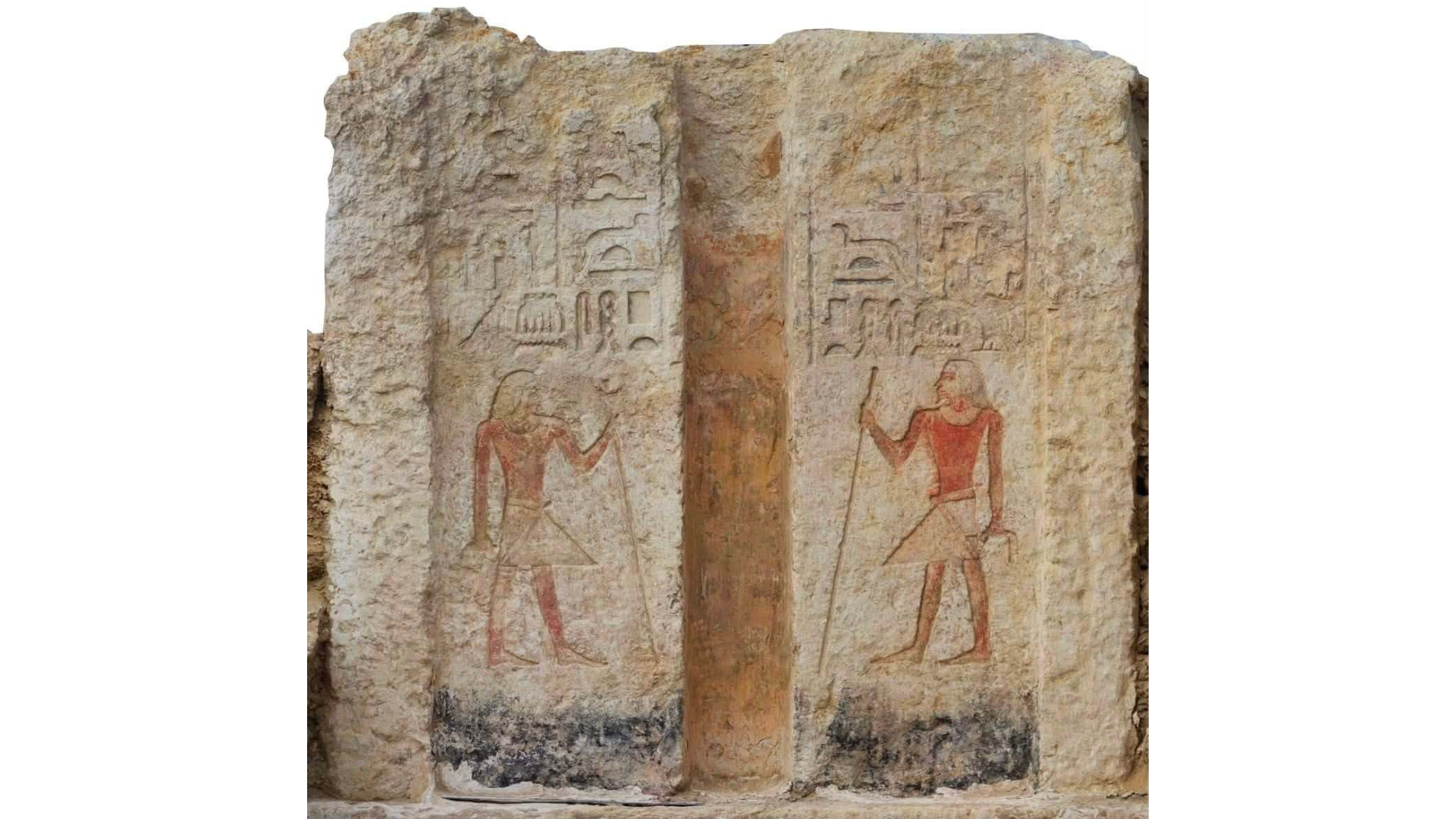
Ancient Tomb of Egypt’s “Keeper of Royal Secrets” Discovered at Saqqara
Egyptian archaeologists have discovered the ancient tomb of an official known as the “Keeper of the Secrets of the Royal Decree” during excavations in Saqqara, one of Egypt’s most important archaeological sites.
The decorated burial belonged to an official named Sekentio Ptah, who lived during Egypt’s Old Kingdom, a period spanning approximately 2649 to 2150 B.C. and best known for the construction of the pyramids at Giza.
Who was the “Keeper of Royal Secrets”?
Although the title “Keeper of Royal Secrets” may sound mystical, it likely referred to a senior administrative position within the ancient Egyptian government. Ann Macy Roth, a clinical professor of Egyptology at New York University who was not involved in the excavation, said the title probably described an official responsible for royal documents and the people who created them.
Latest videos fromLive Science
“That presumably simply means that, as the person in charge of royal documents and those who created them, he had access to classified information,” Roth told Live Science via email. “It’s a common title among royal clerks.”
According to a translated statement from Egypt’s Ministry of Tourism and Antiquities, Sekentio Ptah held several other important positions. These included “Supervisor of all the works of the king” and “Supervisor of royal documents.” The ministry detailed the discovery in an official statement.
Artifacts found inside the Saqqara tomb
Archaeologists found an offering table, a wash basin and two false doors inside the tomb. False doors were symbolic architectural features commonly placed in ancient Egyptian tombs. Egyptians believed these doors allowed the spirit of the deceased to move between the tomb and the afterlife.
The design of the false doors suggests that the tomb dates to the late Fifth Dynasty or early Sixth Dynasty, approximately 4,350 years ago, according to Roth.
Some tombs discovered in Saqqara date back more than 4,000 years.
Image credit: Egyptian Ministry of Tourism and Antiquities
The excavation team also uncovered more than 100 shabtis, also known as ushabtis. These small funerary figures were placed in Egyptian tombs because they were believed to serve the deceased in the afterlife.
Other discoveries included a wooden statue of a falcon, possibly connected with the falcon-headed god Horus, as well as pieces of cartonnage, a plaster-like material used in the construction of ancient Egyptian mummy cases. The mummy of Sekentio Ptah has not been identified.
Get the world’s most fascinating discoveries delivered straight to your inbox.
Evidence of later burials
After reviewing photographs and information released by Egypt’s antiquities authorities, Roth said the tomb was probably reused for later burials. The shabtis and cartonnage may have been placed in the tomb hundreds or thousands of years after Sekentio Ptah was buried.
The tomb was discovered in the Bubastion, also spelled Bubastium, area of Saqqara. During later periods of ancient Egypt, including the Late Period from approximately 664 to 332 B.C., this area was associated with Bastet, the cat-headed goddess of fertility and protection.
Although cat burials are known from the Bubastion area, the Egyptian ministry’s statement did not confirm that a cat was buried inside this particular tomb.
Live Science contacted the excavation team but did not receive a response before publication.
How much do you know about ancient Egyptian mummies? Take our mummy quiz.