


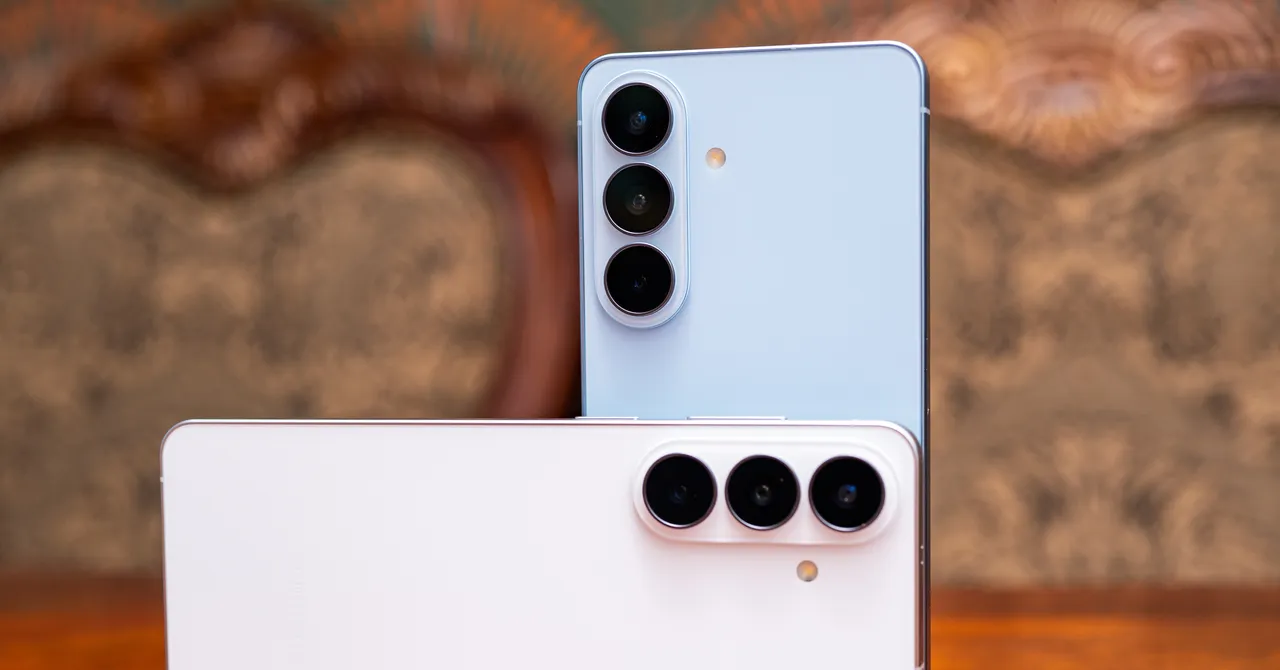
Other Samsung Phones to Consider: Foldables, Galaxy A Series and More
If you don’t see a Samsung phone listed in this guide, it’s likely because it isn’t sold in the US or is more difficult to obtain for testing. However, we tested the following Samsung smartphones and included them here for shoppers with specific needs.
Samsung Galaxy Z Fold8 Ultra
Price: $2,100
The Samsung Galaxy Z Fold8 Ultra is a gradual upgrade over the Z Fold7, but it’s an excellent option for foldable-phone fans who want the best Samsung has to offer and are willing to pay for it.
It retains the familiar book-style design, with a 6.5-inch cover screen that functions like a standard candy-bar phone. Open it to reveal a tablet-sized 8-inch display with a less noticeable crease and a stronger hinge than before.
The Z Fold8 Ultra delivers top-tier performance, all-day battery life, and Samsung’s best camera system in a foldable phone. Its camera setup includes a 200-megapixel main camera, a 50-megapixel ultrawide camera, and a 10-megapixel telephoto camera.
Photo: Julian Cioccatu
Samsung Galaxy S26 FE
Price: $700
The Samsung Galaxy S26 FE is a perfectly decent smartphone with good battery life, a large display, and a solid triple-camera system. However, there’s little reason to spend $100 more on it when the nearly identical Galaxy S25 FE is available.
The processor is slightly better, but that’s about it. Samsung also downgraded the USB-C port to USB 2.0 on the S26 FE. For most shoppers, the Galaxy S25 FE is the better value while it’s still available.
Photo: Simon Hill
Samsung Galaxy Z Fold7 and Galaxy Z Flip7
Prices: Z Fold7, $2,000; Z Flip7, $1,100
If you want a Samsung foldable without paying the highest possible price, consider the 2025 Galaxy Z Fold7 or Galaxy Z Flip7 when they’re available at a discount.
The Galaxy Z Fold7 is slightly thicker than the Z Fold8 Ultra, and its display crease is more noticeable. Battery life isn’t as long, and the ultrawide camera is worse, but the overall difference between the two foldables isn’t substantial.
The same is generally true of the Galaxy Z Flip7. The newer Flip8 introduces minor hinge improvements, a sleeker and lighter design, fewer wrinkles in the display, a faster processor, and more useful software features on the outer screen.
Samsung Galaxy S25 Edge
Price: $1,300
Photo: Julian Cioccatu
Have you ever wanted an exceptionally thin and light phone? Samsung offers one anyway. The Galaxy S25 Edge was a unique one-off model last year, and it’s doubtful that we’ll see a successor.
The phone shares several features with the Galaxy S25 Ultra, including a titanium frame, toughened front glass, and 4K video recording at 120 frames per second. All of its cameras also have autofocus.
However, Samsung made several compromises to achieve the phone’s extremely slim 5.8-millimeter frame. The Galaxy S25 Ultra, by comparison, is 8.2 millimeters thick. The S25 Edge doesn’t include a stylus or a telephoto camera, and its battery capacity is significantly smaller.
Its 3,900-mAh battery required frequent use of various charging and power-management options, which is unacceptable for many people. The iPhone Air delivered better battery life. If you’re usually near a power source and prioritize a slim, lightweight design, the Galaxy S25 Edge may still be worth considering.
Samsung Galaxy A17 5G
Price: $249
Photo: Julian Cioccatu
On paper, the Samsung Galaxy A17 5G looks like a bargain. It offers six years of software support, an AMOLED display, expandable storage, and a decent camera.
Unfortunately, its performance holds it back. The US model includes only 4 GB of RAM, which hurts the overall experience. If you need a phone you can rely on in an emergency, the Galaxy A17 may not be dependable enough.
For shoppers with very basic needs, however, the Galaxy A17 5G may be sufficient.
Should You Buy an Older Samsung Galaxy S24?
If you want to save money, it’s reasonable to buy a Samsung Galaxy S24-series phone from 2024, provided the price is significantly below the original MSRP. These phones are still supported and remain very good, although they’re difficult to find at most major retailers.
That said, the older model isn’t worth buying unless the discount is substantial.
Should You Invest in the Samsung Ecosystem?
Photo: Julian Cioccatu
Samsung is one of the few smartphone manufacturers capable of rivaling Apple’s hardware ecosystem. In addition to smartphones, the company makes a broad range of connected devices, including:
- Galaxy Watch8 smartwatches
- Galaxy Buds4 Pro earbuds
- Galaxy Ring fitness rings
- Galaxy Tab S11 tablets
- Galaxy laptops running Windows
The ecosystem has several advantages. The Galaxy Ring and Galaxy Watch8 are available only when paired with a Samsung phone. Galaxy Buds can also switch automatically between Samsung devices based on which one you’re using.
Samsung phones and laptops don’t offer many exclusive features when used together, but tools such as Quick Share make it easy to send photos and documents between devices. Quick Share can even send files to an iPhone through AirDrop.
You don’t need to buy into the full Samsung ecosystem. However, if you want hardware from one company across multiple product categories, Samsung offers plenty of options.
What Is Samsung Galaxy AI?
Photo: Julian Cioccatu
Samsung introduced Galaxy AI as a collection of artificial intelligence features in the Galaxy S24 series. Many of these features use Google’s Gemini large language model to assist with everyday tasks, including:
- Real-time translation during phone calls
- Real-time transcription in Samsung’s Voice Recorder app
- Summaries of long passages in the Samsung Notes app
- Tools for changing the tone of sentences with Samsung Keyboard
Galaxy AI on the Galaxy S25 Series
The Galaxy S25 series expanded Galaxy AI by making Gemini the default voice assistant. Gemini can control multiple apps at the same time. Samsung also introduced Drawing Assist, which lets you sketch or type prompts to create AI-generated images.
You can also use real-time video with Gemini, including from the cover screen of the Galaxy Z Flip7.
Galaxy AI on the Galaxy S26 Series
With the Galaxy S26 series, Samsung’s AI tools became more useful. The document scanner in the Camera app can remove fingers and wrinkles, minimize distortion, and convert photos into PDFs.
Audio Eraser is now available in all media apps to reduce distracting background sounds in videos, making it easier to hear the subject. The phones also include built-in call screening to help filter robocalls.
Samsung brought Google’s task-automation capabilities to Gemini Assistant, allowing Gemini to book an Uber or place orders through DoorDash, Uber Eats, or Grubhub. However, the process is fairly slow.
Many Galaxy AI features can be enabled or disabled under Settings > Galaxy AI. You can also limit Galaxy AI to on-device processing.
What Is Samsung DeX?
Courtesy of David Nield
Samsung DeX, short for “Desktop Experience,” launched in 2017. It lets you connect a compatible Samsung phone to an external monitor and use a desktop-style version of Android.
Flip7 is the first Galaxy Flip phone to support DeX. DeX requires a compatible monitor, mouse, keyboard, and a cable to connect the phone to the monitor. You can also wirelessly cast DeX to select displays.
DeX lets you resize Android apps and open them in separate windows. It’s a capable computing platform, but it isn’t a permanent replacement for a laptop. It’s most useful when you’re visiting another office, working from a coffee shop, or traveling with a portable display.
A complete guide to setting up and using DeX is available separately.
What Happened to the Samsung Galaxy Z TriFold?
Photo: Julian Cioccatu
I haven’t tested Samsung’s Galaxy Z TriFold, and I doubt I ever will. I got a preview at CES 2026, but Samsung didn’t provide WIRED with a test unit.
The $2,800 flip phone was officially released in the US at the end of January, but Samsung discontinued it three months later, citing high manufacturing costs.
The TriFold’s ability to expand from a relatively compact phone into a massive 10-inch tablet was impressive. However, that versatility didn’t justify the price. You can buy a powerful phone and a high-quality tablet for less than $3,000.
The convenience of carrying the larger screen in your pocket is remarkable, but paying more than $1,000 for that feature is difficult to justify. The TriFold may be the true “phablet” Samsung promised years ago, and its folding mechanism is a novel technical achievement. I hope Samsung reconsiders the design once the smartphone market recovers.
The format would be ideal for people who frequently use multiple apps for productivity. For now, shoppers will have to use a standard Galaxy Z Fold instead.
—Julian Chokkatu
How WIRED Tests Samsung Phones
WIRED has covered Samsung smartphones since they entered the market. For every Samsung phone we test, our reviewers insert a personal SIM card and use the device as their own for as long as possible, typically several weeks.
We test the camera and compare its results with similarly priced phones. We benchmark performance, play graphics-intensive games, and evaluate new features. Reviewers may also make and receive calls to confirm that calls connect reliably and that voice quality is clear.
Source: www.wired.com