


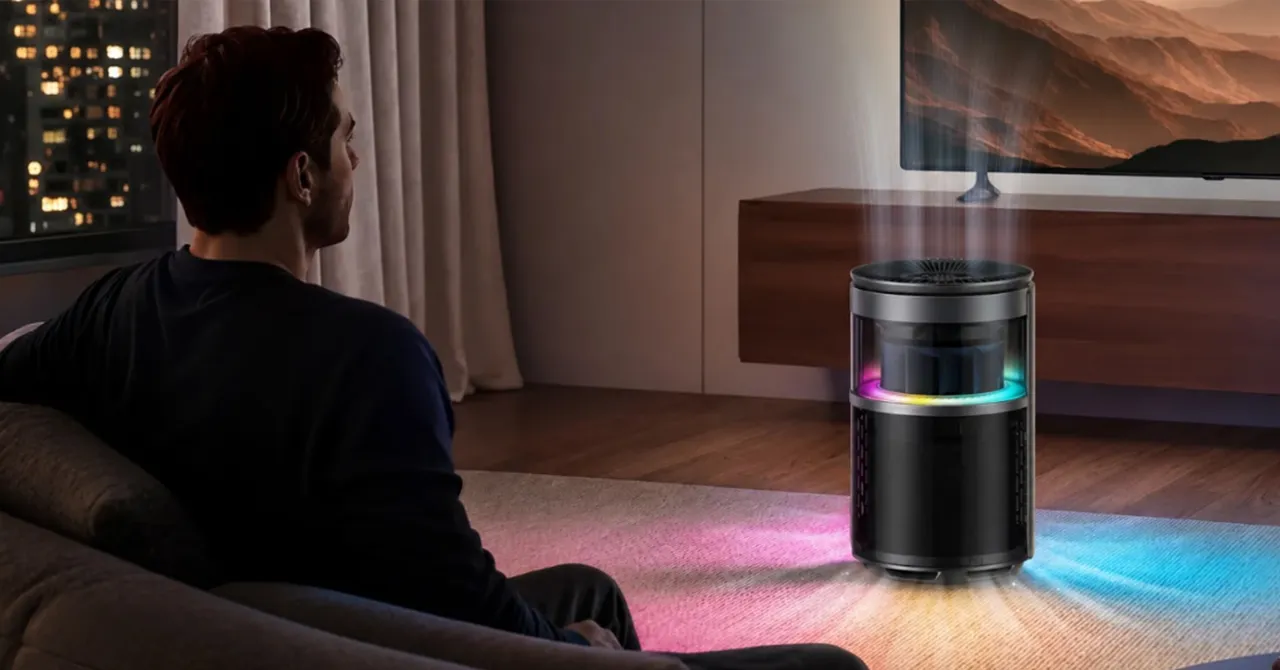
The average air conditioner sold in 2024 is about 20% more efficient than an equivalent model sold in 2014, according to the International Energy Agency (IEA). Yet rising temperatures and growing access to cooling mean efficiency improvements must go much further. The IEA predicts that global cooling demand will continue to rise, while more efficient heat pumps, natural refrigerants and compact systems could help reduce the environmental impact of home air conditioning.
“Total electricity production in Japan and South Korea will increase by 1,600 terawatt-hours by 2035,” the IEA says. Proximity sensing and other controls could deliver modest energy savings, although the benefits of occupancy sensors remain disputed.
“Performance improvements are obtained when [targeted AC] worked,” said the San Francisco-based Gradient, which manufactures 120-volt, all-weather window air conditioners and heat pumps. “But are we going to go into a building that reduces energy by 85% and design another feature that reduces it to 87%? I personally have never used a product with occupancy sensors that I feel has worked well.”
Compact window air conditioners and heat pumps
Three major changes are needed to achieve sustainable home cooling by 2050, according to Palm. One is reducing reliance on toxic synthetic refrigerants, the liquids and compounds that absorb and release heat in cooling systems. Another is designing systems with low refrigerant charges to improve safety.
Heat pumps have become a modern and efficient option for both heating and cooling. In heating mode, the system absorbs heat from outside and uses a refrigerant to produce gas. A compressor raises the refrigerant’s temperature, after which it condenses and transfers heat to water in a home’s heating system. An expansion valve then lowers the pressure and returns the refrigerant to a liquid state. When cooling is needed, a reversing valve switches the direction of the process, moving heat from indoors to outside.
The challenge is persuading renters and people living in small homes to adopt the technology. “The domestic market requires heat pumps that can fit into apartments without being noisy or too bulky,” Palm says. Lower prices will also be important.
Gradient units typically use one-third less energy than a standard window air conditioner. The company says the technology is primarily intended for heating, while also improving cooling efficiency. The units are designed for relatively simple self-installation, allowing apartment renters to reclaim their windows and potentially reduce energy bills. They also operate more quietly than older air conditioners.
Natural refrigerants create new engineering challenges
Changing the shape and size of an air conditioner addresses only part of the problem. Other efforts, including Bosch’s Climate 6000iP, launched in September, aim to replace synthetic refrigerants with natural alternatives such as propane, also known as R290.
Refrigerant leaks alone are estimated to produce 720 million tons of carbon dioxide-equivalent emissions each year. Natural refrigerants can dramatically reduce global-warming potential, but their flammability requires complex redesigns, spark-free components and low-cost systems. U.S. regulators and supply chains also remain cautious about adopting them widely.
Achieving sustainable cooling by 2050 is far from glamorous, Palm says. The future of home cooling will not depend on an air conditioner tracking occupants to the kitchen for a midnight snack. Instead, it will depend on less visible mechanical improvements deep inside the compressor and the wider cooling system.
Source: www.wired.com