


How T Waves Could Provide Early Warning of Tsunamis From Underwater Volcanoes
The powerful 2022 eruption of the underwater Hunga Tonga-Hunga Ha’apai volcano in Tonga has revealed a potential new way to detect tsunamis caused by submarine volcanic eruptions.1
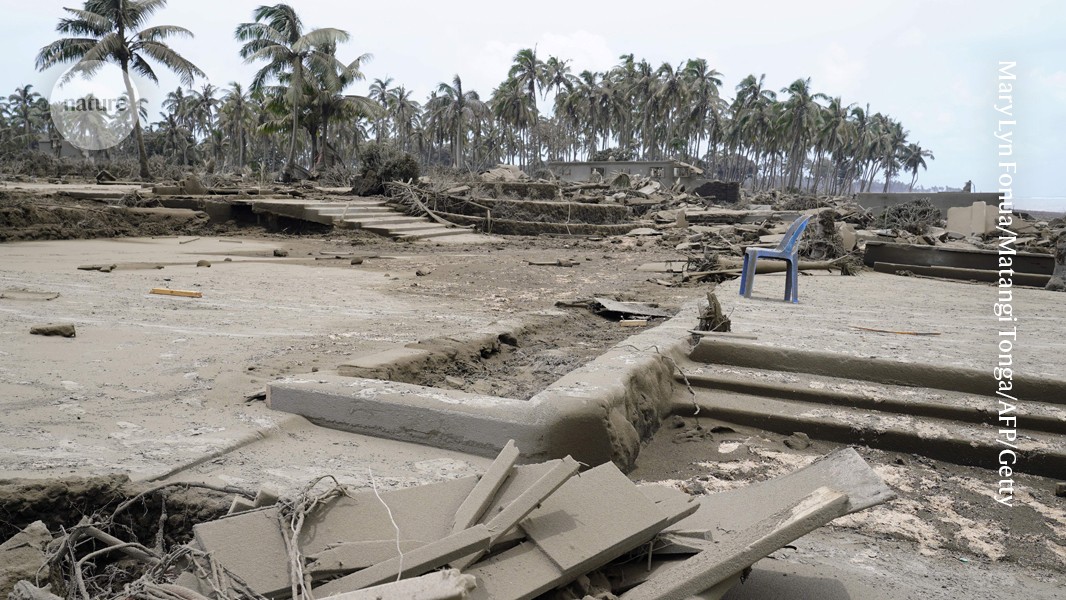
Undersea volcanoes are difficult to monitor because they are hidden beneath the ocean. When Hunga Tonga-Hunga Ha’apai erupted in January 2022, it triggered a tsunami that struck nearby island coastlines with little warning. Some waves reached heights of more than 40 meters.
To investigate the volcano’s 11-hour eruption, Shane Cronin of the University of Auckland in New Zealand and his colleagues analyzed data from seismic sensors located hundreds to thousands of kilometers away. The researchers identified high-frequency, slow-moving seismic signals known as T waves, which formed when the eruption’s energy traveled through the ocean.
The T-wave signals were strongest about an hour after the eruption began, when the underwater volcano’s summit fractured and collapsed. This collapse also generated the eruption’s largest and most destructive tsunami.
Because T waves travel at least seven times faster than tsunami waves, monitoring these signals could help scientists issue earlier warnings for tsunamis triggered by underwater volcanic eruptions.
Source: www.nature.com