


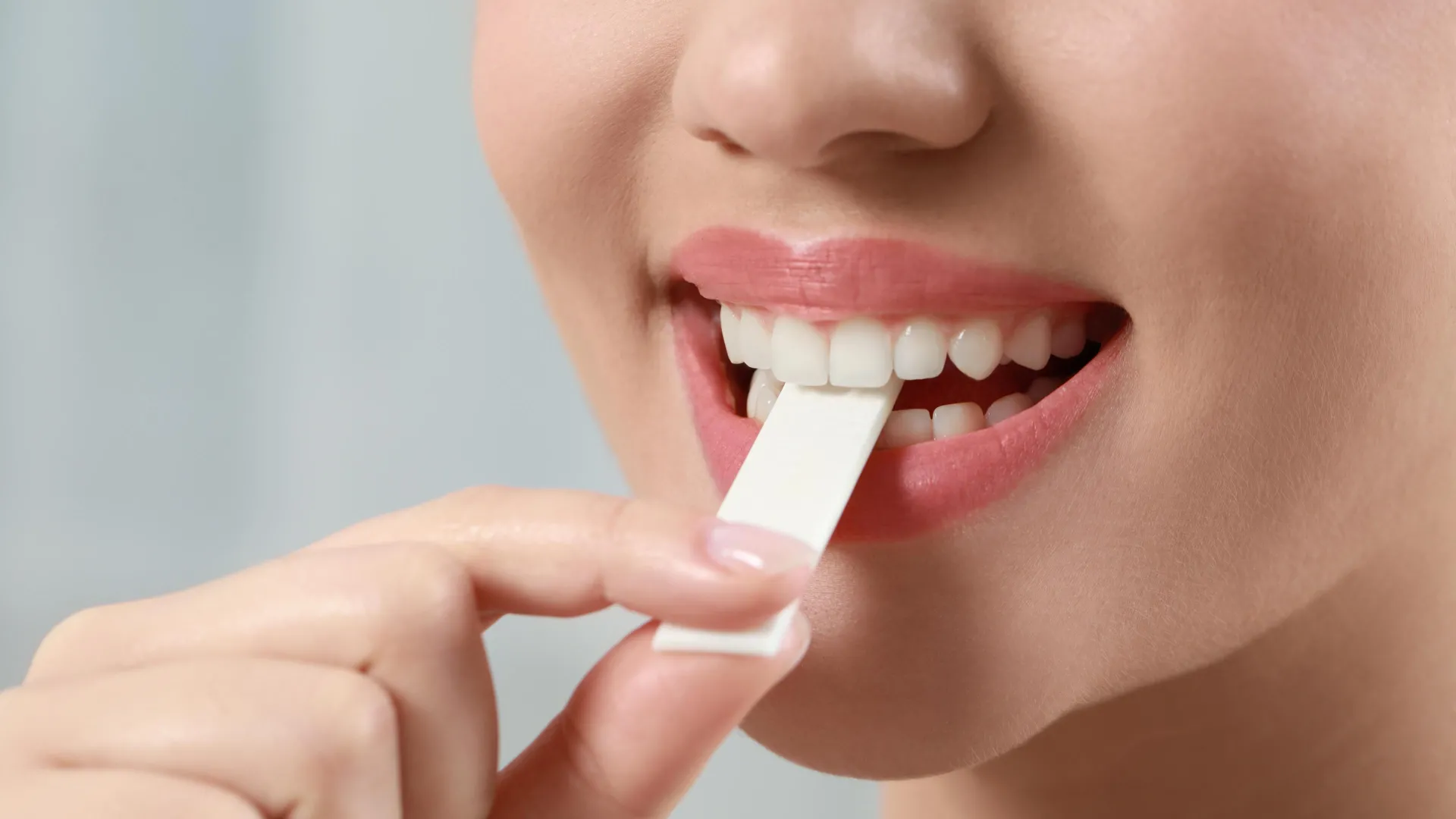
Researchers have developed a bioengineered chewing gum that could provide a new way to target microbes linked to head and neck cancer. In laboratory tests using oral samples from patients, compounds released by the gum significantly reduced levels of human papillomavirus (HPV) and two harmful bacteria associated with the disease.
The study was led by Henry Daniell of the School of Dental Medicine at the University of Pennsylvania. Published in Scientific Reports, the research could help advance more accessible and affordable supportive treatments for head and neck cancer.
New Treatment Approaches for Head and Neck Cancer
Head and neck squamous cell carcinoma (HNSCC) is a common cancer that develops in the tissues lining the mouth and throat. The disease can be aggressive, and survival outcomes are often worse when it is diagnosed at an advanced stage.
Daniell said that many recently approved cancer drugs have not significantly improved patients’ quality of life or five-year survival rates. These challenges highlight the need for innovative therapies that can complement existing head and neck cancer treatments.
Bioengineered Gum Targets HPV and Harmful Oral Bacteria
The study builds on earlier research involving chewing gum made from lablab beans, known as bean gum. The gum contains FRIL, a naturally occurring protein with antiviral properties.
Daniell and his colleagues tested oral samples from patients with HNSCC for three cancer-associated microbes: human papillomavirus (HPV) and two bacterial species, Porphyromonas gingivalis (Pg) and Fusobacterium nucleatum (Fn).
“The global increase in oropharyngeal cancer is linked to HPV infection,” says Daniell. “And Pg and Fn infections worsen survival rates of untreated recurrent or metastatic oral cancer, even after surgery and risk-adjusted adjuvant, or supplemental, therapies.”
Chewing Gum Extracts Reduce Cancer-Linked Microbes
Laboratory tests found that extracts from the bean gum reduced HPV levels by 93% in saliva samples. HPV levels also declined by 80% in oral rinse samples.
The researchers then modified the bean gum to produce protegrin, an antimicrobial peptide that can destroy harmful bacteria. After a single dose, levels of Porphyromonas gingivalis and Fusobacterium nucleatum fell to nearly zero.
Importantly, the treatment did not appear to damage beneficial bacteria naturally found in the mouth. By comparison, radiation therapy may reduce helpful oral bacteria while promoting the growth of disease-causing yeast such as Candida albicans.
Potential Role in Cancer Prevention and Supportive Care
By targeting harmful microbes while preserving the healthy oral microbiome, the bioengineered gum could eventually have several applications. Researchers say it may be developed as an add-on therapy alongside standard cancer treatments or as a preventive strategy to reduce infection and transmission.
“Lip and oral cavity cancer was the seventh leading cancer type in cancer incidence and mortality rate worldwide in adolescents, young adults, and middle-aged adults in 2022,” says Daniell. “Our findings support the value of advancing these therapies to clinical trials as adjuvants with current treatments or as prophylaxis to prevent infection and transmission.”
Henry Daniell is the W.D. Miller Professor in the Department of Basic & Translational Sciences at the School of Dental Medicine at the University of Pennsylvania.
Other authors include Geetanjali Wakade, Rahul Singh, and Smruti Nair of Penn Dental Medicine; Andrés M. Bur and Sufi M. Thomas of the University of Kansas Medical Center; Eri S. Srivatsan and Marilene B. Wang of the University of California at Los Angeles; and Saroj K. Basak of the Veterans Administration Greater Los Angeles Healthcare System.
The research received support from NIH (grant 5-R01-HL 107904-13 awarded to Henry Daniell), the Academic Senate Grant of the David Geffen School of Medicine at UCLA (the Surgical Education Research program), and the National Cancer Institute Cancer Center (Support Grant P30 CA168524).
Source: www.sciencedaily.com