


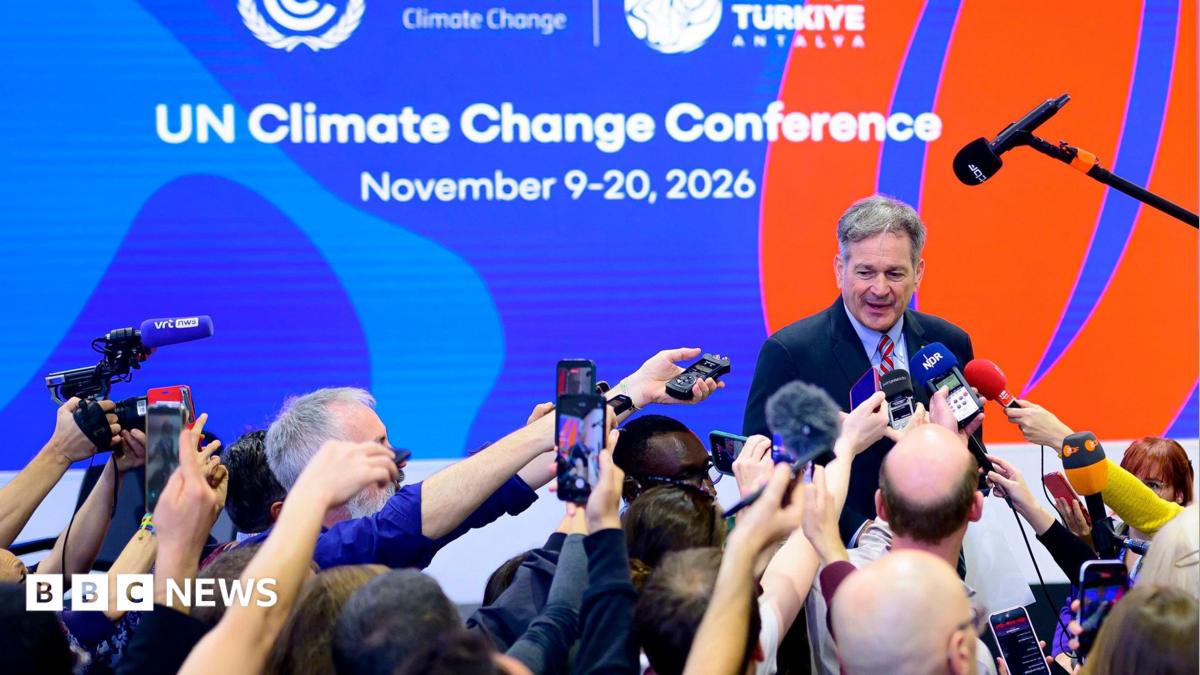
Ministers from Panama and several influential European Union member states are pressing for the Antalya Accord to include a commitment to phase out oil, gas and coal. Their demand comes as negotiators debate whether the agreement should explicitly address fossil fuels, while renewable energy continues to expand rapidly and global temperatures move into a period known as “overshoot.”
Environment ministers from Panama, Spain, France, Belgium, Sweden and Finland said they wanted the final deal to include a commitment to withdraw from oil, gas and coal. Their position followed a call by fossil fuel producers led by Saudi Arabia for a withdrawal from the same fuels.
“COPs and cover-up decisions that don’t even mention fossil fuels are unacceptable and we will not put up with them,” Panama’s Environment Minister Juan Carlos Navarro said.
His comments were echoed by Monique Barbu, France’s Minister of Environment and Transition. She said the agreement’s reference to carbon capture, utilization and storage—technologies that absorb emissions as they are released and store them underground—could give countries permission to continue burning oil and gas.
“We cannot announce to the world that temperatures are rising by 1.5 degrees Celsius and then go about our business as if nothing has happened,” Barbu said.
Acknowledging the 1.5C threshold
The agreement, officially known as the Antalya Accord, was the first COP to acknowledge that the goal of keeping global temperature rise below 1.5 degrees Celsius has not been met.
The world is entering a period called “overshoot.” Scientists warn that beyond this point, millions more people will be exposed to rising sea levels and extreme heat.
The BBC understands that many other EU countries were asked to join the rebellion but declined, believing that doing so would not help the negotiations.
One chief negotiator said he sympathized with the ministers’ position, but added: “How can you get a climate change deal without ever mentioning the causes?”
Debate over the summit’s focus
Australian climate change and energy minister Chris Bowen, who is leading the negotiations, objected to the demands. He argued that the summit should focus on implementation and on moving toward clean energy sources.
Outside the COP negotiations, renewable energy is expanding at an unprecedented rate. For the first time this year, solar panels—the newest renewable energy source—made the largest contribution to growth in global energy demand, more than oil and gas.
The International Energy Agency warned this week that the longer fuel supplies through the Strait of Hormuz are disrupted by the Iran war, the stronger the incentive will be to switch to renewable electricity.
However, U.S. President Donald Trump, Chinese President Xi Jinping and Russian President Vladimir Putin agreed at a meeting in Shenzhen this week to increase oil production in response to fuel supply disruptions.
Source: www.bbc.co.uk