


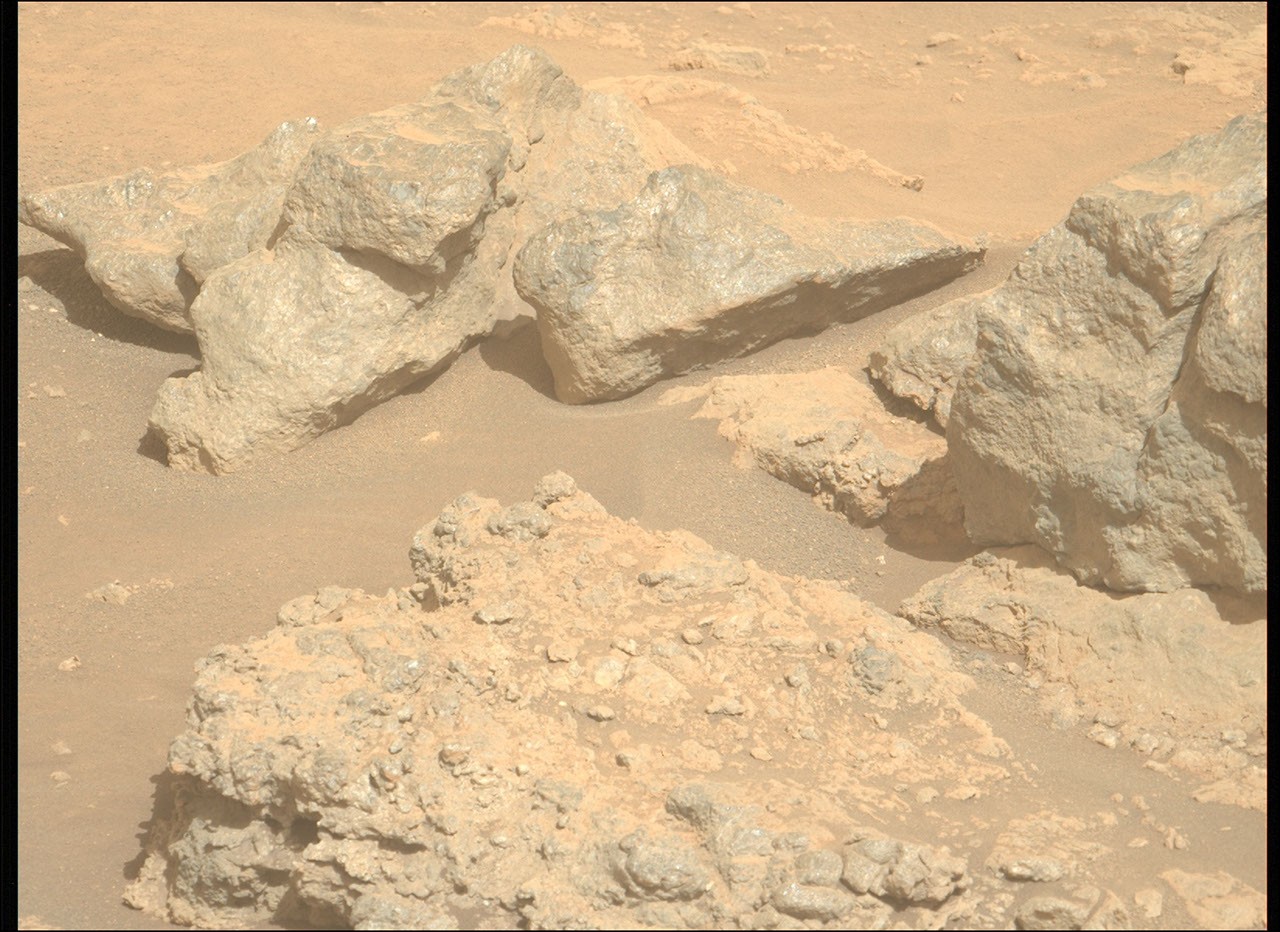
NASA’s Mars 2020 rover has identified a striking geological contact at a target called “Tinga,” near the southern end of the Idubi outcrop outside Jezero Crater. The exposed rocks may include impact-generated breccia and dark, olivine-bearing material, or breccia altered by heat from nearby rocks. Further investigation is needed to determine how these units formed and how they relate to the broader geology of the region.
By Dr. Margaret Dean, candidate at Purdue University
October 19, 2026
A complex contact at “Tinga”
NASA’s Mars 2020 rover previously explored the southern end of Idubi, an outcrop composed primarily of the igneous-rock mineral olivine. During its traverse, the rover’s cameras captured important geological features, including contacts between different rock types that could reveal the area’s history. One such contact is clearly visible at a target named “Tinga.”
At “Tinga,” several geological units occur in close contact. The lowest units may be polymict breccia, a rock made from angular fragments of different rock types. Breccias commonly form through violent geological processes, including impacts. This breccia may have formed during an impact similar to the one that created Jezero Crater itself. A recent spacecraft blog post contains more information about potential breccias in this area.
What are the dark rocks?
Breccia may be only the first part of “Tinga’s” geological story. The taller, dark rocks may be associated with the nearby Idubi olivine-bearing unit, which also appears to extend across the plains beyond Jezero Crater’s rim. If so, the dark rocks at “Tinga” could be part of this broader unit.
Alternatively, they may represent a portion of the breccia that was heated, or “baked,” when it came into contact with the hot rocks of Idubi. Further investigation of this outcrop is needed to determine how the lithology observed at the contact relates to the larger olivine-bearing unit.
“Tinga” records the distinctive geological events that occurred just outside Jezero Crater’s rim. NASA’s Mars 2020 rover will continue investigating the region as it works to uncover Jezero’s origins and geological history.
Source: science.nasa.gov