


Wildfires Are Accelerating Permafrost Thaw and Releasing More Carbon
Hilary Schock, the consortium’s coordinator, used a thaw probe—a T-shaped metal rod designed to measure the depth of the active layer above permafrost. Permafrost is ancient frozen soil beneath the surface. It covers approximately 15% of the planet’s land area across the Northern Hemisphere and stores about twice as much carbon as the atmosphere.
Wildfire Removes the Layer Protecting Permafrost
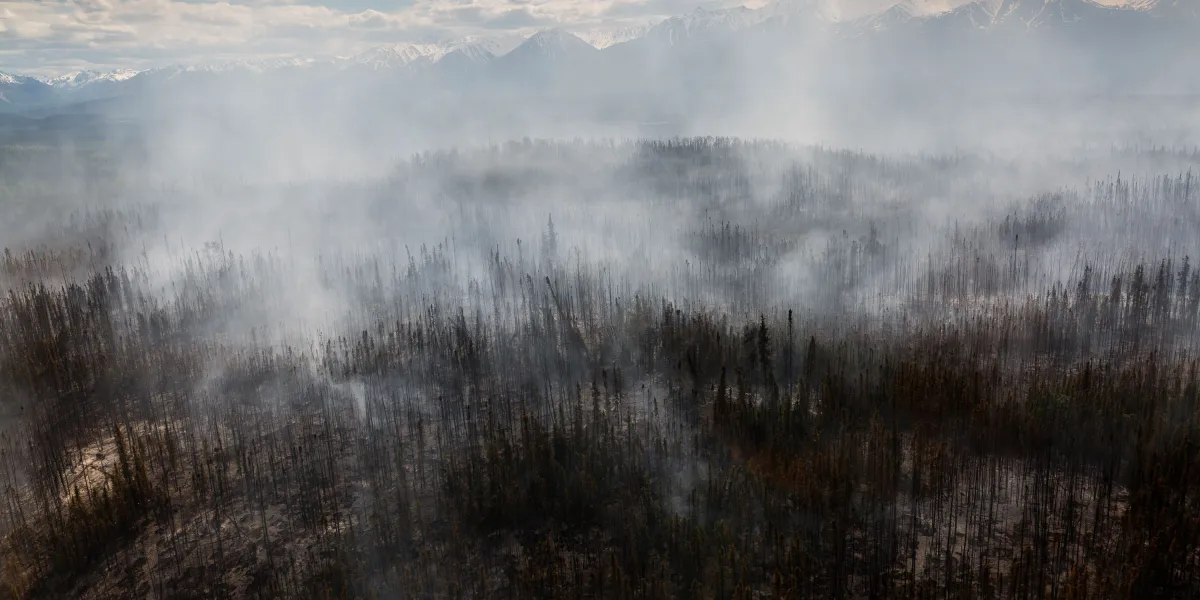
When Schock examined the ground just outside the burn scar, the probe encountered a concrete-like layer about a foot below the surface. But in the burned area, where the fire had removed the moss- and organic-rich topsoil that insulates and protects the permafrost, the thaw probe plunged at least three times deeper into the ground.
“It was the immediate aftermath of the fire,” said Alison York, the organization’s outgoing coordinator, who was nearby. “I looked at it right after and found it had already thawed considerably.”
leif van sisse
Permafrost Thaw Could Intensify Climate Change
This simple tool provides depth measurements from a single point on Earth, revealing a growing problem across the Far North. Climate change is causing severe fires to occur more frequently at northern latitudes, while permafrost thaw is accelerating.
As permafrost thaws, organic matter decomposes and releases powerful greenhouse gases. These emissions contribute to climate feedback loops that drive further warming, more severe fires and additional permafrost loss.
Wildfires in Canada release more carbon. As in Alaska, many of these large fires occur in remote areas where policies allow fires to burn as long as they do not threaten human communities. But if intensifying fires and rising temperatures continue unchecked, the world’s boreal forests and permafrost could increasingly shift from major carbon sinks to significant sources of atmospheric carbon.
Researchers Explore New Ways to Protect Carbon Stores
An international team of researchers from the United States, Canada and elsewhere is working to understand the economic and environmental risks. The group is studying preventative measures such as burn management and investigating ways to detect and extinguish wildfires quickly, before they spread out of control.
Researchers are even exploring the once-unthinkable possibility of deploying human firefighters not only to protect lives and buildings, but also to safeguard one of the planet’s largest stores of carbon.
Source: www.technologyreview.com