


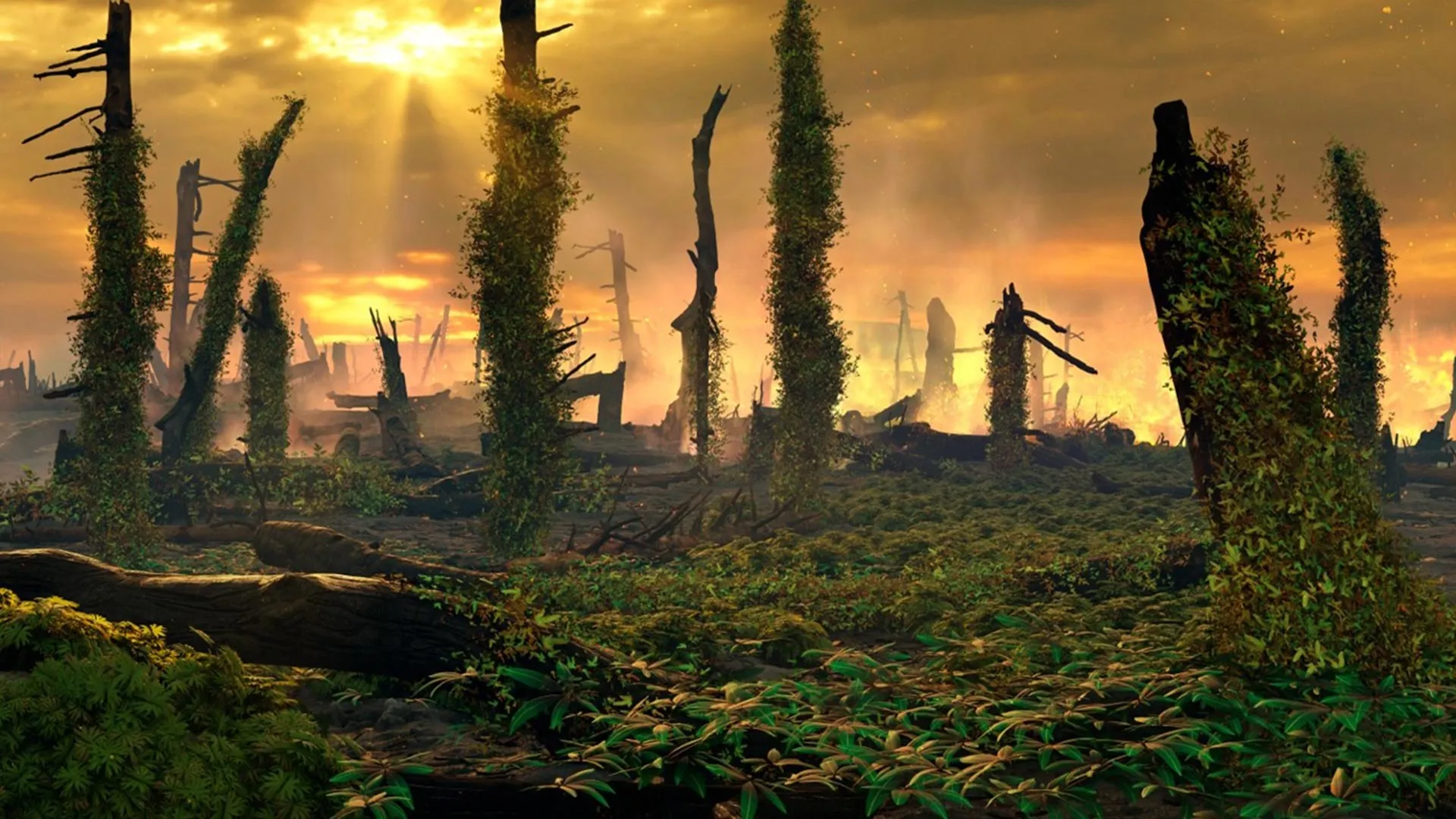
The mass extinction at the end of the Triassic period, approximately 201 million years ago, was linked to extensive volcanic eruptions during the breakup of Pangea. These eruptions released significant amounts of carbon dioxide into the atmosphere, leading to a rise in global temperatures by an estimated 5 to 10 degrees Celsius.
As Earth heated, forests dominated by trees began to collapse. Ferns rapidly colonized the affected landscapes, spreading across much of what is now northwestern Europe and creating expansive savannah-like environments. Recent research by an international team of geologists from Utrecht University indicates that these fern-covered areas were highly susceptible to wildfires, with the ferns themselves providing much of the fuel for their rapid spread.
The findings were published in Natural Earth Science on July 21, 2026.
Reconstructing Ancient Wildfires
To explore wildfire activity during this ancient period, researchers analyzed well-preserved sediments from four drill cores, including a 640-meter-long core recently obtained from the UK.
They reconstructed wildfire activity by measuring organic compounds known as polycyclic aromatic hydrocarbons (PAHs) that are produced from fossil coal and wildfire smoke. The data, alongside fossil pollen and spore records, revealed a marked increase in wildfire activity during peak extinction stages, coinciding with a significant fern expansion.
However, traditional indicators have their limitations. Large charcoal fragments can fragment into smaller pieces, leading to an inflated perception of fire activity. Furthermore, PAHs can disperse far from their original fires, causing potential gaps in the geological record. To address these issues, researchers developed a novel method for tracking ancient fires.
“The innovation of this study stemmed from analyzing color changes in organic microfossils,” explains Dr. Bas van de Schotbrugge from Utrecht University, the senior author of the study. “We employed a straightforward and cost-effective technique called the palynomorph darkness index, which quantifies the ‘darkness’ of fossil pollen and spores.”
Unusual Fossil Color Patterns
Organic microfossils typically darken over time as they become buried, undergoing changes due to increasing temperature and pressure. Deeper sediments are exposed to higher heat, making organic matter progressively darker. Generally, the deeper the burial, the darker the fossil.
“However, we observed a completely different pattern here,” notes Van de Schotbrugge.
Interestingly, the oldest and deepest pollen and intranuclear spores retained lighter colors. In contrast, fossils from the extinction period grew darker, culminating in an extremely dark brown hue. Post-extinction, the fossils reverted to pale yellow.
“We were quite puzzled by this phenomenon, as it occurred simultaneously across all four cores, which have distinct geological histories,” Van de Schotbrugge explains.
The Ancient Fire “Dark Zone”
The palynomorph darkness index employs the RGB spectrum for color measurement. A camera attached to a light microscope captures the fossils, and the color data is converted into an average grayscale value. This technique enables comparisons of samples from different layers within the same core or across various cores.
Researchers conducted 15,000 measurements of pollen and spores from plants that existed before, during, and after the mass extinction. By comparing tree pollen and fern spores, they sought to determine if the darkening was due to biological differences between plant groups.
“All plant groups exhibited the same phenomenon, strongly suggesting it resulted from an external factor,” researchers noted.
As researchers compared color changes in fossils with charcoal and PAH levels, a distinct pattern emerged. An unusual “dark zone” began to document extensive periods of wildfire activity coinciding with fern surges.
“This darkening aligns precisely with the main extinction period and the fern spike, reflecting increased quantities of charcoal and PAHs.”
Ferns Flourishing in a Warming World
The rapid proliferation of ferns during the extinction period was likely driven by several interconnected factors, including deforestation, soil erosion, extreme greenhouse warming, and frequent wildfires.
According to Van de Schotbrugge, “Ferns are extraordinary plants that have survived numerous crises throughout Earth’s history, with some species adapting to extreme environments. They can be considered true disaster species.”
Certain fern species can quickly colonize damaged areas, especially where other vegetation has been eradicated. Wildfires can further expedite this process. Though the visible portions of the ferns burn, they can swiftly regrow from their underground root systems, enabling them to recover and occupy more territory compared to many competing plants.
This resilience may explain the prolonged nature of fern proliferation during the mass extinction event, which researchers estimate lasted at least 40,000 years and possibly as long as 300,000 years.
Ferns as Fuel for Wildfires
“When ferns dry out, their dense mats become ideal fuel for igniting large wildfires,” notes Van de Schotbrugge.
This rapid spread of pioneering ferns fostered vast fern savannahs, with some species potentially acting as fire ladders, assisting the spread of flames across the landscape while stifling other plant species.
“The ferns provided ample fuel, igniting repeated large-scale wildfires, creating a truly chaotic environment.”
The result could have formed a destructive feedback loop. With climate warming and deforestation, fern-dominated landscapes expanded, providing abundant dry fuel for new fires, which then proliferated further.
“This emphasizes that the interplay of climate change, deforestation, and opportunistic species may set the stage for a perfect storm,” concluded Van de Schotbrugge.
Source: www.sciencedaily.com