


How Small Can Transistors Get? The Future of Tiny Chips in the Age of AI
For decades, engineers have worked to make computer transistors smaller so more of them can fit on a single chip. This drive toward miniaturization has helped create faster smartphones, more powerful computers and increasingly capable artificial intelligence (AI) systems.
Today, the race to build smaller, faster and more energy-efficient transistors is more intense than ever. But how small can transistors actually become, and will engineers continue shrinking them in the future?
What is a transistor?
To understand how small transistors can become, it helps to first understand what a transistor is and why it is so important to modern electronics.
Latest videos fromLive Science
“If you pry open a computer or cell phone, you’ll find a printed circuit board,” Suman Dutta, professor of electrical and computer engineering at Georgia Tech, told Live Science.
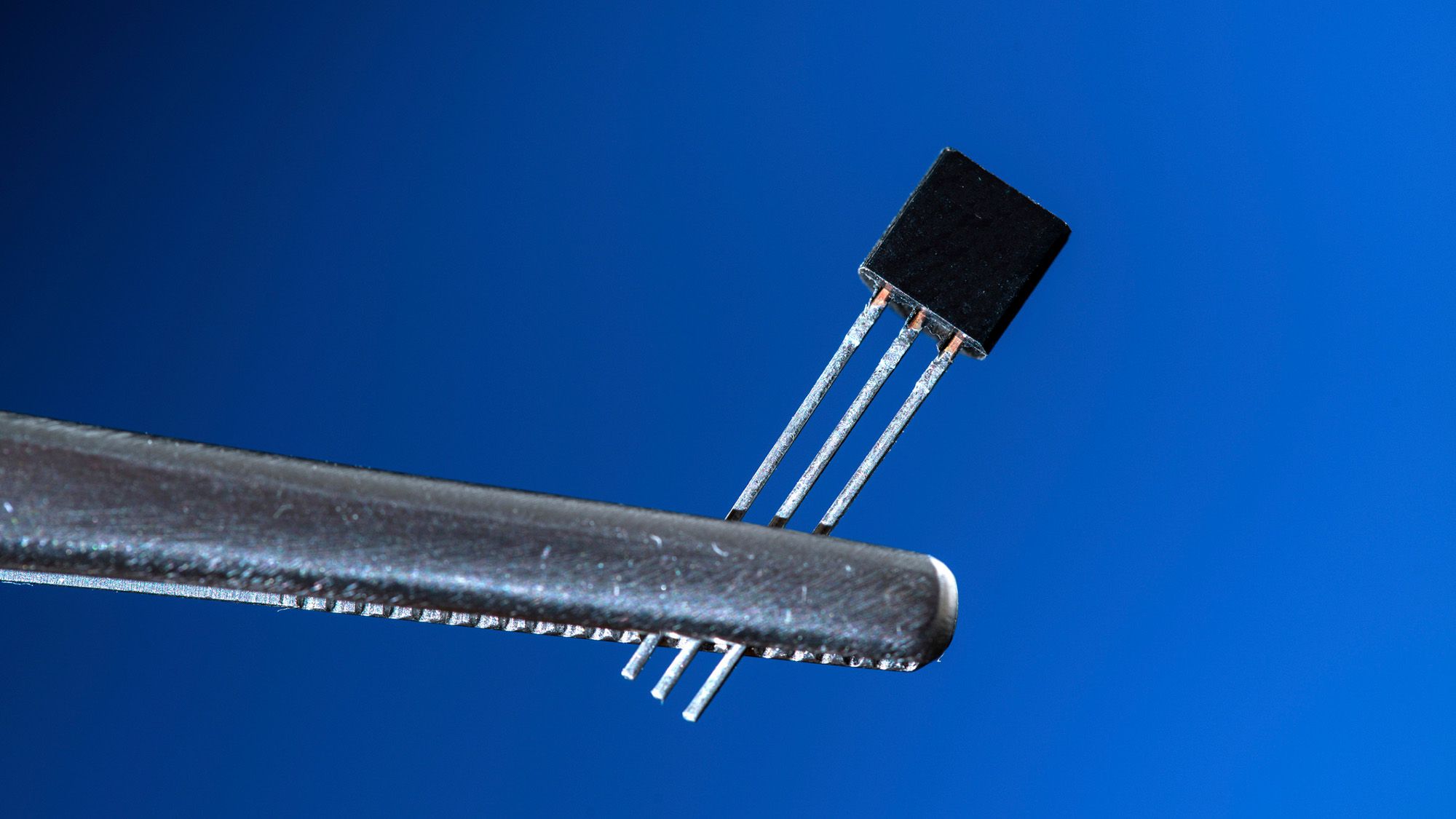
The circuit board contains small rectangular components called chips. Each chip contains a piece of silicon. “And if you zoom in on that silicon a million times or so, maybe if you’re lucky you’ll see little switches or transistors etched into that piece of silicon,” Dutta said.
Sign up for our newsletter
(Image credit: Marilyn Perkins / Future)
Sign up for our weekly Life’s Little Mysteries newsletter to get the latest mysteries before they’re posted online.
How small are modern transistors?
A transistor acts as an electrical switch. It turns on or off in response to electrical signals, allowing computers to process and store the ones and zeros that make up digital information. Modern chips contain billions of these tiny switches, which work together to power everything from internet searches and AI data centers to smartphones and household appliances.
Shrinking transistors allows manufacturers to fit more of them onto each chip. This can improve processing speed, increase functionality and, in some cases, reduce the amount of energy needed to perform a task. But transistor size is only one factor that determines how powerful a chip will be.
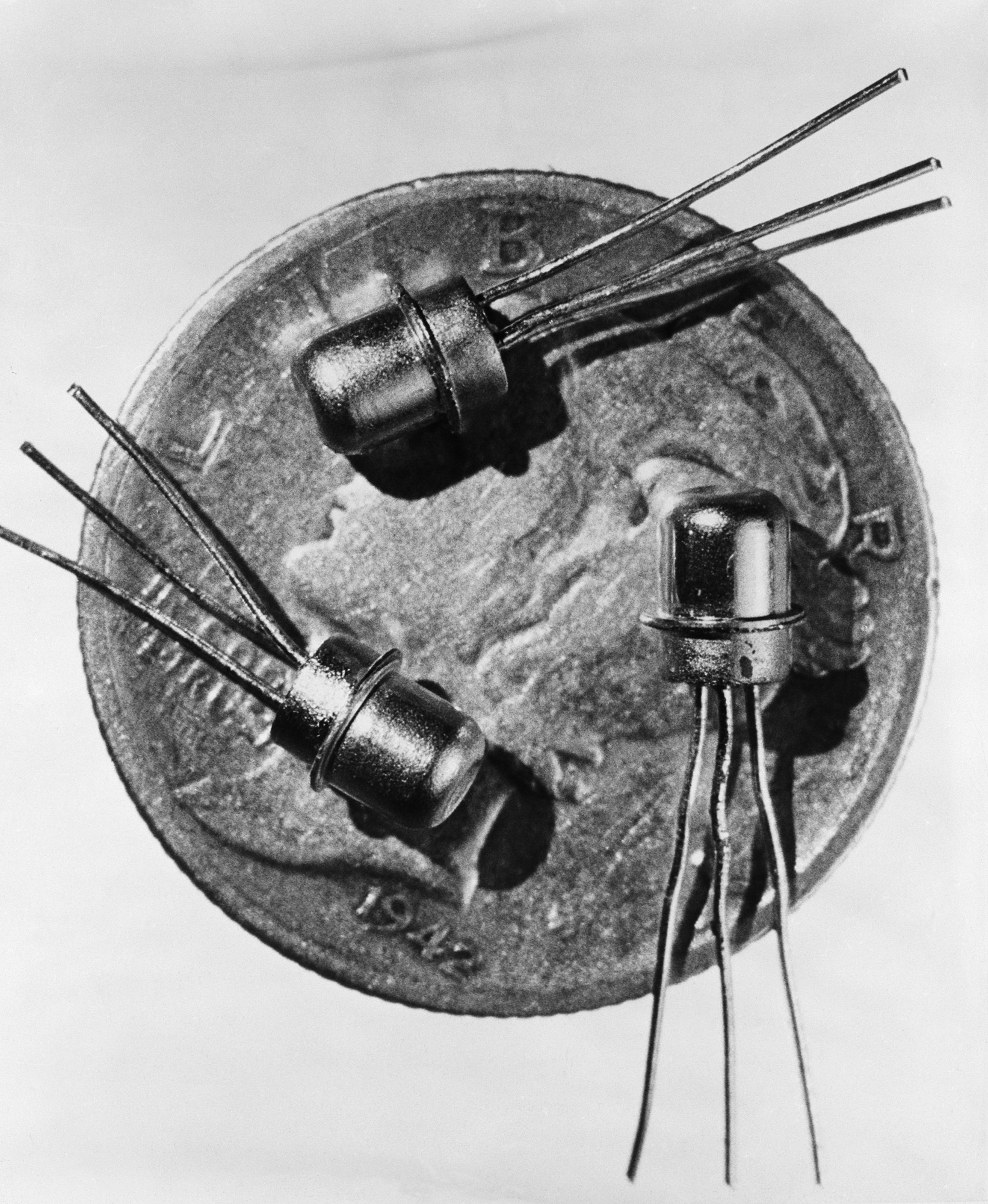
Transistors were once large enough to see easily. Today, the active components of many transistors are far smaller than the width of a human hair.
(Image credit: Bettmann via Getty Images)
Researchers have already demonstrated transistor devices in which a single atom controls the flow of electrons. However, a complete working device at that scale would still require larger supporting components.
Anton Persson, assistant professor at Chalmers University of Technology in Sweden, and Tara Peña, an incoming assistant professor at UCLA, told Live Science in a co-authored email that the switching portion of a transistor can be made extremely small, even though complete, commercially practical devices at that scale do not yet exist.
In research published in Nature Nanotechnology, Persson, Peña and their colleagues used two-dimensional semiconductors, including tungsten disulfide, to create nanoribbon transistors with channel widths of about 25 nanometers. That is roughly 0.00025 times the width of a human hair.
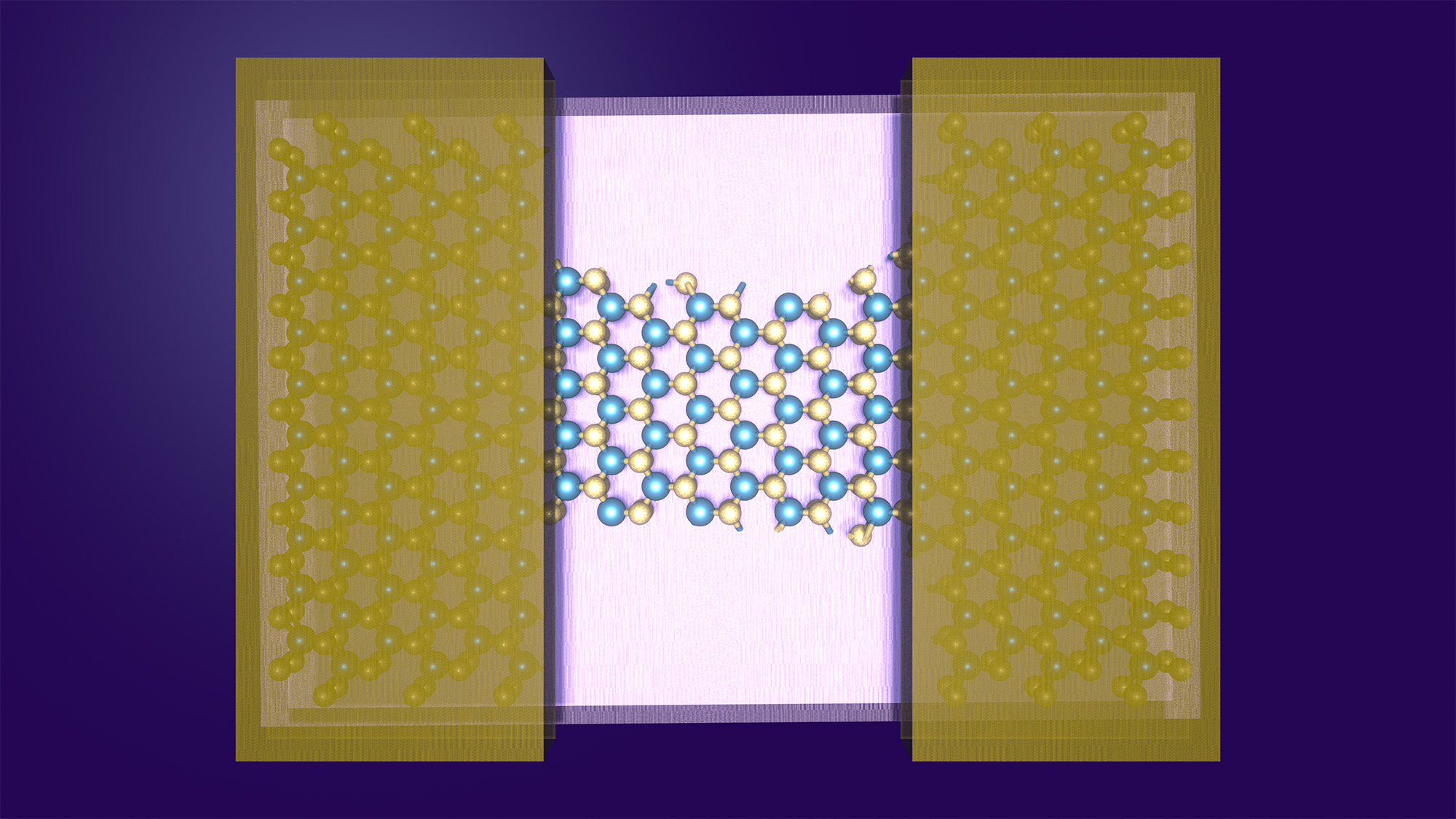
Diagram showing the miniature transistor created by Persson, Peña and their colleagues.
(Image credit: Peña et al. (2026))
Could atomically thin materials make smaller transistors possible?
Two-dimensional semiconductors are electrically active materials only one or a few atoms thick. Their extreme thinness can provide more precise control over electrical current, potentially allowing researchers to build transistors smaller than those made with conventional silicon.
Silicon transistors are expected to continue shrinking over the next decade, although progress may be slower than it was in the past. Eventually, significant miniaturization could require new materials and device designs, including atomically thin two-dimensional semiconductors.
Why smaller transistors are not the only goal
Transistor size is important, but it is not the only consideration when engineers design a new chip. Manufacturing cost, reliability, energy use and performance all play a role.
Designing and manufacturing an advanced chip requires enormous investment. “We are as focused on research and development as any pharmaceutical company, which spends billions of dollars developing a single drug,” Dutta said. “It’s a very similar business model.”
Manufacturing is another major challenge. Producing a few experimental transistors in a laboratory is very different from reliably manufacturing billions of identical transistors at a commercially viable price. “What works once in the lab doesn’t necessarily mean it will work in the factory,” Persson and Peña said.
Energy efficiency is also becoming increasingly important, particularly as AI data centers consume more electricity. Adding more transistors does not automatically make each individual transistor more efficient. Without improvements in chip architecture and power management, increasing the number of transistors can also increase a system’s overall power requirements.
For example, some of the latest Nvidia data-center GPUs have power requirements of about 1.4 kilowatts, while future products are expected to require even more power. A substantial portion of that electricity is ultimately released as waste heat.
The most effective chips therefore need to be smaller, faster, less expensive and more energy efficient. Engineers must balance all four goals rather than focusing only on transistor dimensions.
Is making transistors smaller still the goal in the age of AI?
There is a physical limit to how many transistors can fit side by side on a chip. As a result, engineers are increasingly looking beyond simple miniaturization and developing three-dimensional chip designs.
“Increasingly, the idea is to stack transistors on top of each other so that more transistors can fit within the same chip area, rather than just making each transistor smaller,” Persson and Peña said. “Then you can make the electronics significantly more powerful, even if each transistor is only slightly smaller.”
The explosive growth of AI is increasing demand for faster and more efficient processors. But advanced transistors are important beyond AI data centers. Smaller, more efficient chips can also make consumer electronics smaller, less expensive and more capable.
Transistor miniaturization has already helped smartphones achieve greater processing power, longer battery life and lower costs. In many ways, modern smartphones outperform room-sized supercomputers from only a few decades ago.
So, how small can transistors become? The answer depends on more than physics. Engineers must also find ways to control electrons, manufacture billions of reliable devices and make the technology economically practical.
“As long as we can control it, we’ll do everything we can to make it as small as possible,” Dutta said.
Topics
Source: www.livescience.com